Megascapheus bottae
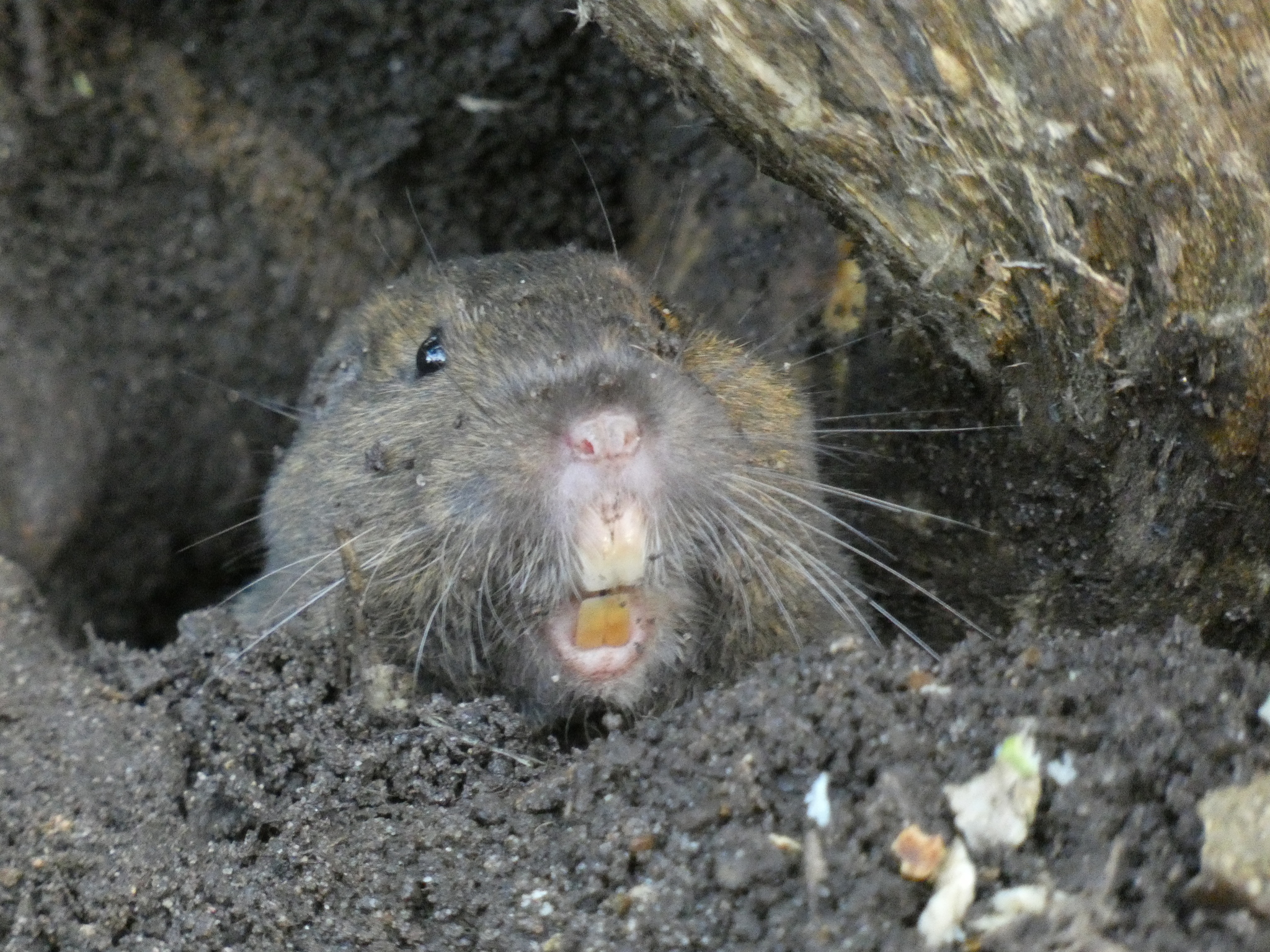
Not Megascapheus bottae. This is Megascapheus Elliot, 1903, a relative — both are Geomyidae.
usernameforinaturalist · CC BY-NC 4.0 · via GBIF. May be a photograph of a specimen, or an artist’s reconstruction — an interpretation of a skeleton, since colour and soft tissue are almost never preserved.
On record
Recorded, not inferred- Also called
- Botta's pocket gopherPBDB
- Sits inside
- MegascapheusPBDB
- Diet
- browserPBDB, for Geomyidae
- Life habit
- fossorialPBDB, for Geomyidae
- Motility
- actively mobilePBDB, for Osteichthyes
- Environment
- terrestrialPBDB, for Eutheria
Time the record covers
At least 1.3 million years on record.
The record covers at least 1.4 Mya to 11.7 ka. No occurrence read is dated outside 4.7 Mya to 0 Mya.
45 occurrences of Megascapheus bottae on record, most of them in the Pleistocene. The Paleobiology Database records this as a living group. Bar height is expected occurrences, not a count: each fossil is spread across the span it is dated to, so a tall narrow bar means tight dating and a low wide one means loose.
When
45 occurrences- Pliocene1%
- Pleistocene85%
- Holocene13%
These are dates about fossils, not the animal: the record can only begin after it arose and end before it died out, so either end may reach further. Shares are expected occurrences: a fossil dated to a span is counted partly in each period it straddles. More on what this infers.
Found in
7 formations
- "unnamed sandstone" Formation21
- Pauba Formation3
- Palos Verdes Sand Formation3
- Temecula Arkose Formation1
- La Habra Formation1
- San Pedro Formation1
Loading coastlines…
The named rock units Megascapheus bottae has been recovered from, largest first. Drawn where the rock is now, not where it formed. 14 occurrences have no formation on record, which is common for older literature.
Megascapheus bottae and its relatives
PleistoceneWhere Megascapheus bottae and its relatives were recorded in the Pleistocene.
Found in the same rock
405 taxa- Neotoma25 sites
- Dipodomys22 sites
- Sylvilagus21 sites
- Peromyscus17 sites
- Equus16 sites
- Perognathinae16 sites
- Leporidae14 sites
- Lepus10 sites
- Microtus10 sites
- Microtus californicus10 sites
- Canis latrans9 sites
- Odocoileus9 sites
- Sciuridae9 sites
- Equus mexicanus8 sites
- Aenocyon dirus7 sites
- Camelops7 sites
- Colubridae7 sites
- Mammuthus7 sites
- Sylvilagus audubonii7 sites
- Notiosorex crawfordi6 sites
- Otospermophilus variegatus6 sites
- Ovis canadensis6 sites
- Peromyscus maniculatus6 sites
- Rana6 sites
The Paleobiology Database records 45 sites for Megascapheus bottae, and this reads all of them. The number is how many of those sites it was catalogued from too. The 24 sharing the most are listed.
This is not a list of everything alive at the time. It is only what has come out of the same ground as this animal and been written down.
Entered from
13 references- A review of the biostratigraphy of Pliocene and Pleistocene sediments in the Elsinore Fault Zone, Riverside County, California22
- Preliminary taphonomic analyses of the mammalian microfauna.4
- Pleistocene vertebrates of the Los Angeles basin and vicinity:(exclusive of Rancho La Brea)4
- Synonymies and reidentifications of North American fossil mammals3
- A catalogue of late Quaternary Vertebrates from California: Part Two, Mammals3
- Late Pleistocene and early Recent mammals from Fowlkes Cave, southern Culberson County, Texas2
- A diverse Rancholabrean vertebrate microfauna from southern California includes the first fossil record of ensatina ( Ensatina eschscholtzii : Plethodontidae)1
- Mid to late Holocene mammals from Bighorn Cave, Arizona1
- Preliminary Report on a Late Pleistocene Vertebrate Assemblage From Bonita, San Diego County, California1
- Reconstruction of mid Wisconsinan environments in southern New Mexico1
- Marine studies of San Pedro Bay, California1
- Pleistocene-Recent fauna of the Isleta Caves, Bernalillo County, New Mexico1
Each of the 45 occurrences read was entered from one of these publications, ordered by how many each accounts for. This is not a search for papers mentioning the name. 1 further reference is not listed. Entries link to doi.org where the Paleobiology Database holds an identifier, and to its own record where it does not. Relayed as the Paleobiology Database holds them, not checked against what they resolve to.
Media and terms
Media content1
Picture of Megascapheus Elliot, 1903
- Source
- GBIF
- Credit
- usernameforinaturalist
- Licence
- CC BY-NC 4.0
- Commercial use
- the licence does not allow it
No 3D scan was found. Smithsonian Open Access, MorphoSource and Sketchfab were all searched.
This is what the site found, which is not the same as what exists.
Keep going
What may have been alongside itMegascapheus through timeFormations of the PleistoceneThe world it lived on
Occurrence data from the Paleobiology Database, CC BY 4.0. (Eydoux and Gervais 1836)