Neotoma
A pack rat or packrat, also called a woodrat or trade rat, are any species in the North and Central American rodent genus Neotoma. Pack rats have a rat-like appearance, with long tails, large ears, and large, black eyes. Pack rats are noticeably larger than deer mice, harvest mice, and grasshopper mice, and are usually somewhat larger than cotton rats.

R. B. Forbes · Public Domain · via Wikipedia/Commons. May be a photograph of a specimen, or an artist’s reconstruction — an interpretation of a skeleton, since colour and soft tissue are almost never preserved.
On record
Recorded, not inferred- Also called
- pack ratPBDB
- Sits inside
- NeotominaPBDB
- Diet
- herbivorePBDB, for Rodentia
- Life habit
- ground dwellingPBDB
- Motility
- actively mobilePBDB, for Osteichthyes
- Environment
- terrestrialPBDB, for Eutheria
Time the record covers
At least 4.6 million years on record.
The record covers at least 4.7 Mya to 11.7 ka. No occurrence read is dated outside 9.4 Mya to 0 Mya.
341 occurrences of Neotoma on record, most of them in the Pleistocene. The Paleobiology Database records this as a living group. Bar height is expected occurrences, not a count: each fossil is spread across the span it is dated to, so a tall narrow bar means tight dating and a low wide one means loose.
When
341 occurrences- Miocene2%
- Pliocene13%
- Pleistocene76%
- Holocene9%
These are dates about fossils, not the animal: the record can only begin after it arose and end before it died out, so either end may reach further. Shares are expected occurrences: a fossil dated to a span is counted partly in each period it straddles. More on what this infers.
Found in
37 formations
- "unnamed sandstone" Formation31
- San Timoteo Formation9
- Temecula Arkose Formation7
- Rexroad Formation5
- St. David Formation4
- Gila Conglomerate Formation4
Loading coastlines…
The named rock units Neotoma has been recovered from, largest first. Drawn where the rock is now, not where it formed. 13 further formations hold fewer occurrences each and are not listed. 236 occurrences have no formation on record, which is common for older literature.
Neotoma and its relatives
PleistoceneWhere Neotoma and its relatives were recorded in the Pleistocene.
Found in the same rock
1,726 taxa- Equus78 sites
- Sylvilagus76 sites
- Peromyscus60 sites
- Thomomys48 sites
- Dipodomys43 sites
- Microtus42 sites
- Canis latrans41 sites
- Odocoileus41 sites
- Lepus40 sites
- Perognathinae39 sites
- Camelops38 sites
- Sigmodon minor37 sites
- Platygonus35 sites
- Leporidae34 sites
- Odocoileus virginianus34 sites
- Geomys32 sites
- Scalopus aquaticus31 sites
- Megascapheus bottae30 sites
- Microtus pennsylvanicus30 sites
- Sorex30 sites
- Spermophilus30 sites
- Procyon lotor27 sites
- Hemiauchenia26 sites
- Aenocyon dirus24 sites
The Paleobiology Database records 293 sites for Neotoma, and this reads 240 of them. The number is how many of those sites it was catalogued from too. The 24 sharing the most are listed.
This is not a list of everything alive at the time. It is only what has come out of the same ground as this animal and been written down.
Entered from
147 references- A review of the biostratigraphy of Pliocene and Pleistocene sediments in the Elsinore Fault Zone, Riverside County, California33
- Quaternary vertebrate localities of Virginia and their avian and mammalian fauna16
- Synonymies and reidentifications of North American fossil mammals13
- A late Pleistocene and early Holocene mammalian fauna from Little Beaver Cave, Central Ozarks, Missouri.12
- Preliminary taphonomic analyses of the mammalian microfauna.12
- Reconstruction of mid Wisconsinan environments in southern New Mexico9
- Paleontology and historic field trip of the John Guilday Cave Preserve (Trout Rock)8
- Papago Springs Cave revisited, part II: vertebrate paleofauna8
- New Species of Blancan Woodrat (Cricetidae) from North-Central Kansas6
- Middle Pleistocene arvicoline rodents and environmental change at 2900-meters elevation, Porcupine Cave, South Park, Colorado6
- Chronology of Florida Pleistocene mammals6
- A catalogue of late Quaternary Vertebrates from California: Part Two, Mammals5
Each of the 341 occurrences read was entered from one of these publications, ordered by how many each accounts for. This is not a search for papers mentioning the name. 135 further references are not listed. Entries link to doi.org where the Paleobiology Database holds an identifier, and to its own record where it does not. Relayed as the Paleobiology Database holds them, not checked against what they resolve to.
Media and terms
Media content3

Picture of Neotoma
- Source
- Wikipedia/Commons
- Credit
- R. B. Forbes
- Licence
- Public Domain
- Commercial use
- the licence allows it
CT scan
- Source
- MorphoSource
- Licence
- In Copyright
- Commercial use
- cannot be read from the licence given — check the record
- Specimen
- Neotoma sp. · UWBM:Mammalogy:UWBM:Mamm:37681
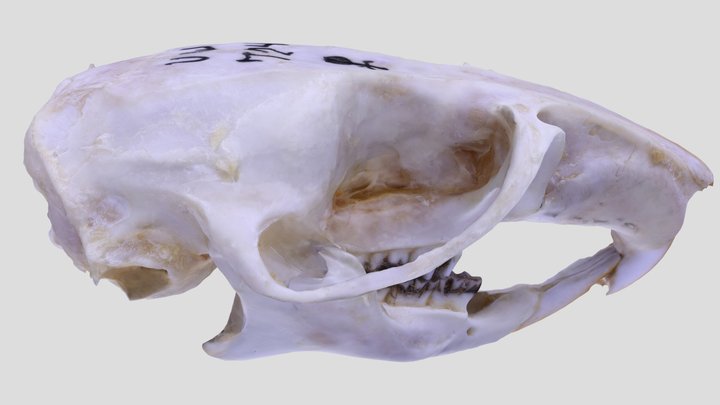
3D model
- Source
- Sketchfab
- Licence
- CC Attribution
- Commercial use
- cannot be read from the licence given — check the record
The description on this site
- Source
- Wikipedia, “Pack rat”
- Licence
- CC BY-SA 4.0
This is what the site found, which is not the same as what exists.
Keep going
Everything alive alongside itNeotomina through timeFormations of the PleistoceneThe world it lived on
Occurrence data from the Paleobiology Database, CC BY 4.0. Say and Ord 1825