Pilosa
Searched as Pilosa indet.. The Paleobiology Database treats Pilosa as the accepted name.
Pilosa is an order of xenarthran placental mammals, native to the Americas. They include anteaters and sloths. The name comes from the Latin word for "hairy".

PaleoMatt · CC BY-SA 4.0 · via Wikipedia/Commons. May be a photograph of a specimen, or an artist’s reconstruction — an interpretation of a skeleton, since colour and soft tissue are almost never preserved.
On record
Recorded, not inferred- Sits inside
- XenarthraPBDB
- Diet
- omnivorePBDB, for Xenarthra
- Life habit
- ground dwellingPBDB, for Xenarthra
- Motility
- actively mobilePBDB, for Osteichthyes
- Environment
- terrestrialPBDB, for Eutheria
Time the record covers
At least 37 million years on record.
The record covers at least 37.71 Mya to 129 ka. No occurrence read is dated outside 41.03 Mya to 0 Mya.
12 occurrences of Pilosa on record, most of them in the Pleistocene. The Paleobiology Database records this as a living group. Bar height is expected occurrences, not a count: each fossil is spread across the span it is dated to, so a tall narrow bar means tight dating and a low wide one means loose.
When
12 occurrences- Eocene8%
- Miocene25%
- Pleistocene66%
- Holoceneunder 1%
These are dates about fossils, not the animal: the record can only begin after it arose and end before it died out, so either end may reach further. Shares are expected occurrences: a fossil dated to a span is counted partly in each period it straddles. More on what this infers.
Found in
6 formations
- Collón Cura Formation2
- Chaco Formation1
- Chiu-Chiu Formation1
- Caujarao Formation1
- Sarmiento Formation1
- Pongo Formation1
Loading coastlines…
The named rock units Pilosa has been recovered from, largest first. Drawn where the rock is now, not where it formed. 5 occurrences have no formation on record, which is common for older literature.
Pilosa and its relatives
PleistoceneWhere Pilosa and its relatives were recorded in the Pleistocene.
Found in the same rock
2,059 taxa- Equus92 sites
- Camelops54 sites
- Megalonyx54 sites
- Paramylodon harlani54 sites
- Hemiauchenia45 sites
- Platygonus45 sites
- Odocoileus36 sites
- Canis latrans32 sites
- Odocoileus virginianus32 sites
- Sylvilagus31 sites
- Hemiauchenia macrocephala30 sites
- Plesippus simplicidens30 sites
- Dasypus bellus26 sites
- Camelidae24 sites
- Mammut americanum23 sites
- Tapirus23 sites
- Mammuthus columbi22 sites
- Camelops hesternus21 sites
- Capromeryx21 sites
- Peromyscus21 sites
- Thomomys21 sites
- Gomphotheriidae20 sites
- Megalonyx leptostomus20 sites
- Neotoma20 sites
The Paleobiology Database records 907 sites for Pilosa, and this reads 240 of them. The number is how many of those sites it was catalogued from too. The 24 sharing the most are listed.
This is not a list of everything alive at the time. It is only what has come out of the same ground as this animal and been written down.
Entered from
11 references- New middle Miocene (Langhian - Serravallian) vertebrate localities in northwestern Patagonia, Argentina: A contribution to high latitude south american land mammal ages sequence2
- Taphonomy, paleoecology and chronology of a late Quaternary tank (natural reservoir) deposit from the Brazilian Intertropical Region1
- Lithostratigraphy and Biostratigraphy of Pliocene and Pleistocene Marine Deposits and Age of the highest Marine Terrace from the Sacaco Basin and its Environs (southern Peru)1
- Novos achados de mamíferos Pleistocênicos em Irauçuba, Ceará, Nordeste, Brasil1
- A new vertebrate continental assemblage from the Tortonian of Venezuela1
- Mamíferos extintos del Pleistoceno de la Cuenca de Calama (Segunda Región, Chile). Viejas colecciones y nuevos hallazgos1
- Los Xenarthra de Gran Barranca: Más de 20 Ma de historia1
- Geologia e Paleontologia de depositos fossiliferos pleistocenicos do Rio Grande do Norte1
- Vertebrados Pleistocenicos de Salgueiro-PE1
- A fossil tortoise from Hispaniola1
- Caiman latirostris from the Pleistocene of Argentina, and a Summary of South American Cenozoic Crocodilia1
Each of the 12 occurrences read was entered from one of these publications, ordered by how many each accounts for. This is not a search for papers mentioning the name. Entries link to doi.org where the Paleobiology Database holds an identifier, and to its own record where it does not. Relayed as the Paleobiology Database holds them, not checked against what they resolve to.
Media and terms
Media content2

Picture of Pilosa
- Source
- Wikipedia/Commons
- Credit
- PaleoMatt
- Licence
- CC BY-SA 4.0
- Commercial use
- the licence allows it
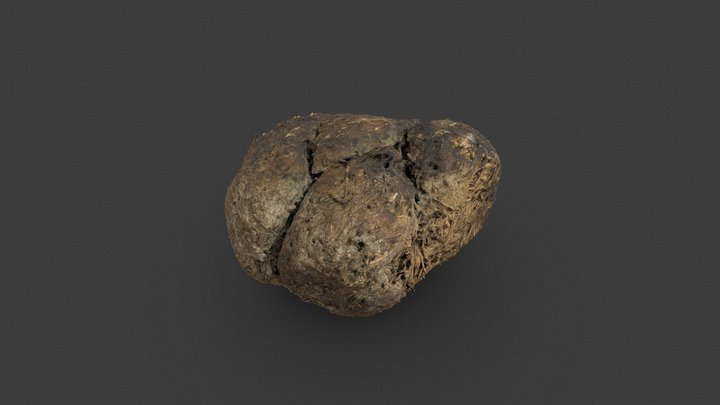
3D model
- Source
- Sketchfab
- Licence
- CC0 Public Domain
- Commercial use
- the licence allows it
Smithsonian Open Access was not reached for this taxon, so this list is what the others held rather than everything there is.
The description on this site
- Source
- Wikipedia, “Pilosa”
- Licence
- CC BY-SA 4.0
This is what the site found, which is not the same as what exists.
Keep going
What may have been alongside itXenarthra through timeFormations of the PleistoceneThe world it lived on
Occurrence data from the Paleobiology Database, CC BY 4.0. (Flower 1883)