Plantae indet.
No picture of Plantae indet. was found. Wikipedia and Wikidata were searched and had none. iDigBio and GBIF were not searched: the Paleobiology Database does not place Plantae indet. firmly enough to tell it from something else bearing the same name, and a search on the name alone returns whichever of them was photographed. Smithsonian Open Access did not answer, so this is what the others held rather than everything there is.
Time the record covers
At least 438 million years on record.
The record covers at least 438.6 Mya to 11.7 ka. No occurrence read is dated outside 538.8 Mya to 0 Mya.
872 occurrences of Plantae indet. on record, most of them in the Late Cretaceous. Bar height is expected occurrences, not a count: each fossil is spread across the span it is dated to, so a tall narrow bar means tight dating and a low wide one means loose.
When
872 occurrences- Cambrianunder 1%
- Ordovicianunder 1%
- Silurian2%
- Devonian13%
- Carboniferous9%
- Permian4%
- Early Triassic1%
- Middle Triassicunder 1%
- Late Triassic3%
- Early Jurassic7%
- Middle Jurassic4%
- Late Jurassic3%
- Early Cretaceous9%
- Late Cretaceous16%
- Paleocene3%
- Eocene7%
- Oligocene4%
- Miocene6%
- Pliocene2%
- Pleistocene3%
- Holocene2%
These are dates about fossils, not the animal: the record can only begin after it arose and end before it died out, so either end may reach further. Shares are expected occurrences: a fossil dated to a span is counted partly in each period it straddles. More on what this infers.
Found in
302 formations
- Solimões Formation57
- Dakota Formation40
- Graham Formation · Cisco Group40
- Rintoul Creek Formation · Strzelecki Group23
- Steierdorf Formation20
- Wide Bay Formation18
Loading coastlines…
The named rock units Plantae indet. has been recovered from, largest first. Drawn where the rock is now, not where it formed. 278 further formations hold fewer occurrences each and are not listed. 109 occurrences have no formation on record, which is common for older literature.
Plantae indet. and its relatives
Late CretaceousWhere Plantae indet. and its relatives were recorded in the Late Cretaceous.
Found in the same rock
1,299 taxa- Rhizophora41 sites
- <Fern>39 sites
- Cyathea25 sites
- Arecaceae23 sites
- Crinoidea20 sites
- Alchornea19 sites
- Pteris18 sites
- Selaginella17 sites
- Gastropoda16 sites
- Bivalvia15 sites
- Malvaceae15 sites
- Manicaria15 sites
- Paxillitriletes15 sites
- Cladophlebis14 sites
- Engelhardia14 sites
- Polypodiaceae14 sites
- Ilex13 sites
- Minerisporites13 sites
- Spermatites13 sites
- Lycopodium12 sites
- Nilsonia12 sites
- Pelliciera12 sites
- Productella12 sites
- Synechanthus sp.12 sites
The Paleobiology Database records 784 sites for Plantae indet., and this reads 240 of them. The number is how many of those sites it was catalogued from too. The 24 sharing the most are listed.
This is not a list of everything alive at the time. It is only what has come out of the same ground as this animal and been written down.
Entered from
348 references- Georeferencing fossiliferous localities from Solimões and Acre Basins (Brazil) -what we know so far about Solimões Formation and future perspectives56
- Megaspores and other dispersed plant remains from the Dakota Formation (Cenomanian) of Kansas, U.S.A.39
- Early Cretaceous (Neocomian) flora and fauna of the Lower Strzelecki Group, Gippsland Basin, Victoria26
- Taxonomy and Paleoecology of the Bivalves from the Finis Shale (Pennsylvanian) of Texas25
- The Downtonian and Devonian Flora of Spitsbergen23
- Early Jurassic land flora of the Getic Nappe22
- Quantitative community analysis: Recurrent group and cluster techniques applied to the fauna of the Upper Devonian Sonyea Group, New York20
- Flora of the Ravenscrag Formation (Paleocene), Southwestern Saskatchewan, Canada18
- The surficial geology, paleontology, and paleoecology of the Finis Shale (Pennsylvanian, Lower Virgilian) in Jack County, Texas17
- Studies in neotropical paleobotany. I. The Oligocene communities of Puerto Rico16
- The Malvinokaffric realm in the Devonian of Brazil14
- Habitat of Llandoverian-Lochkovian eurypterids12
Each of the 872 occurrences read was entered from one of these publications, ordered by how many each accounts for. This is not a search for papers mentioning the name. 336 further references are not listed. Entries link to doi.org where the Paleobiology Database holds an identifier, and to its own record where it does not. Relayed as the Paleobiology Database holds them, not checked against what they resolve to.
Media and terms
Media content2
Structured light scan
- Source
- MorphoSource
- Credit
- LACM Rancho La Brea
- Licence
- In Copyright
- Commercial use
- cannot be read from the licence given — check the record
- Specimen
- Plantae indet. · LACM:rlb:RLP 531B
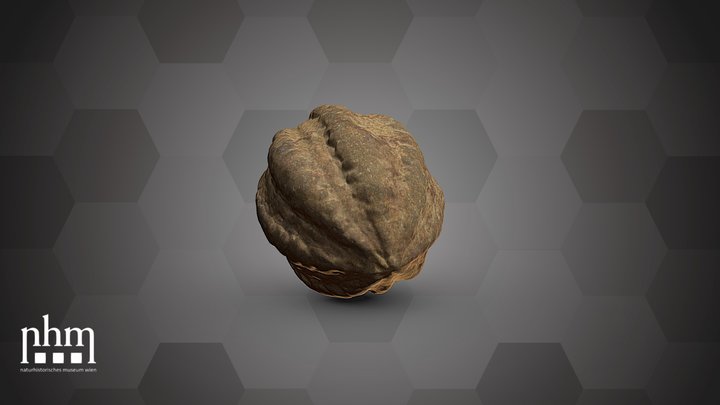
3D model
- Source
- Sketchfab
- Licence
- CC Attribution-NonCommercial
- Commercial use
- the licence does not allow it
No picture of Plantae indet. was found. Wikipedia and Wikidata were searched and had none.
iDigBio and GBIF were not searched: the Paleobiology Database does not place Plantae indet. firmly enough to tell it from something else bearing the same name, and a search on the name alone returns whichever of them was photographed.
Smithsonian Open Access did not answer, so this is what the others held rather than everything there is.
Smithsonian Open Access was not reached for this taxon, so this list is what the others held rather than everything there is.
This is what the site found, which is not the same as what exists.
Keep going
What may have been alongside itFormations of the Late CretaceousThe world it lived on
Occurrence data from the Paleobiology Database, CC BY 4.0.