Bivalvia
Bivalvia or bivalves, in previous centuries referred to as the Lamellibranchiata and Pelecypoda, is a class of aquatic molluscs that have laterally compressed soft bodies enclosed by a calcified exoskeleton consisting of a hinged pair of half-shells known as valves. As a group, bivalves have no head and lack some typical molluscan organs such as the radula and the odontophore. Their gills have evolved into ctenidia, specialised organs for feeding and breathing.

Ernst Haeckel · Public Domain · via Wikipedia/Commons. May be a photograph of a specimen, or an artist’s reconstruction — an interpretation of a skeleton, since colour and soft tissue are almost never preserved.
On record
Recorded, not inferred- Also called
- clamPBDB
- Sits inside
- MolluscaPBDB
- Diet
- suspension feederPBDB
- Life habit
- infaunalPBDB
- Motility
- facultatively mobilePBDB
- Vision
- blindPBDB
Time the record covers
At least 468 million years on record.
The record covers at least 509.7 Mya to 41.03 Mya. No occurrence read is dated outside 515.3 Mya to 33.9 Mya.
12,000+ occurrences of Bivalvia on record. The Paleobiology Database records this as a living group, and the chart stops with its fossils rather than at the present. Bar height is expected occurrences, not a count: each fossil is spread across the span it is dated to, so a tall narrow bar means tight dating and a low wide one means loose.
When
12,000 occurrences read- Cambrianunder 1%
- Ordovician3%
- Silurian2%
- Devonian1%
- Carboniferous4%
- Permianunder 1%
- Middle Jurassic2%
- Late Jurassic12%
- Early Cretaceous21%
- Late Cretaceous46%
- Eocene9%
These are dates about fossils, not the animal: the record can only begin after it arose and end before it died out, so either end may reach further. Shares are expected occurrences: a fossil dated to a span is counted partly in each period it straddles. The read hit its cap, so every figure above is a floor and the shares are of the occurrences read. More on what this infers.
Found in
at least 197 formations
- Kap Leslie Formation1,281
- Moodys Branch Formation · Jackson Group624
- Kiowa Formation386
- Jalama Formation256
- Shuqra Formation219
- Pierre Shale Formation · Montana Group204
Loading coastlines…
The named rock units Bivalvia has been recovered from, largest first. Drawn where the rock is now, not where it formed. The read hit its cap, so each count is a floor. 173 further formations hold fewer occurrences each and are not listed. 6,366 occurrences have no formation on record, which is common for older literature.
Found in the same rock
1,775 taxa- Crinoidea93 sites
- Lingula51 sites
- Hallopora44 sites
- Modiolopsis44 sites
- Nuculites42 sites
- Leptaena41 sites
- Pterinea41 sites
- Ctenodonta38 sites
- Ambonychia37 sites
- Orbiculoidea37 sites
- Camarotoechia35 sites
- Flexicalymene35 sites
- Gastropoda35 sites
- Isotelus33 sites
- Rafinesquina32 sites
- Tentaculites32 sites
- Crurithyris31 sites
- Ostracoda30 sites
- Brachiopoda29 sites
- Cornulites28 sites
- Hormotoma28 sites
- Schuchertella28 sites
- Zygospira28 sites
- Atrypa27 sites
The Paleobiology Database records at least 423 sites for Bivalvia, and this reads 240 of them. The number is how many of those sites it was catalogued from too. The 24 sharing the most are listed.
This is not a list of everything alive at the time. It is only what has come out of the same ground as this animal and been written down.
Entered from
at least 137 references- Unpublished data on Cretaceous-Paleocene molluscan assemblages4,846
- Genesis and environmental significance of Upper Cretaceous shell concentrations from the Cauvery Basin, southern India888
- Jura Vaudois et Neuchatelois793
- Fossil assemblages of a marine transgressive sand, Moody''s Branch Formation (Upper Eocene), Louisiana and Mississippi674
- The Jurassic-Cretaceous Boundary and the Berriasian Stage in the Boreal Realm493
- Ecological control of evolutionary rates in Paleocene - Eocene marine molluscs428
- Unpublished data405
- Paleoecology and Paleontology of the Lower Cretaceous Kiowa Formation, Kansas386
- The stratigraphical palaeontology of the Lower Greensand385
- The Jurassic and Lower Cretaceous of Wadi Hajar, southern Yemen366
- Mollusca from the upper Cretaceous Jalama Formation, Santa Barbara County, California247
- The Red Bird Section of the Upper Cretaceous Pierre Shale in Wyoming213
Each of the 12,000 occurrences read was entered from one of these publications, ordered by how many each accounts for. This is not a search for papers mentioning the name. That read hit its cap, so each count is a floor. 125 further references are not listed. Entries link to doi.org where the Paleobiology Database holds an identifier, and to its own record where it does not. Relayed as the Paleobiology Database holds them, not checked against what they resolve to.
Media and terms
Media content2

Picture of Bivalvia
- Source
- Wikipedia/Commons
- Credit
- Ernst Haeckel
- Licence
- Public Domain
- Commercial use
- the licence allows it
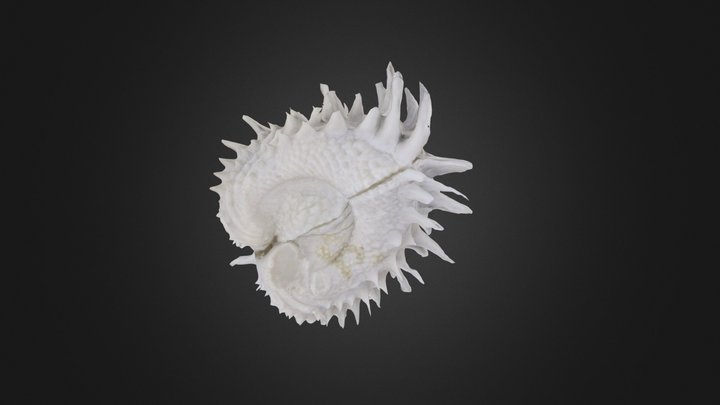
3D model
- Source
- Sketchfab
- Licence
- CC0 Public Domain
- Commercial use
- the licence allows it
The description on this site
- Source
- Wikipedia, “Bivalvia”
- Licence
- CC BY-SA 4.0
This is what the site found, which is not the same as what exists.
Keep going
What may have been alongside itMollusca through timeThe world it lived on
Occurrence data from the Paleobiology Database, CC BY 4.0. Linnaeus 1758