Atrypa
Atrypa is a genus of brachiopod with round to short egg-shaped shells covered with many fine radial ridges. Growth lines form perpendicular to the costae and are spaced approximately 2 to 3 times further apart than the costae.. The pedunculate valve is slightly convex, but oftentimes levels out or becomes slightly concave toward the anterior margin. The brachial valve is highly convex. Neither valve contains an interarea. Atrypa had a large geographic range and occurred from the late Lower Silurian (Telychian) to the early Upper Devonian (Frasnian). Other sources expand the range from the Late Ordovician to Carboniferous, approximately from 449 to 336 Ma. A proposed new species, A. harrisi, was found in the trilobite-rich Floresta Formation in Boyacá, Colombia.

Dwergenpaartje · CC BY-SA 3.0 · via Wikipedia/Commons. May be a photograph of a specimen, or an artist’s reconstruction — an interpretation of a skeleton, since colour and soft tissue are almost never preserved.
On record
Recorded, not inferred- Sits inside
- AtrypinaePBDB
- Diet
- suspension feederPBDB, for Atrypida
- Life habit
- epifaunalPBDB, for Atrypida
- Motility
- stationaryPBDB, for Atrypida
- Vision
- blindPBDB, for Rhynchonellata
- Environment
- marinePBDB, for Lophophorata
Time the record covers
At least 110 million years on record.
The record covers at least 450.2 Mya to 339.9 Mya. No occurrence read is dated outside 471.3 Mya to 298.9 Mya.
1,479 occurrences of Atrypa on record, most of them in the Devonian. Bar height is expected occurrences, not a count: each fossil is spread across the span it is dated to, so a tall narrow bar means tight dating and a low wide one means loose.
When
1,479 occurrences- Ordovicianunder 1%
- Silurian46%
- Devonian52%
- Carboniferousunder 1%
These are dates about fossils, not the animal: the record can only begin after it arose and end before it died out, so either end may reach further. Shares are expected occurrences: a fossil dated to a span is counted partly in each period it straddles. More on what this infers.
Found in
386 formations
- Dawson Bay Formation · Manitoba Group77
- Onondaga Formation47
- Henryhouse Formation33
- Irondequoit Formation · Clinton Group27
- Bird Fiord Formation24
- Rochester Formation · Clinton Group23
Loading coastlines…
The named rock units Atrypa has been recovered from, largest first. Drawn where the rock is now, not where it formed. 362 further formations hold fewer occurrences each and are not listed. 243 occurrences have no formation on record, which is common for older literature.
Atrypa and its relatives
DevonianWhere Atrypa and its relatives were recorded in the Devonian.
Found in the same rock
1,295 taxa- Crinoidea65 sites
- Leptaena50 sites
- Favosites48 sites
- Schizophoria47 sites
- Bryozoa45 sites
- Schuchertella43 sites
- Camarotoechia42 sites
- Dalejina38 sites
- Isorthis38 sites
- Gypidula36 sites
- Howellella36 sites
- Leptaena rhomboidalis36 sites
- Strophomena (Strophodonta)36 sites
- Cyrtina33 sites
- Rugosa31 sites
- Strophonella31 sites
- Nucleospira29 sites
- Productella28 sites
- Spirifer28 sites
- Actinopteria26 sites
- Eospirifer26 sites
- Lingula26 sites
- Pentamerella arata26 sites
- Calymene25 sites
The Paleobiology Database records 1,284 sites for Atrypa, and this reads 240 of them. The number is how many of those sites it was catalogued from too. The 24 sharing the most are listed.
This is not a list of everything alive at the time. It is only what has come out of the same ground as this animal and been written down.
Entered from
294 references- Devonian rocks of the Lake Winnipegosis - Lake Manitoba outcrop belt, Manitoba81
- The Clinton of Western and Central New York73
- Caradocian-Gedinnian echinoderm associations of Central and Eastern North America46
- Lower Devonian (Lochkovian) biostratigraphy and brachiopod faunas, Canadian arctic islands42
- Brachiopods of the Henryhouse Formation (Silurian) of Oklahoma29
- Pridolian and early Gedinnian age brachiopods from the Roberts Mountains Formation of central Nevada28
- Brachiopods and Community Ecology of the Onondaga Limestone25
- Quantitative community analysis: Recurrent group and cluster techniques applied to the fauna of the Upper Devonian Sonyea Group, New York25
- Fauna of the Manitoba Group, from Manitoba, Canada24
- Silurian Reefs of Gotland23
- Great Basin Lower Devonian Brachiopoda21
- Wenlockian fossil communities in New York State and adjacent areas: Paleontology and Paleoecology20
Each of the 1,479 occurrences read was entered from one of these publications, ordered by how many each accounts for. This is not a search for papers mentioning the name. 282 further references are not listed. Entries link to doi.org where the Paleobiology Database holds an identifier, and to its own record where it does not. Relayed as the Paleobiology Database holds them, not checked against what they resolve to.
Media and terms
Media content2

Picture of Atrypa
- Source
- Wikipedia/Commons
- Credit
- Dwergenpaartje
- Licence
- CC BY-SA 3.0
- Commercial use
- the licence allows it
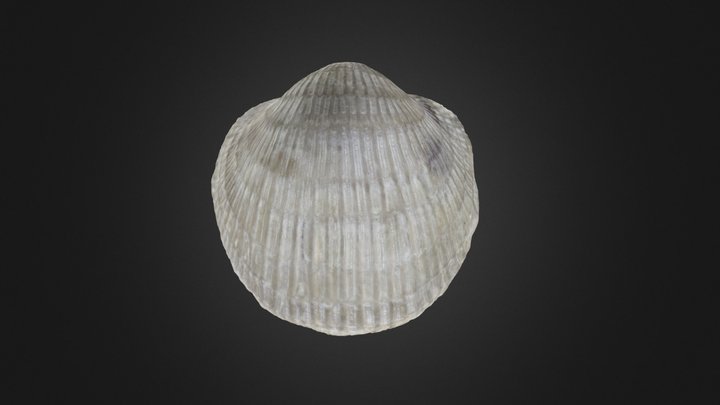
3D model
- Source
- Sketchfab
- Licence
- CC0 Public Domain
- Commercial use
- the licence allows it
Smithsonian Open Access and MorphoSource were not reached for this taxon, so this list is what the others held rather than everything there is.
The description on this site
- Source
- Wikipedia, “Atrypa”
- Licence
- CC BY-SA 4.0
This is what the site found, which is not the same as what exists.
Keep going
What may have been alongside itAtrypinae through timeFormations of the DevonianThe world it lived on
Occurrence data from the Paleobiology Database, CC BY 4.0. Dalman 1828