Lingula
Lingula is a genus of brachiopods within the class Lingulata. Lingula has been historically considered a 'living fossil' with members stretching back to the Cambrian, but those fossils likely represent other genera in the order Lingulida and the genus likely first originated in the early Cenozoic or late Cretaceous. Like its relatives, it has two unadorned organo-phosphatic valves and a long fleshy stalk. Lingula lives in burrows in barren sandy coastal seafloor and feeds by filtering detritus from the water. It can be detected by a short row of three openings through which it takes in water (sides) and expels it again (middle).

Drow_male · CC BY-SA 3.0 · via Wikipedia/Commons. May be a photograph of a specimen, or an artist’s reconstruction — an interpretation of a skeleton, since colour and soft tissue are almost never preserved.
On record
Recorded, not inferred- Sits inside
- LingulidaePBDB
- Diet
- suspension feederPBDB, for Lingulidae
- Life habit
- infaunalPBDB, for Lingulidae
- Motility
- facultatively mobilePBDB, for Lingulidae
- Vision
- blindPBDB, for Lingulata
- Environment
- marinePBDB, for Lophophorata
Time the record covers
At least 501 million years on record.
The record covers at least 504.5 Mya to 2.58 Mya. No occurrence read is dated outside 506.5 Mya to 11.7 ka.
1,046 occurrences of Lingula on record, most of them in the Devonian. The Paleobiology Database records this as a living group. Bar height is expected occurrences, not a count: each fossil is spread across the span it is dated to, so a tall narrow bar means tight dating and a low wide one means loose.
When
1,046 occurrences- Cambrianunder 1%
- Ordovician10%
- Silurian15%
- Devonian23%
- Carboniferous11%
- Permian10%
- Early Triassic5%
- Middle Triassic3%
- Late Triassic2%
- Early Jurassic5%
- Middle Jurassic1%
- Late Jurassic3%
- Early Cretaceous2%
- Late Cretaceous6%
- Paleoceneunder 1%
- Eoceneunder 1%
- Miocene2%
- Pleistoceneunder 1%
These are dates about fossils, not the animal: the record can only begin after it arose and end before it died out, so either end may reach further. Shares are expected occurrences: a fossil dated to a span is counted partly in each period it straddles. More on what this infers.
Found in
376 formations
- Moscow Formation · Hamilton Group37
- Feixianguan Formation19
- Ross Brook Formation18
- Geneseo Shale Formation · Genesee Group18
- Ross Point Formation17
- Phosphoria Formation15
Loading coastlines…
The named rock units Lingula has been recovered from, largest first. Drawn where the rock is now, not where it formed. 352 further formations hold fewer occurrences each and are not listed. 189 occurrences have no formation on record, which is common for older literature.
Lingula and its relatives
DevonianWhere Lingula and its relatives were recorded in the Devonian.
Found in the same rock
1,959 taxa- Orbiculoidea52 sites
- Tentaculites47 sites
- Crinoidea40 sites
- Camarotoechia39 sites
- Nuculites28 sites
- Bivalvia26 sites
- Leptaena25 sites
- Modiolopsis25 sites
- Schuchertella23 sites
- Protochonetes21 sites
- Calymene20 sites
- Chonetes19 sites
- Cornulites19 sites
- Palaeoneilo19 sites
- Pterinea19 sites
- Archaeogastropoda18 sites
- Craniops18 sites
- Ctenodonta17 sites
- Orthoceras17 sites
- Rhipidomella17 sites
- Astarte16 sites
- Gastropoda16 sites
- Hallopora16 sites
- Nuculana16 sites
The Paleobiology Database records 951 sites for Lingula, and this reads 240 of them. The number is how many of those sites it was catalogued from too. The 24 sharing the most are listed.
This is not a list of everything alive at the time. It is only what has come out of the same ground as this animal and been written down.
Entered from
370 references- The Malvinokaffric realm in the Devonian of Brazil36
- The relationship between sedimentary facies and faunal associations in the Llandovery siliclastic Ross Brook Formation, Arisaig, Nova Scotia35
- Makridin, 196428
- Biostratigraphy and correlation of several Permian-Triassic boundary sections in southwestern China20
- Devonian monspecific assemblages: new insights into the ecology of reduced-oxygen depositional settings18
- Biostratigraphy of the Phosphoria, Park City, and Shedhorn Formations; Geology of Permian Rocks in the Western Phosphate Field17
- Kalashnikov, 199316
- The Clinton of Western and Central New York16
- The Dynamics of Rapid, Asynchronous Biotic Turnover in the Middle Devonian Appalachian Basin of New York14
- Paleoecology and Paleontology of the Lower Cretaceous Kiowa Formation, Kansas14
- Marine Communities of a Portion of the Wewoka Formation (Pennsylvanian) in Hughes County, Oklahoma14
- Genesis and environmental significance of Upper Cretaceous shell concentrations from the Cauvery Basin, southern India13
Each of the 1,046 occurrences read was entered from one of these publications, ordered by how many each accounts for. This is not a search for papers mentioning the name. 358 further references are not listed. Entries link to doi.org where the Paleobiology Database holds an identifier, and to its own record where it does not. Relayed as the Paleobiology Database holds them, not checked against what they resolve to.
Media and terms
Media content3

Picture of Lingula
- Source
- Wikipedia/Commons
- Credit
- Drow_male
- Licence
- CC BY-SA 3.0
- Commercial use
- the licence allows it
Photogrammetry
- Source
- MorphoSource
- Licence
- not stated by the source
- Commercial use
- cannot be read from the licence given — check the record
- Specimen
- lingula iowensis · MST:PALEO:MST-SP-2227
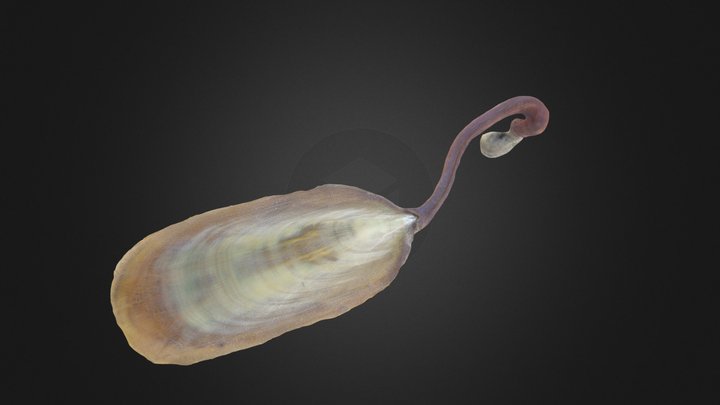
3D model
- Source
- Sketchfab
- Licence
- CC0 Public Domain
- Commercial use
- the licence allows it
The description on this site
- Licence
- CC BY-SA 4.0
This is what the site found, which is not the same as what exists.
Keep going
What may have been alongside itLingulidae through timeFormations of the DevonianThe world it lived on
Occurrence data from the Paleobiology Database, CC BY 4.0. Bruguiére 1797