Selaginella
Selaginella, also known as spikemosses or lesser clubmosses, is a genus of lycophyte. It is usually treated as the only genus in the family Selaginellaceae, with over 750 known species.

L. Fdez. · CC BY-SA 2.1 es · via Wikipedia/Commons. May be a photograph of a specimen, or an artist’s reconstruction — an interpretation of a skeleton, since colour and soft tissue are almost never preserved.
On record
Recorded, not inferred- Sits inside
- SelaginellaceaePBDB
- Diet
- "photoautotroph"PBDB, for Streptophyta
- Environment
- freshwater,terrestrialPBDB, for Lycopodiophyta
Time the record covers
At least 316 million years on record.
The record covers at least 316.9 Mya to 11.7 ka. No occurrence read is dated outside 318.7 Mya to 0 Mya.
158 occurrences of Selaginella on record, most of them in the Miocene. The Paleobiology Database records this as a living group. Bar height is expected occurrences, not a count: each fossil is spread across the span it is dated to, so a tall narrow bar means tight dating and a low wide one means loose.
When
158 occurrences- Carboniferousunder 1%
- Middle Triassicunder 1%
- Late Triassicunder 1%
- Early Jurassicunder 1%
- Late Jurassic1%
- Early Cretaceous4%
- Late Cretaceous3%
- Paleocene5%
- Eocene21%
- Oligocene13%
- Miocene35%
- Pliocene3%
- Pleistocene12%
- Holocene1%
These are dates about fossils, not the animal: the record can only begin after it arose and end before it died out, so either end may reach further. Shares are expected occurrences: a fossil dated to a span is counted partly in each period it straddles. More on what this infers.
Found in
26 formations
- Yaw Formation29
- Culebra Formation11
- Fort Union Formation4
- San Sebastian Formation · Rio Guatemala Group3
- Denver Formation2
- Batylykh Formation · Sangar Group2
Loading coastlines…
The named rock units Selaginella has been recovered from, largest first. Drawn where the rock is now, not where it formed. 2 further formations hold fewer occurrences each and are not listed. 87 occurrences have no formation on record, which is common for older literature.
Selaginella and its relatives
MioceneWhere Selaginella and its relatives were recorded in the Miocene.
Found in the same rock
2,265 taxa- Cyathea28 sites
- Laevigatosporites28 sites
- Verrucatosporites28 sites
- Deltoidospora27 sites
- Poaceae26 sites
- Acrostichum25 sites
- Discoidites25 sites
- Euphorbiaceae25 sites
- Proxapertites operculatus25 sites
- Sapotaceoidaepollenites25 sites
- Lycopodium24 sites
- Longapertites23 sites
- Verrucatosporites usmensis23 sites
- Ilex21 sites
- Rubiaceae21 sites
- Cupanieidites20 sites
- Cupuliferoipollenites20 sites
- Asteraceae19 sites
- Plantae19 sites
- Saxosporis19 sites
- Cyperaceae18 sites
- Dicolpopollis18 sites
- Ericaceae18 sites
- Palaquium18 sites
The Paleobiology Database records 105 sites for Selaginella, and this reads all of them. Of that, one read hit the database's own return limit, so every count below is a floor rather than a total. The number is how many of those sites it was catalogued from too. The 24 sharing the most are listed.
This is not a list of everything alive at the time. It is only what has come out of the same ground as this animal and been written down.
Entered from
47 references- A proto-monsoonal climate in the late Eocene of Southeast Asia: evidence from a sedimentary record in central Myanmar29
- Die mittelmiozaenen und obermiozaenen Floren aus der Meuroer und Raunoer Folge in der Lausitz. III. Fundstellen und Palaeobiologie27
- Early Pleistocene vegetation change in upland south-eastern Australia12
- Die oberoligozanen Floren am Nordrand der Sachsischen Lausitz11
- Studies in Neotropical Paleobotany. V. The Lower Miocene Communities of Panama - The Culebra Formation.11
- Tretichnye Flory Zapadnoi Sibiri7
- Paleocene flora of the Rocky Mountains and Great Plains7
- Die Floren des Haselbacher Serie im Weisselster-Becken (Bezirk Leipzig, DDR)6
- Kleinsäugerstratigraphie in der miozänen Hörnlischüttung (Ostschweiz); (Biostratigraphy of small mammals in the Hörnlischüttung of Miocene age (East Switzerland))3
- Studies in neotropical paleobotany. I. The Oligocene communities of Puerto Rico3
- Niche evolution versus niche conservatism and habitat loss determine persistence and extirpation in late Neogene European Fagaceae2
- Taphonomy of the Upper Mesozoic Tetrapod Teete Locality (Yakutia)2
Each of the 158 occurrences read was entered from one of these publications, ordered by how many each accounts for. This is not a search for papers mentioning the name. 35 further references are not listed. Entries link to doi.org where the Paleobiology Database holds an identifier, and to its own record where it does not. Relayed as the Paleobiology Database holds them, not checked against what they resolve to.
Media and terms
Media content2
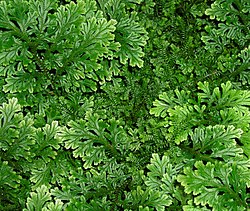
Picture of Selaginella
- Source
- Wikipedia/Commons
- Credit
- L. Fdez.
- Licence
- CC BY-SA 2.1 es
- Commercial use
- the licence allows it
3D model
- Source
- Sketchfab
- Credit
- stephenandrewmalcolm
- Licence
- CC Attribution
- Commercial use
- cannot be read from the licence given — check the record
Smithsonian Open Access and MorphoSource were not reached for this taxon, so this list is what the others held rather than everything there is.
The description on this site
- Source
- Wikipedia, “Selaginella”
- Licence
- CC BY-SA 4.0
This is what the site found, which is not the same as what exists.
Keep going
What may have been alongside itSelaginellaceae through timeFormations of the MioceneThe world it lived on
Occurrence data from the Paleobiology Database, CC BY 4.0. Beauvois 1804