Hydrozoa
Hydrozoa, also called hydroids, are a taxonomic class of individually very small, predatory animals, some solitary and some colonial, most of which inhabit saline water. The colonies of the colonial species can be large, and in some cases the specialized individual animals cannot survive outside the colony. A few genera within this class live in freshwater habitats. Hydrozoans are related to jellyfish and corals, which also belong to the phylum Cnidaria.

Ernst Haeckel · Public Domain · via Wikipedia/Commons. May be a photograph of a specimen, or an artist’s reconstruction — an interpretation of a skeleton, since colour and soft tissue are almost never preserved.
On record
Recorded, not inferred- Sits inside
- MedusozoaPBDB
- Diet
- carnivore, suspension feederPBDB
- Life habit
- epifaunalPBDB
- Motility
- stationary, attachedPBDB
- Vision
- blindPBDB
Time the record covers
At least 515 million years on record.
The record covers at least 516 Mya to 11.7 ka. No occurrence read is dated outside 521 Mya to 0 Mya.
777 occurrences of Hydrozoa on record, most of them in the Late Triassic. The Paleobiology Database records this as a living group. Bar height is expected occurrences, not a count: each fossil is spread across the span it is dated to, so a tall narrow bar means tight dating and a low wide one means loose.
When
777 occurrences- Cambrian2%
- Ordovician2%
- Silurian2%
- Devonian4%
- Carboniferous3%
- Permian15%
- Early Triassic1%
- Middle Triassic11%
- Late Triassic28%
- Early Jurassic1%
- Middle Jurassic2%
- Late Jurassic6%
- Early Cretaceous2%
- Late Cretaceous1%
- Paleocene1%
- Eocene3%
- Oligocene2%
- Miocene3%
- Pliocene1%
- Pleistocene6%
- Holocene3%
These are dates about fossils, not the animal: the record can only begin after it arose and end before it died out, so either end may reach further. Shares are expected occurrences: a fossil dated to a span is counted partly in each period it straddles. More on what this infers.
Found in
206 formations
- Anshun Formation41
- Changxing Formation22
- Luning Formation21
- Tataouine Formation12
- Martin Bridge Formation11
- Nayband Formation10
Loading coastlines…
The named rock units Hydrozoa has been recovered from, largest first. Drawn where the rock is now, not where it formed. 182 further formations hold fewer occurrences each and are not listed. 289 occurrences have no formation on record, which is common for older literature.
Hydrozoa and its relatives
Late TriassicWhere Hydrozoa and its relatives were recorded in the Late Triassic.
Found in the same rock
3,117 taxa- Tubiphytes104 sites
- Bryozoa38 sites
- Ophthalmidium38 sites
- Gastropoda35 sites
- Shamovella obscura33 sites
- Ostracoda31 sites
- Bivalvia30 sites
- Brachiopoda26 sites
- Crinoidea25 sites
- Colospongia24 sites
- Bacinella23 sites
- Peronidella23 sites
- Radiomura cautica23 sites
- Retiophyllia23 sites
- Serpulidae21 sites
- Baccanella floriformis20 sites
- Cayeuxia20 sites
- Solenopora20 sites
- Echinodermata19 sites
- Scleractinia19 sites
- Spongiomorpha19 sites
- Amblysiphonella18 sites
- Echinoidea18 sites
- Porifera17 sites
The Paleobiology Database records 512 sites for Hydrozoa, and this reads 240 of them. The number is how many of those sites it was catalogued from too. The 24 sharing the most are listed.
This is not a list of everything alive at the time. It is only what has come out of the same ground as this animal and been written down.
Entered from
357 references- Recovery dynamics of foraminifers and algae following the Permian-Triassic extinction in Qingyan, South China46
- Paleoecology, structure, and distribution of Triassic coral buildups in western North America43
- Map and table describing fossil collections and related samples in the Ketchikan and Prince Rupert Quadrangles, southeastern Alaska21
- Palökologie benthischer Faunengemeinschaften und Taxonomie der Bivalven im Jura von Südtunesien14
- Compositional characteristics and paleoenvironmental significance of Changhsingian (Late Permian) sponge reefs in South China13
- Upper Triassic marine invertebrate faunas of North America11
- Review of the fossil Stylasteridae (Cnidaria: Hydrozoa) from the New Zealand region10
- Riffbiotope im Karn und Nor (Obertrias) der Tethys: Entwicklung, Einschnitte und Diversitätsmuster [Reef biotopes of the Carnian and Norian (Upper Triassic) in the Thetys: Development, incisions and diversitypatterns]10
- Late Pennsylvanian to Middle Permian revised algal and foraminiferan biostratigraphy and palaeobiogeography of the Lycian Nappes (SW Turkey): Palaeogeographic implications9
- The reefal margin and slope of a Middle Triassic carbonate platform: the Latemar (Dolomites, Italy)9
- Paleoecology of some Leonardian patch reefs in the Glass Mountains, Texas9
- Postglacial Early Permian (late Sakmarian–early Artinskian) shallow-marine carbonate deposition along a 2000 km transect from Timor to west Australia8
Each of the 777 occurrences read was entered from one of these publications, ordered by how many each accounts for. This is not a search for papers mentioning the name. 345 further references are not listed. Entries link to doi.org where the Paleobiology Database holds an identifier, and to its own record where it does not. Relayed as the Paleobiology Database holds them, not checked against what they resolve to.
Media and terms
Media content2

Picture of Hydrozoa
- Source
- Wikipedia/Commons
- Credit
- Ernst Haeckel
- Licence
- Public Domain
- Commercial use
- the licence allows it
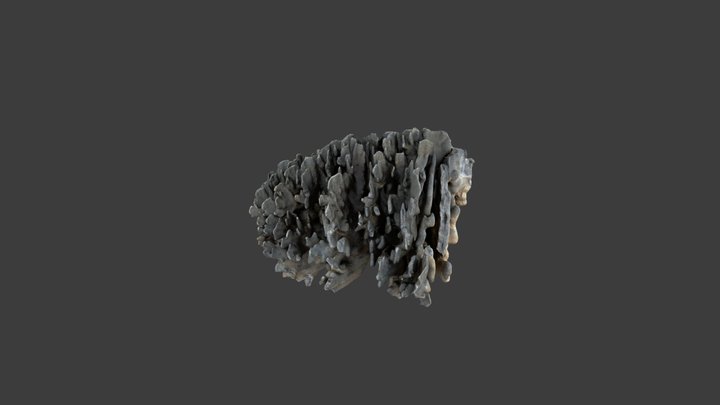
3D model
- Source
- Sketchfab
- Licence
- CC0 Public Domain
- Commercial use
- the licence allows it
Smithsonian Open Access was not reached for this taxon, so this list is what the others held rather than everything there is.
The description on this site
- Source
- Wikipedia, “Hydrozoa”
- Licence
- CC BY-SA 4.0
This is what the site found, which is not the same as what exists.
Keep going
What may have been alongside itMedusozoa through timeFormations of the Late TriassicThe world it lived on
Occurrence data from the Paleobiology Database, CC BY 4.0. Owen 1843