Scleractinia
Scleractinia, also called stony corals or hard corals, are marine animals in the phylum Cnidaria that build themselves a hard skeleton. The individual animals are known as polyps and have a cylindrical body crowned by an oral disc in which a mouth is fringed with tentacles. Although some species are solitary, most are colonial. The founding polyp settles and starts to secrete calcium carbonate to protect its soft body. Solitary corals can be as much as 25 cm (10 in) across but in colonial species the polyps are usually only a few millimetres in diameter. These polyps reproduce asexually by budding, but remain attached to each other, forming a multi-polyp colony of clones with a common skeleton, which may be up to several metres in diameter or height according to species.

Ernst Haeckel · Public Domain · via Wikipedia/Commons. May be a photograph of a specimen, or an artist’s reconstruction — an interpretation of a skeleton, since colour and soft tissue are almost never preserved.
On record
Recorded, not inferred- Also called
- stony coralPBDB
- Sits inside
- HexacoralliaPBDB
- Diet
- microcarnivore, photosymbioticPBDB
- Life habit
- intermediate-level epifaunal, colonial, clonalPBDB
- Motility
- stationary, attachedPBDB
- Vision
- blindPBDB, for Anthozoa
- Environment
- marinePBDB
Time the record covers
At least 259 million years on record.
The record covers at least 259.857 Mya to 129 ka. No occurrence read is dated outside 266.9 Mya to 0 Mya.
12,000+ occurrences of Scleractinia on record. The Paleobiology Database records this as a living group. Bar height is expected occurrences, not a count: each fossil is spread across the span it is dated to, so a tall narrow bar means tight dating and a low wide one means loose.
When
12,000 occurrences read- Permianunder 1%
- Middle Triassicunder 1%
- Late Triassic11%
- Early Jurassic3%
- Middle Jurassic7%
- Late Jurassic25%
- Early Cretaceous9%
- Late Cretaceous8%
- Paleocene2%
- Eocene5%
- Oligocene4%
- Miocene10%
- Pliocene6%
- Pleistocene7%
- Holoceneunder 1%
These are dates about fossils, not the animal: the record can only begin after it arose and end before it died out, so either end may reach further. Shares are expected occurrences: a fossil dated to a span is counted partly in each period it straddles. The read hit its cap, so every figure above is a floor and the shares are of the occurrences read. More on what this infers.
Found in
at least 435 formations
- Seroe Domi Formation231
- Korallenoolith Formation180
- Cassian Formation · Wegen Group162
- Zlambach Formation143
- Stramberk Limestone Formation142
- Cercado Formation117
Loading coastlines…
The named rock units Scleractinia has been recovered from, largest first. Drawn where the rock is now, not where it formed. The read hit its cap, so each count is a floor. 411 further formations hold fewer occurrences each and are not listed. 5,299 occurrences have no formation on record, which is common for older literature.
Found in the same rock
1,975 taxa- Turritella91 sites
- Micrabacia79 sites
- Nuculana79 sites
- Vertebrata68 sites
- Anomia argentaria62 sites
- Cubitostrea tecticosta60 sites
- Corbula58 sites
- Crenella serica57 sites
- Cymbophora57 sites
- Striarca56 sites
- Syncyclonema55 sites
- Cadulus51 sites
- Crassatella vadosa49 sites
- Caestocorbula (Caestocorbula) crassaplica48 sites
- Dentalium48 sites
- Hamulus onyx48 sites
- Euspira rectilabrum47 sites
- Serpula46 sites
- Bryozoa45 sites
- Cyprimeria45 sites
- Turritella bilira44 sites
- Camptonectes bubonis42 sites
- Cyclorisma41 sites
- Linearis41 sites
The Paleobiology Database records at least 457 sites for Scleractinia, and this reads 240 of them. Of that, one read hit the database's own return limit, so every count below is a floor rather than a total. The number is how many of those sites it was catalogued from too. The 24 sharing the most are listed.
This is not a list of everything alive at the time. It is only what has come out of the same ground as this animal and been written down.
Entered from
at least 565 references- Mesozoic corals of Slovenia339
- Origination preceding extinction during late Cenozoic turnover of Caribbean reefs307
- Die oberjurassische Korallenfazies von Algarve (Südportugal) [The Upper Jurassic coral facies of Algarve (Southern Portugal)]247
- Geological and geographical distribution of reef-corals in Japan228
- Les Madreporaires du Jurassic superieur de la bordure des Monts de Sainte-Croix, Pologne [Upper Jurassic Scleractinia from the Holy Cross Mountains, Poland]206
- Jurassic corals of east-central Iran204
- Ecological stratification in the Pleistocene coral reefs of the Kenya coast184
- Les scléractiniaires du Jurassique supérieur de la Dobrogea centrale, Roumanie183
- Triassic Corals of the Zlambach Beds, Northern Calcareous Alps, Austria181
- Beiträge zur Korallenfauna des Stramberger Tithon174
- Coraux crétacés de Bohême (Cénomanien supérieur; Turonien inférieur - Coniacien inférieur), République tchèque159
- Carbonate deposition in accretionary prism settings: Early Miocene coral limestones and corals of the Makran Mountain Range in southern Iran150
Each of the 12,000 occurrences read was entered from one of these publications, ordered by how many each accounts for. This is not a search for papers mentioning the name. That read hit its cap, so each count is a floor. 553 further references are not listed. Entries link to doi.org where the Paleobiology Database holds an identifier, and to its own record where it does not. Relayed as the Paleobiology Database holds them, not checked against what they resolve to.
Media and terms
Media content3
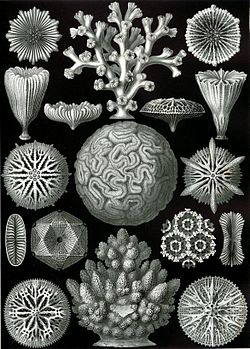
Picture of Scleractinia
- Source
- Wikipedia/Commons
- Credit
- Ernst Haeckel
- Licence
- Public Domain
- Commercial use
- the licence allows it
Photogrammetry
- Source
- MorphoSource
- Licence
- not stated by the source
- Commercial use
- cannot be read from the licence given — check the record
- Specimen
- scleractinia indet. · MST:PALEO:MST-SP-2474
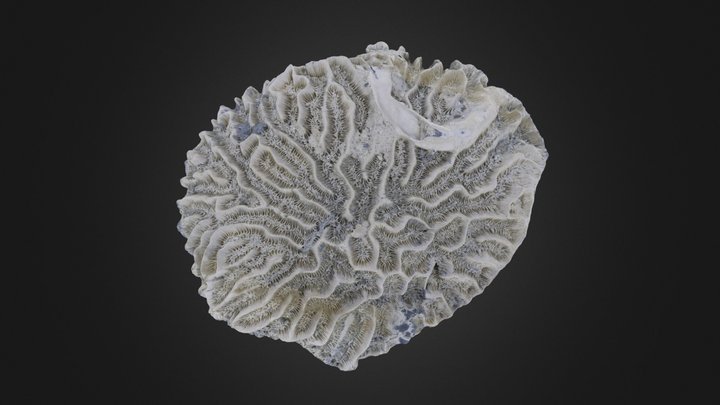
3D model
- Source
- Sketchfab
- Licence
- CC0 Public Domain
- Commercial use
- the licence allows it
The description on this site
- Licence
- CC BY-SA 4.0
This is what the site found, which is not the same as what exists.
Keep going
What may have been alongside itHexacorallia through timeThe world it lived on
Occurrence data from the Paleobiology Database, CC BY 4.0. Bourne 1900