Dytiscidae
The Dytiscidae, from the Ancient Greek word δυτικός (dutikós), meaning "able to dive", are the predaceous diving beetles, a family of water beetles. They occur in virtually any freshwater habitat around the world, but a few species live in terrestrial habitats such as among leaf litter. The "diving" in their common name comes from their cycling between underwater and the surface to replenish oxygen like a diver. The adults of most are between 1 and 2.5 cm (0.4–1.0 in) long, though much variation is seen between species. The European Dytiscus latissimus and Brazilian Bifurcitus ducalis are the largest, reaching up to 4.5 and 4.75 cm respectively, although the latter is listed as extinct by the IUCN. In contrast, the smallest is likely the Australian Limbodessus atypicali of subterranean waters, which only is about 0.9 mm (0.035 in) long. Most are dark brown, blackish, or dark olive in color with golden highlights in some subfamilies. The larvae are commonly known as water tigers due to their voracious appetite. They have short, but sharp mandibles, and immediately upon biting, they deliver digestive enzymes into prey to suck their liquefied remains. The family includes more than 4,000 described species in numerous genera. The oldest of the species is †Palaeodytes gutta, from the Late Jurassic according to Karabastau Formation fossils.

This image is created by user Wim Rubers at Waarneming.nl , a source of nature observations in the Netherlands. · CC BY 3.0 · via Wikipedia/Commons. May be a photograph of a specimen, or an artist’s reconstruction — an interpretation of a skeleton, since colour and soft tissue are almost never preserved.
On record
Recorded, not inferred- Also called
- predaceous diving beetlePBDB
- Sits inside
- AdephagaPBDB
- Motility
- actively mobilePBDB, for Arthropoda
- Environment
- terrestrialPBDB, for Insecta
Time the record covers
At least 174 million years on record.
The record covers at least 174.7 Mya to 129 ka. No occurrence read is dated outside 184.2 Mya to 0 Mya.
375 occurrences of Dytiscidae on record, most of them in the Pleistocene. The Paleobiology Database records this as a living group. Bar height is expected occurrences, not a count: each fossil is spread across the span it is dated to, so a tall narrow bar means tight dating and a low wide one means loose.
When
375 occurrences- Early Jurassicunder 1%
- Late Jurassicunder 1%
- Early Cretaceous5%
- Late Cretaceousunder 1%
- Paleoceneunder 1%
- Eocene10%
- Oligocene5%
- Miocene18%
- Pliocene2%
- Pleistocene59%
These are dates about fossils, not the animal: the record can only begin after it arose and end before it died out, so either end may reach further. Shares are expected occurrences: a fossil dated to a span is counted partly in each period it straddles. More on what this infers.
Found in
43 formations
- Kap København Formation56
- Barstow Formation22
- Highbury Silts and Sands Formation16
- Yixian Formation · Jehol Group12
- Upper Freshwater-Molasse Formation11
- Florissant Formation11
Loading coastlines…
The named rock units Dytiscidae has been recovered from, largest first. Drawn where the rock is now, not where it formed. 19 further formations hold fewer occurrences each and are not listed. 128 occurrences have no formation on record, which is common for older literature.
Dytiscidae and its relatives
PleistoceneWhere Dytiscidae and its relatives were recorded in the Pleistocene.
Found in the same rock
5,087 taxa- Stenus38 sites
- Aleocharinae32 sites
- Bembidion29 sites
- Aphodius27 sites
- Carabidae27 sites
- Anostraca22 sites
- Schistomerus californense21 sites
- Bledius20 sites
- Dasyhelea antiqua20 sites
- Helophorus20 sites
- Curculionidae18 sites
- Staphylinidae18 sites
- Agabus17 sites
- Pterostichus (Cryobius)17 sites
- Chrysomelidae16 sites
- Hydroporus16 sites
- Coleoptera15 sites
- Dyschirius15 sites
- Ilybius14 sites
- Hydraena13 sites
- Hydrophilidae13 sites
- Pterostichus13 sites
- Scydmaeninae13 sites
- Thripidae13 sites
The Paleobiology Database records 178 sites for Dytiscidae, and this reads all of them. Of that, one read hit the database's own return limit, so every count below is a floor rather than a total. The number is how many of those sites it was catalogued from too. The 24 sharing the most are listed.
This is not a list of everything alive at the time. It is only what has come out of the same ground as this animal and been written down.
Entered from
90 references- Palaeoentomology of the Kap København Formation, a Plio-Pleistocene sequence in Peary Land, North Greenland56
- Pleistoceńskie owady z Borysławia26
- A Late Pleistocene fauna and flora from Upton Warren, Worcestershire20
- Miocene arthropods from the Mojave desert, California20
- Late Cenozoic insects of northern Eurasia18
- Marine Isotope Stage 9 environments of fluvial deposits at Hackney, north London, UK16
- Neue fossile Schwimmkäfer aus dem Tertiär Europas und Westsibiriens (Coleoptera: Dytiscidae)14
- The paleoenvironment of the Olympia beds based on fossil beetles from Discovery Park, Seattle, Washington, U.S.A.9
- Palaeoenvironmental interpretation of Middle and Late Wisconsinan fossil coleopteran assemblages from western Olympic Peninsula, Washington, USA9
- Canadian fossil insects, 4. Additions to the coleopterous fauna of the interglacial clays of the Toronto district9
- Beiträge zur Insektenfauna Oeningens: Coleoptera. Geodephagen, Hydrocanthariden, Gyriniden, Brachelytren, Clavicornen, Lamellicornen und Buprestiden9
- The beetle (Coleoptera) fauna of the Insect Limestone (late Eocene), Isle of Wight, southern England8
Each of the 375 occurrences read was entered from one of these publications, ordered by how many each accounts for. This is not a search for papers mentioning the name. 78 further references are not listed. Entries link to doi.org where the Paleobiology Database holds an identifier, and to its own record where it does not. Relayed as the Paleobiology Database holds them, not checked against what they resolve to.
Media and terms
Media content2

Picture of Dytiscidae
- Source
- Wikipedia/Commons
- Credit
- This image is created by user Wim Rubers at Waarneming.nl , a source of nature observations in the Netherlands.
- Licence
- CC BY 3.0
- Commercial use
- the licence allows it
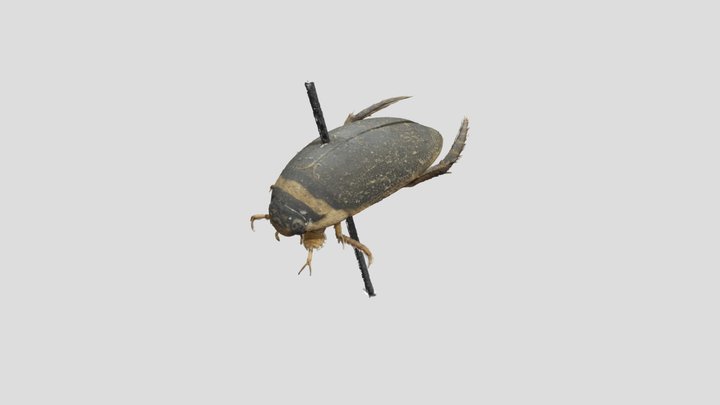
3D model
- Source
- Sketchfab
- Credit
- lcr-digitalservices
- Licence
- CC Attribution-NonCommercial
- Commercial use
- the licence does not allow it
Smithsonian Open Access and MorphoSource were not reached for this taxon, so this list is what the others held rather than everything there is.
The description on this site
- Source
- Wikipedia, “Dytiscidae”
- Licence
- CC BY-SA 4.0
This is what the site found, which is not the same as what exists.
Keep going
What may have been alongside itAdephaga through timeFormations of the PleistoceneThe world it lived on
Occurrence data from the Paleobiology Database, CC BY 4.0. Leach 1815