Calcarea
The calcareous sponges or calcereans are sponges that make up the class Calcarea, characterized by spicules made of calcium carbonate in the form of high-magnesium calcite or aragonite. While the spicules in most species are triradiate, some species may possess two- or four-pointed spicules. Unlike the far more common siliceous sponges, calcareans lack microscleres, tiny spicules which reinforce the flesh. In addition, their spicules develop from the outside-in, mineralizing within a hollow organic sheath.

Ernst Haeckel · Public Domain · via Wikipedia/Commons. May be a photograph of a specimen, or an artist’s reconstruction — an interpretation of a skeleton, since colour and soft tissue are almost never preserved.
On record
Recorded, not inferred- Also called
- calcareous spongePBDB
- Sits inside
- PoriferaPBDB
- Diet
- suspension feederPBDB
- Life habit
- intermediate-level epifaunalPBDB
- Motility
- stationary, attachedPBDB
- Vision
- blindPBDB
Time the record covers
At least 513 million years on record.
The record covers at least 514.5 Mya to 774 ka. No occurrence read is dated outside 521 Mya to 11.7 ka.
827 occurrences of Calcarea on record, most of them in the Late Jurassic. The Paleobiology Database records this as a living group. Bar height is expected occurrences, not a count: each fossil is spread across the span it is dated to, so a tall narrow bar means tight dating and a low wide one means loose.
When
827 occurrences- Cambrianunder 1%
- Ordovicianunder 1%
- Permian8%
- Middle Triassic2%
- Late Triassic17%
- Early Jurassicunder 1%
- Middle Jurassic9%
- Late Jurassic32%
- Early Cretaceous17%
- Late Cretaceous10%
- Paleocene1%
- Eocene2%
- Oligoceneunder 1%
- Mioceneunder 1%
- Pleistoceneunder 1%
These are dates about fossils, not the animal: the record can only begin after it arose and end before it died out, so either end may reach further. Shares are expected occurrences: a fossil dated to a span is counted partly in each period it straddles. More on what this infers.
Found in
129 formations
- Cassian Formation47
- Caillasses de la Basse Ecarde Formation17
- Sandgate Formation · Lower Greensand Group16
- Changxing Formation15
- Maokou Formation15
- Alcobaça Formation14
Loading coastlines…
The named rock units Calcarea has been recovered from, largest first. Drawn where the rock is now, not where it formed. 105 further formations hold fewer occurrences each and are not listed. 397 occurrences have no formation on record, which is common for older literature.
Calcarea and its relatives
Late JurassicWhere Calcarea and its relatives were recorded in the Late Jurassic.
Found in the same rock
3,599 taxa- Peronidella67 sites
- Bryozoa46 sites
- Colospongia40 sites
- Tubiphytes40 sites
- Gastropoda35 sites
- Bivalvia32 sites
- Shamovella obscura32 sites
- Endostoma30 sites
- Brachiopoda24 sites
- Thamnasteria23 sites
- Echinoidea22 sites
- Ophthalmidium22 sites
- Ostracoda22 sites
- Serpula22 sites
- Crinoidea21 sites
- Solenopora21 sites
- Cayeuxia20 sites
- Radiomura cautica20 sites
- Amblysiphonella18 sites
- Serpulidae18 sites
- Montlivaltia17 sites
- Echinodermata16 sites
- Archaeolithoporella15 sites
- Cidaris15 sites
The Paleobiology Database records 338 sites for Calcarea, and this reads 240 of them. The number is how many of those sites it was catalogued from too. The 24 sharing the most are listed.
This is not a list of everything alive at the time. It is only what has come out of the same ground as this animal and been written down.
Entered from
196 references- Catalogue of the fossil sponges in the Geological Department of the British Museum (Natural History)129
- Die Kalkschwämme der Unterordnung Inozoa Steinmann aus dem Oberen Jura von Württemberg (SW-Deutschland) [The Calcispongia of the suborder Inozoa Steinmann from the Upper Jurassic of Württemberg (SW Germany)]67
- Calcispongea from the Jurassic of Poland50
- The stratigraphical palaeontology of the Lower Greensand24
- Ecology of sponge reefs from the Upper Bathonian of Normandy17
- Die Typus-Profile des Valanginien und Hauterivien17
- Jura Vaudois et Neuchatelois16
- Contribution à l'étude du Néocomien des environs de Gray15
- Porosphaera globularis (Phillips, 1829) (Porifera, Calcarea) in the Campanian (Upper Cretaceous) of extra-Carpathian Poland14
- Sphinctozoan and Inozoan Sponges from the Permian Reefs of South China14
- Palaeoecology of coralline sponge-coral meadows from the Upper Jurassic of Portugal14
- Biostratinomy and palaeoecology of the Cassian Formation (Triassic) of the Southern Alps14
Each of the 827 occurrences read was entered from one of these publications, ordered by how many each accounts for. This is not a search for papers mentioning the name. 184 further references are not listed. Entries link to doi.org where the Paleobiology Database holds an identifier, and to its own record where it does not. Relayed as the Paleobiology Database holds them, not checked against what they resolve to.
Media and terms
Media content3
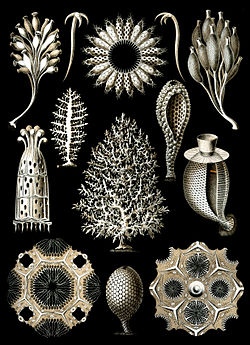
Picture of Calcarea
- Source
- Wikipedia/Commons
- Credit
- Ernst Haeckel
- Licence
- Public Domain
- Commercial use
- the licence allows it
CT scan
- Source
- MorphoSource
- Licence
- In Copyright
- Commercial use
- cannot be read from the licence given — check the record
- Specimen
- Macoma calcarea · fmnh:invertebrate zoology:71115
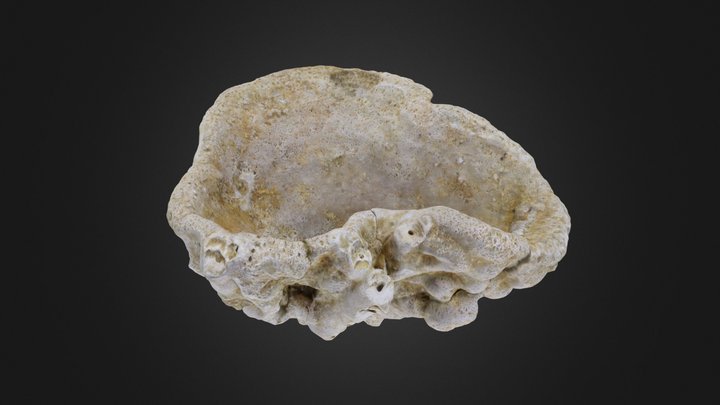
3D model
- Source
- Sketchfab
- Licence
- CC0 Public Domain
- Commercial use
- the licence allows it
The description on this site
- Licence
- CC BY-SA 4.0
This is what the site found, which is not the same as what exists.
Keep going
What may have been alongside itPorifera through timeFormations of the Late JurassicThe world it lived on
Occurrence data from the Paleobiology Database, CC BY 4.0. Bowerbank 1864