Batoidea
No picture of Batoidea was found. Wikidata and iDigBio were searched and had none. Wikipedia has a picture filed under this name, but nothing tied it to Batoidea itself, so it was not used. Smithsonian Open Access did not answer, so this is what the others held rather than everything there is. GBIF was asked, and what came back is not recorded: nothing, or a picture this site could not tie to Batoidea, or no answer at all. This entry cannot say which.
On record
Recorded, not inferred- Also called
- rayPBDB
- Sits inside
- NeoselachiiPBDB
- Diet
- carnivorePBDB
- Life habit
- nektobenthicPBDB
- Motility
- actively mobilePBDB
Time the record covers
At least 139 million years on record.
The record covers at least 143.1 Mya to 3.6 Mya. No occurrence read is dated outside 149.2 Mya to 2.58 Mya.
57 occurrences of Batoidea on record, most of them in the Late Cretaceous. The Paleobiology Database records this as a living group, and the chart stops with its fossils rather than at the present. Bar height is expected occurrences, not a count: each fossil is spread across the span it is dated to, so a tall narrow bar means tight dating and a low wide one means loose.
When
57 occurrences- Late Jurassic2%
- Early Cretaceous11%
- Late Cretaceous54%
- Paleocene11%
- Eocene10%
- Miocene10%
- Pliocene2%
These are dates about fossils, not the animal: the record can only begin after it arose and end before it died out, so either end may reach further. Shares are expected occurrences: a fossil dated to a span is counted partly in each period it straddles. More on what this infers.
Found in
38 formations
- Durlston Formation · Purbeck Group4
- Hell Creek Formation · Montana Group3
- Wahweap Formation3
- Nanafalia Formation · Wilcox Group3
- Masuk Formation3
- La Posa Formation · Tremp Group2
Loading coastlines…
The named rock units Batoidea has been recovered from, largest first. Drawn where the rock is now, not where it formed. 14 further formations hold fewer occurrences each and are not listed. 4 occurrences have no formation on record, which is common for older literature.
Batoidea and its relatives
Late CretaceousWhere Batoidea and its relatives were recorded in the Late Cretaceous.
Found in the same rock
966 taxa- Crocodylia14 sites
- Teleostei11 sites
- Testudines11 sites
- Osteichthyes10 sites
- Selachii10 sites
- Hadrosauridae9 sites
- Lepisosteidae9 sites
- Anura7 sites
- Chondrichthyes7 sites
- Trionychidae7 sites
- Albanerpetontidae6 sites
- Amiidae6 sites
- Urodela6 sites
- Coriops5 sites
- Hybodus5 sites
- Reptilia5 sites
- Theropoda5 sites
- Venericardia5 sites
- Acanthomorphata4 sites
- Belemnobatis variabilis4 sites
- Dinosauria4 sites
- Egertonodus basanus4 sites
- Euteleostei4 sites
- Hiodontidae4 sites
The Paleobiology Database records 53 sites for Batoidea, and this reads all of them. The number is how many of those sites it was catalogued from too. The 24 sharing the most are listed.
This is not a list of everything alive at the time. It is only what has come out of the same ground as this animal and been written down.
Entered from
40 references- Elasmobranchs from Upper Cretaceous freshwater facies in southern Utah5
- Selachian faunas from the lowermost Purbeck Group of Dorset, southern England4
- Stratigraphic Distribution of Paleocene and Eocene Fossils in the Eastern Gulf Coast Region4
- Stratigraphic revision of Campanian (Upper Cretaceous) rocks in the Henry Basin, Utah3
- Euselachian diversity through the uppermost Cretaceous Hell Creek Formation of Garfield County, Montana, USA, with implications for the Cretaceous-Paleogene mass extinction in freshwater environments2
- Los dinosaurios terópodos del Cretácico Superior de la Cuenca de Tremp (Pirineos Sur-Centrales, Lleida)2
- Découverte de nouvelles faunes de sélaciens (Neoselachii) dans les phosphates maastrichtiens de la Mer Rouge, Egypte2
- Paleoecology of the Delaware Valley region. Part II: Cretaceous to Quartenary2
- Faunal Horizons of the Barton Beds in Hampshire2
- Bawitius, gen. nov., a giant polypterid (Osteichthyes, Actinopterygii) from the Upper Cretaceous Bahariya Formation of Egypt1
- The structure of Late Cretaceous (late Campanian) nonmarine aquatic communities: a guild analysis of two vertebrate microfossil localities in Dinosaur Provincial Park, Alberta, Canada1
- Fossil Vertebrate Collections1
Each of the 57 occurrences read was entered from one of these publications, ordered by how many each accounts for. This is not a search for papers mentioning the name. 28 further references are not listed. Entries link to doi.org where the Paleobiology Database holds an identifier, and to its own record where it does not. Relayed as the Paleobiology Database holds them, not checked against what they resolve to.
Media and terms
Media content1
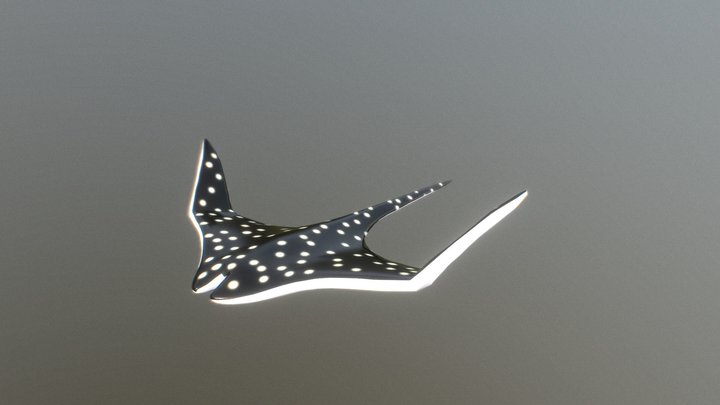
3D model
- Source
- Sketchfab
- Credit
- deadphoenixx
- Licence
- CC Attribution
- Commercial use
- cannot be read from the licence given — check the record
No picture of Batoidea was found. Wikidata and iDigBio were searched and had none.
Wikipedia has a picture filed under this name, but nothing tied it to Batoidea itself, so it was not used.
Smithsonian Open Access did not answer, so this is what the others held rather than everything there is.
GBIF was asked, and what came back is not recorded: nothing, or a picture this site could not tie to Batoidea, or no answer at all. This entry cannot say which.
Smithsonian Open Access and MorphoSource were not reached for this taxon, so this list is what the others held rather than everything there is.
This is what the site found, which is not the same as what exists.
Keep going
What may have been alongside itNeoselachii through timeFormations of the Late CretaceousThe world it lived on
Occurrence data from the Paleobiology Database, CC BY 4.0.