Reptilia
Reptiles, as commonly defined, are tetrapod vertebrate animals with an ectothermic metabolism and amniotic development. Reptiles traditionally comprise four orders: Testudines (turtles), Crocodilia, Squamata and Rhynchocephalia (tuatara), with about 12,000 extant species listed in the Reptile Database. The study of the traditional reptile orders, customarily in combination with the study of modern amphibians, is called herpetology.

Stewart Nimmo · CC BY-SA 4.0 · via Wikipedia/Commons. May be a photograph of a specimen, or an artist’s reconstruction — an interpretation of a skeleton, since colour and soft tissue are almost never preserved.
On record
Recorded, not inferred- Also called
- reptilePBDB
- Sits inside
- SauropsidaPBDB
- Motility
- actively mobilePBDB, for Osteichthyes
- Environment
- terrestrialPBDB, for Amniota
Time the record covers
At least 316 million years on record.
The record covers at least 316.9 Mya to 11.7 ka. No occurrence read is dated outside 323.4 Mya to 0 Mya.
12,000+ occurrences of Reptilia on record. The Paleobiology Database records this as a living group. Bar height is expected occurrences, not a count: each fossil is spread across the span it is dated to, so a tall narrow bar means tight dating and a low wide one means loose.
When
12,000 occurrences read- Carboniferousunder 1%
- Permianunder 1%
- Early Triassicunder 1%
- Middle Triassicunder 1%
- Late Triassic3%
- Early Jurassic4%
- Middle Jurassic2%
- Late Jurassic7%
- Early Cretaceous11%
- Late Cretaceous37%
- Paleocene2%
- Eocene9%
- Oligoceneunder 1%
- Miocene9%
- Pliocene4%
- Pleistocene10%
- Holocene1%
These are dates about fossils, not the animal: the record can only begin after it arose and end before it died out, so either end may reach further. Shares are expected occurrences: a fossil dated to a span is counted partly in each period it straddles. The read hit its cap, so every figure above is a floor and the shares are of the occurrences read. More on what this infers.
Found in
at least 842 formations
- Hell Creek Formation · Montana Group1,034
- Morrison Formation483
- Dinosaur Park Formation · Belly River Group397
- Oldman Formation · Belly River Group362
- Willwood Formation332
- Lance Formation · Montana Group304
Loading coastlines…
The named rock units Reptilia has been recovered from, largest first. Drawn where the rock is now, not where it formed. The read hit its cap, so each count is a floor. 818 further formations hold fewer occurrences each and are not listed. 2,128 occurrences have no formation on record, which is common for older literature.
Found in the same rock
2,363 taxa- Osteichthyes19 sites
- Clarias17 sites
- Aves16 sites
- Bovidae15 sites
- Crocodylus15 sites
- Equus14 sites
- Trionyx14 sites
- Geochelone13 sites
- Dinosauria12 sites
- Euthecodon brumpti12 sites
- Hipparion12 sites
- Bos taurus11 sites
- Trionychidae11 sites
- Crocodylus niloticus10 sites
- Mammalia10 sites
- Polypterus10 sites
- Struthio camelus10 sites
- Tatera10 sites
- Alcelaphus buselaphus9 sites
- Gazella9 sites
- Theropoda9 sites
- Tragelaphus strepsiceros9 sites
- Amphibia8 sites
- Crocodylia8 sites
The Paleobiology Database records at least 722 sites for Reptilia, and this reads 240 of them. The number is how many of those sites it was catalogued from too. The 24 sharing the most are listed.
This is not a list of everything alive at the time. It is only what has come out of the same ground as this animal and been written down.
Entered from
at least 2,730 references- Fossil Vertebrate Collections509
- Vertebrate biostratigraphy of the Hell Creek Formation in southwestern North Dakota and northwestern South Dakota440
- Vertebrate microsite assemblages (exclusive of mammals) from the Foremost and Oldman Formations of the Judith River Group (Campanian) of southeastern Alberta: an illustrated guide327
- Stratigraphy and mammalian paleontology of the McCullough Peaks, northern Bighorn Basin, Wyoming: Implications for biochronology, basin development, and community reorganization across the Paleocene-Eocene boundary294
- Paleontology of the Judith River Formation (Campanian) of Dinosaur National Park, Alberta, Canada: evidence from vertebrate microfossil locality201
- Stratigraphy and paleontology of the Cloverly Formation (Lower Cretaceous) of the Bighorn Basin area, Wyoming and Montana142
- Pleistocene vertebrate faunas of Hungary118
- Paleoecology of an estuarine, incised-valley fill in the Dinosaur Park Formation (Judith River Group, Upper Cretaceous) of southern Alberta, Canada111
- Synonymies and reidentifications of North American fossil vertebrates and so forth105
- Plio-Pleistocene fossil vertebrates of Monte Tuttavista (Orosei, Eastern Sardinia, Italy), an overview95
- A transitional Paleocene-Eocene reptile fauna from the Bighorn Basin, Wyoming80
- Fossil vertebrates from the Late Cretaceous Lance Formation, eastern Wyoming73
Each of the 12,000 occurrences read was entered from one of these publications, ordered by how many each accounts for. This is not a search for papers mentioning the name. That read hit its cap, so each count is a floor. 2,718 further references are not listed. Entries link to doi.org where the Paleobiology Database holds an identifier, and to its own record where it does not. Relayed as the Paleobiology Database holds them, not checked against what they resolve to.
Media and terms
Media content3

Picture of Reptilia
- Source
- Wikipedia/Commons
- Credit
- Stewart Nimmo
- Licence
- CC BY-SA 4.0
- Commercial use
- the licence allows it
CT scan
- Source
- MorphoSource
- Licence
- In Copyright
- Commercial use
- cannot be read from the licence given — check the record
- Specimen
- Reptilia indet. · AMNH:FARB:9543
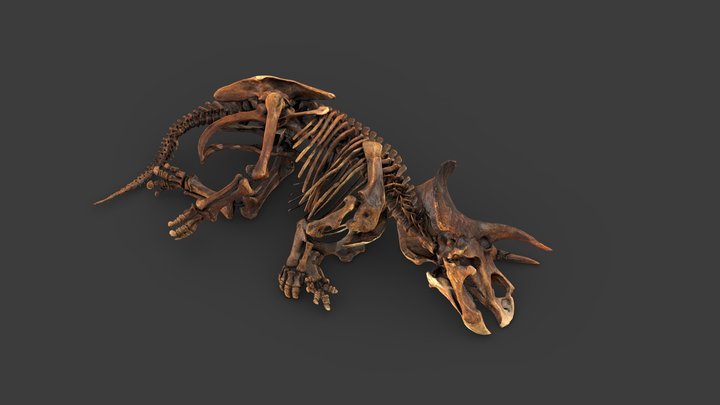
3D model
- Source
- Sketchfab
- Licence
- CC0 Public Domain
- Commercial use
- the licence allows it
Smithsonian Open Access was not reached for this taxon, so this list is what the others held rather than everything there is.
The description on this site
- Source
- Wikipedia, “Reptile”
- Licence
- CC BY-SA 4.0
This is what the site found, which is not the same as what exists.
Keep going
What may have been alongside itSauropsida through timeThe world it lived on
Occurrence data from the Paleobiology Database, CC BY 4.0. (Laurenti 1768)