Vulpes vulpes

ClaudiaTen · CC BY-SA 4.0 · via Wikidata/Commons. May be a photograph of a specimen, or an artist’s reconstruction — an interpretation of a skeleton, since colour and soft tissue are almost never preserved.
On record
Recorded, not inferred- Also called
- red foxPBDB
- Sits inside
- VulpesPBDB
- Diet
- carnivore, omnivorePBDB, for Vulpes
- Life habit
- ground dwellingPBDB, for Vulpes
- Motility
- actively mobilePBDB, for Osteichthyes
- Environment
- terrestrialPBDB, for Eutheria
Time the record covers
At least 1.7 million years on record.
The record covers at least 1.8 Mya to 11.7 ka. No occurrence read is dated outside 3.55 Mya to 0 Mya.
98 occurrences of Vulpes vulpes on record, most of them in the Pleistocene. The Paleobiology Database records this as a living group. Bar height is expected occurrences, not a count: each fossil is spread across the span it is dated to, so a tall narrow bar means tight dating and a low wide one means loose.
When
98 occurrences- Plioceneunder 1%
- Pleistocene85%
- Holocene15%
These are dates about fossils, not the animal: the record can only begin after it arose and end before it died out, so either end may reach further. Shares are expected occurrences: a fossil dated to a span is counted partly in each period it straddles. More on what this infers.
Found in
5 formations
- Unterer Travertin Formation2
- American Falls Lake Bed E Formation1
- Floral Formation1
- Forest Bed Formation1
- Shuler Formation1
Loading coastlines…
The named rock units Vulpes vulpes has been recovered from, largest first. Drawn where the rock is now, not where it formed. 92 occurrences have no formation on record, which is common for older literature.
Vulpes vulpes and its relatives
PleistoceneWhere Vulpes vulpes and its relatives were recorded in the Pleistocene.
Found in the same rock
1,348 taxa- Canis lupus39 sites
- Equus38 sites
- Microtus29 sites
- Sus scrofa26 sites
- Bos primigenius24 sites
- Cervus elaphus23 sites
- Lepus22 sites
- Cervus21 sites
- Ursus19 sites
- Ursus arctos19 sites
- Panthera leo17 sites
- Canis latrans16 sites
- Meles meles16 sites
- Panthera pardus16 sites
- Arvicola15 sites
- Capreolus capreolus15 sites
- Dama dama15 sites
- Aves13 sites
- Myodes13 sites
- Canis12 sites
- Crocidura12 sites
- Crocuta crocuta12 sites
- Alces alces11 sites
- Apodemus sylvaticus11 sites
The Paleobiology Database records 98 sites for Vulpes vulpes, and this reads all of them. The number is how many of those sites it was catalogued from too. The 24 sharing the most are listed.
This is not a list of everything alive at the time. It is only what has come out of the same ground as this animal and been written down.
Entered from
77 references- I giacimenti Quaternari di vertebrati fossili nell'Italia Nord-Orientale7
- Quaternary large mammals from the Apidima Caves (Lakonia, S. Peloponnese, Greece4
- A revision of the fossil Canidae (Mammalia of north-western Africa3
- A preliminary report on the Carnivora of Porcupine Cave, Park County, Colorado3
- Pleistocene vertebrate faunas of Hungary3
- Le gisement Pleistocene moyen et superieur d'Artenac (Saint-Mary, Charent): premier bilan interdisciplinaire2
- Quaternary vertebrates from Shiriya area, Shimokita Pininsula, northeastern Japan2
- Late Pleistocene vertebrates from Gunnison County, Colorado2
- Canids from the late Pleistocene of Utah2
- New microstratigraphic horizons in the vertebrate chronology of the Hungarian Pleistocene2
- Die jungpleistozänen Säugetierfaunen aus dem Travertingebiet von Taubach-Weimar-Ehringsdorf (The Early Plestocene mammalian fauna from the travetin-area of Taubach-Weimar-Ehringsdorf)2
- Geologic history, stratigraphy, and paleontology of SAM Cave, north-central New Mexico1
Each of the 98 occurrences read was entered from one of these publications, ordered by how many each accounts for. This is not a search for papers mentioning the name. 65 further references are not listed. Entries link to doi.org where the Paleobiology Database holds an identifier, and to its own record where it does not. Relayed as the Paleobiology Database holds them, not checked against what they resolve to.
Media and terms
Media content3
Picture of Vulpes vulpes
- Source
- Wikidata/Commons
- Credit
- ClaudiaTen
- Licence
- CC BY-SA 4.0
- Commercial use
- the licence allows it
Laser scan
- Source
- MorphoSource
- Licence
- In Copyright
- Commercial use
- cannot be read from the licence given — check the record
- Specimen
- Vulpes vulpes · NMV:Mammalogy:C25075
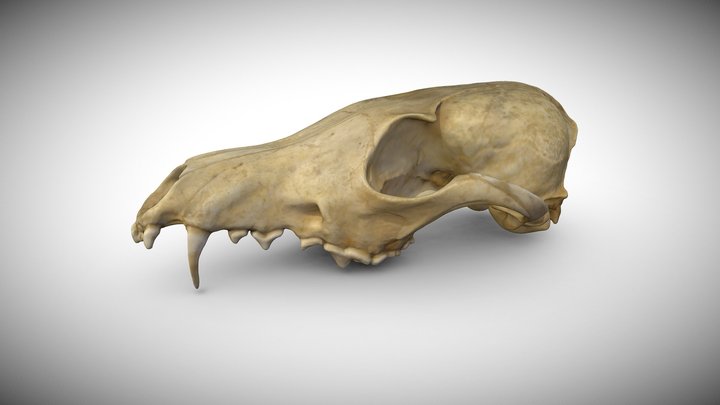
3D model
- Source
- Sketchfab
- Credit
- Turku City Museum
- Licence
- CC Attribution
- Commercial use
- cannot be read from the licence given — check the record
This is what the site found, which is not the same as what exists.
Keep going
What may have been alongside itVulpes through timeFormations of the PleistoceneThe world it lived on
Occurrence data from the Paleobiology Database, CC BY 4.0. (Linnaeus 1758)