Cervus
Cervus is a genus of deer that primarily are native to Eurasia, although one species occurs in northern Africa and another in North America. In addition to the species presently placed in this genus, it has included a whole range of other species now commonly placed in other genera. Additionally, the species-level taxonomy is in a state of flux.

Uncredited · Public Domain · via Wikipedia/Commons. May be a photograph of a specimen, or an artist’s reconstruction — an interpretation of a skeleton, since colour and soft tissue are almost never preserved.
On record
Recorded, not inferred- Sits inside
- CerviniPBDB
- Diet
- grazerPBDB
- Life habit
- ground dwellingPBDB, for Cervidae
- Motility
- actively mobilePBDB, for Osteichthyes
- Environment
- terrestrialPBDB, for Artiodactyla
Time the record covers
At least 7.2 million years on record.
The record covers at least 7.246 Mya to 11.7 ka. No occurrence read is dated outside 23.04 Mya to 0 Mya.
486 occurrences of Cervus on record, most of them in the Pleistocene. The Paleobiology Database records this as a living group. Bar height is expected occurrences, not a count: each fossil is spread across the span it is dated to, so a tall narrow bar means tight dating and a low wide one means loose.
When
486 occurrences- Miocene3%
- Pliocene10%
- Pleistocene80%
- Holocene7%
These are dates about fossils, not the animal: the record can only begin after it arose and end before it died out, so either end may reach further. Shares are expected occurrences: a fossil dated to a span is counted partly in each period it straddles. More on what this infers.
Found in
40 formations
- Cromer Forest Bed Formation10
- Pinjor Formation · Siwalik Group4
- Unterer Travertin Formation3
- Balta sands Formation3
- Gerakarou Formation · Premygdonian Group2
- Yuanmou Formation2
Loading coastlines…
The named rock units Cervus has been recovered from, largest first. Drawn where the rock is now, not where it formed. 16 further formations hold fewer occurrences each and are not listed. 422 occurrences have no formation on record, which is common for older literature.
Cervus and its relatives
PleistoceneWhere Cervus and its relatives were recorded in the Pleistocene.
Found in the same rock
1,398 taxa- Equus88 sites
- Microtus54 sites
- Canis lupus50 sites
- Stephanorhinus etruscus48 sites
- Sus scrofa45 sites
- Bison41 sites
- Mimomys38 sites
- Bovidae34 sites
- Mammuthus meridionalis34 sites
- Megaloceros34 sites
- Lepus33 sites
- Equus caballus32 sites
- Ursus32 sites
- Allohippus stenonis31 sites
- Capreolus capreolus30 sites
- Myodes30 sites
- Canis28 sites
- Hystrix28 sites
- Pliomys28 sites
- Sus28 sites
- Vulpes vulpes28 sites
- Castor fiber27 sites
- Microtus arvalis26 sites
- Allocricetus25 sites
The Paleobiology Database records 427 sites for Cervus, and this reads 240 of them. The number is how many of those sites it was catalogued from too. The 24 sharing the most are listed.
This is not a list of everything alive at the time. It is only what has come out of the same ground as this animal and been written down.
Entered from
234 references- I giacimenti Quaternari di vertebrati fossili nell'Italia Nord-Orientale26
- Mitochondrial DNA phylogeography of red deer (Cervus elaphus)21
- Mittelpleistozane Saugetierfaunen aus Mitteleuropa - der Versuch einer biostratigraphischen Zuordnung16
- Large mammal fossil occurrences and associated archaeological evidence in Pleistocene contexts of peninsular India and Sri Lanka14
- From tortoises to elephants: the impact of elephants in the broad spectrum diet at Bolomor Cave (MIS 9–5 Spain)13
- Pleistocene vertebrate faunas of Hungary11
- Summary on the fossil vertebrates in Taiwan (Formosa)11
- Catalogue of Tertiary Fossil Sites of the Land Mammals in the U.S.S.R.11
- The Pleistocene vertebrates of Michigan9
- The Vertebrata of the Forest Bed Series of Norfolk and Suffolk9
- The Latest Villfranchian faunas in Italy - the Pirro Nord local fauna (Apricena, Gargano)8
- Principaux gisements paleontologiques Francais du Pleistocene Moyen: Essai de classification8
Each of the 486 occurrences read was entered from one of these publications, ordered by how many each accounts for. This is not a search for papers mentioning the name. 222 further references are not listed. Entries link to doi.org where the Paleobiology Database holds an identifier, and to its own record where it does not. Relayed as the Paleobiology Database holds them, not checked against what they resolve to.
Media and terms
Media content3
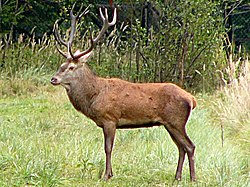
Picture of Cervus
- Source
- Wikipedia/Commons
- Credit
- nobody named on the record
- Licence
- Public Domain
- Commercial use
- the licence allows it
Photogrammetry
- Source
- MorphoSource
- Licence
- not stated by the source
- Commercial use
- cannot be read from the licence given — check the record
- Specimen
- Lucanus cervus · ypm:ent:626274
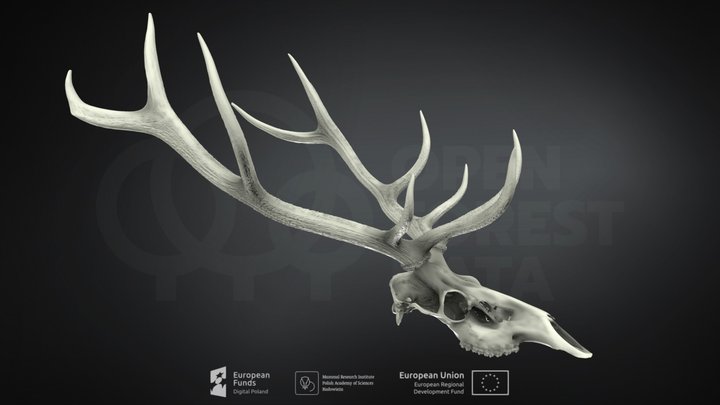
3D model
- Source
- Sketchfab
- Licence
- CC Attribution
- Commercial use
- cannot be read from the licence given — check the record
Smithsonian Open Access was not reached for this taxon, so this list is what the others held rather than everything there is.
The description on this site
- Source
- Wikipedia, “Cervus”
- Licence
- CC BY-SA 4.0
This is what the site found, which is not the same as what exists.
Keep going
What may have been alongside itCervini through timeFormations of the PleistoceneThe world it lived on
Occurrence data from the Paleobiology Database, CC BY 4.0. Linnaeus 1758