Panthera leo
The lion is a large cat of the genus Panthera, currently ranging only in Sub-Saharan Africa and India. It has a muscular, broad-chested body; a short, rounded head; round ears; and a dark, hairy tuft at the tip of its tail. It is sexually dimorphic; adult male lions are larger than females and have a prominent mane that extends from the head to the shoulders and chest.

Giles Laurent · CC BY-SA 4.0 · via Wikipedia/Commons. May be a photograph of a specimen, or an artist’s reconstruction — an interpretation of a skeleton, since colour and soft tissue are almost never preserved.
On record
Recorded, not inferred- Also called
- lionPBDB
- Sits inside
- PantheraPBDB
- Diet
- carnivorePBDB, for Panthera
- Life habit
- scansorialPBDB, for Felidae
- Motility
- actively mobilePBDB, for Osteichthyes
- Environment
- terrestrialPBDB, for Eutheria
- Mass
- 188 kgWikidata
Time the record covers
At least 1.7 million years on record.
The record covers at least 1.8 Mya to 11.7 ka. No occurrence read is dated outside 5.333 Mya to 0 Mya.
129 occurrences of Panthera leo on record, most of them in the Pleistocene. The Paleobiology Database records this as a living group. Bar height is expected occurrences, not a count: each fossil is spread across the span it is dated to, so a tall narrow bar means tight dating and a low wide one means loose.
When
129 occurrences- Pliocene1%
- Pleistocene92%
- Holocene7%
These are dates about fossils, not the animal: the record can only begin after it arose and end before it died out, so either end may reach further. Shares are expected occurrences: a fossil dated to a span is counted partly in each period it straddles. More on what this infers.
Found in
15 formations
- Kingsdown Formation2
- Koobi Fora Formation2
- Sterkfontein Formation · Transvaal Group2
- Swartkrans Formation · Transvaal Group2
- Babladanga Formation1
- Tacubaya Formation1
Loading coastlines…
The named rock units Panthera leo has been recovered from, largest first. Drawn where the rock is now, not where it formed. 110 occurrences have no formation on record, which is common for older literature.
Panthera leo and its relatives
PleistoceneWhere Panthera leo and its relatives were recorded in the Pleistocene.
Found in the same rock
1,394 taxa- Equus53 sites
- Canis lupus36 sites
- Crocuta crocuta26 sites
- Panthera pardus26 sites
- Hippopotamus amphibius25 sites
- Lepus25 sites
- Cervus24 sites
- Vulpes vulpes24 sites
- Microtus22 sites
- Bos primigenius21 sites
- Taurotragus oryx20 sites
- Aenocyon dirus19 sites
- Lupulella mesomelas19 sites
- Sus scrofa19 sites
- Cervus elaphus18 sites
- Ursus18 sites
- Bovidae17 sites
- Phacochoerus aethiopicus16 sites
- Canis15 sites
- Equus caballus15 sites
- Equus quagga burchelli15 sites
- Arvicola14 sites
- Bison14 sites
- Capreolus capreolus14 sites
The Paleobiology Database records 124 sites for Panthera leo, and this reads all of them. The number is how many of those sites it was catalogued from too. The 24 sharing the most are listed.
This is not a list of everything alive at the time. It is only what has come out of the same ground as this animal and been written down.
Entered from
95 references- I giacimenti Quaternari di vertebrati fossili nell'Italia Nord-Orientale8
- The fossil American lion (Panthera atrox) in South America: Palaeobiogeographical implications6
- Systematic position of the cave lion Panthera spelaea (Goldfuss) based on cranial and dentalc haracters4
- Le gisement Pleistocene moyen et superieur d'Artenac (Saint-Mary, Charent): premier bilan interdisciplinaire4
- Mittelpleistozane Saugetierfaunen aus Mitteleuropa - der Versuch einer biostratigraphischen Zuordnung4
- Quaternary vertebrate localities of Virginia and their avian and mammalian fauna3
- Late Pleistocene records of felids from Medicine Hat, Alberta, including the first Canadian record of the sabre-toothed cat Smilodon fatalis2
- A sabre-tooth felid from Coopers Cave (Gauteng, South Africa) and its implications for Megantereon (Felidae: Machairodontinae) taxonomy2
- Plio-Pleistocene mammalian biostratigraphy of Atlantic Morocco2
- Carnivores from the Early Pleistocene hominid-bearing Trinchera Dolina 6 (Sierra de Atapuerca, Spain)2
- Implications of Late Quaternary mammalian fauna from Lukenya Hill (South-Central Kenya) for paleoenvironmental change and faunal extinctions2
- Late Pleistocene hunter-gatherers at Ishango (eastern Zaire): the faunal evidence2
Each of the 129 occurrences read was entered from one of these publications, ordered by how many each accounts for. This is not a search for papers mentioning the name. 83 further references are not listed. Entries link to doi.org where the Paleobiology Database holds an identifier, and to its own record where it does not. Relayed as the Paleobiology Database holds them, not checked against what they resolve to.
Media and terms
Media content3

Picture of Panthera leo
- Source
- Wikipedia/Commons
- Credit
- Giles Laurent
- Licence
- CC BY-SA 4.0
- Commercial use
- the licence allows it

CT scan
- Source
- MorphoSource
- Credit
- MCZ Mammalogy
- Licence
- In Copyright
- Commercial use
- cannot be read from the licence given — check the record
- Specimen
- Panthera leo · MCZ:Mamm:56777
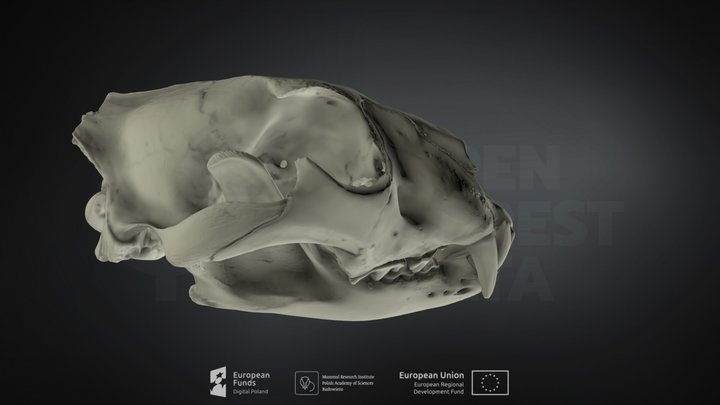
3D model
- Source
- Sketchfab
- Licence
- CC Attribution
- Commercial use
- cannot be read from the licence given — check the record
Smithsonian Open Access was not reached for this taxon, so this list is what the others held rather than everything there is.
The description on this site
- Source
- Wikipedia, “Lion”
- Licence
- CC BY-SA 4.0
This is what the site found, which is not the same as what exists.
Keep going
What may have been alongside itPanthera through timeFormations of the PleistoceneThe world it lived on
Occurrence data from the Paleobiology Database, CC BY 4.0. (Linnaeus 1758)