Smilodon
Smilodon is a genus of extinct felids. It is one of the best-known saber-toothed predators and prehistoric mammals. Although commonly known as the saber-toothed tiger, it was not closely related to the tiger or other modern cats, belonging to the extinct subfamily Machairodontinae, with an estimated date of divergence from the ancestor of living cats around 20 million years ago. Smilodon was one of the last surviving machairodonts alongside Homotherium. Smilodon lived in the Americas during the Pleistocene to early Holocene epoch. The genus was named in 1842 based on fossils from Brazil; the generic name means 'scalpel' or 'two-edged knife' combined with 'tooth'. Three species are recognized today: S. gracilis, S. fatalis, and S. populator. The two latter species were probably descended from S. gracilis, which itself probably evolved from Megantereon. The hundreds of specimens obtained from the La Brea Tar Pits in Los Angeles constitute the largest collection of Smilodon fossils.

JJonahJackalope · CC BY-SA 4.0 · via Wikipedia/Commons. May be a photograph of a specimen, or an artist’s reconstruction — an interpretation of a skeleton, since colour and soft tissue are almost never preserved.
On record
Recorded, not inferred- Also called
- saber-toothed catPBDB
- Sits inside
- SmilodontiniPBDB
- Diet
- carnivorePBDB, for Felidae
- Life habit
- scansorialPBDB, for Felidae
- Motility
- actively mobilePBDB, for Osteichthyes
- Environment
- terrestrialPBDB, for Eutheria
- Length
- 175 cmWikidata
- Mass
- 280 kgWikidata
Time the record covers
At least 236 million years on record.
The record covers at least 237 Mya to 11.7 ka. No occurrence read is dated outside 241.464 Mya to 0 Mya.
143 occurrences of Smilodon on record, most of them in the Pleistocene. Bar height is expected occurrences, not a count: each fossil is spread across the span it is dated to, so a tall narrow bar means tight dating and a low wide one means loose.
When
143 occurrencesThese are dates about fossils, not the animal: the record can only begin after it arose and end before it died out, so either end may reach further. Shares are expected occurrences: a fossil dated to a span is counted partly in each period it straddles. More on what this infers.
Found in
26 formations
- Palm Spring Formation5
- Miramar Formation5
- Erfurt Formation · Keuper Group3
- Sopas Formation3
- Bermont Formation2
- Tarija Formation2
Loading coastlines…
The named rock units Smilodon has been recovered from, largest first. Drawn where the rock is now, not where it formed. 2 further formations hold fewer occurrences each and are not listed. 100 occurrences have no formation on record, which is common for older literature.
Smilodon and its relatives
PleistoceneWhere Smilodon and its relatives were recorded in the Pleistocene.
Found in the same rock
1,494 taxa- Equus48 sites
- Panthera onca29 sites
- Odocoileus virginianus26 sites
- Aenocyon dirus23 sites
- Paramylodon harlani22 sites
- Canis latrans21 sites
- Odocoileus19 sites
- Lynx rufus18 sites
- Mammut americanum17 sites
- Procyon lotor16 sites
- Dasypus bellus15 sites
- Puma concolor15 sites
- Hemiauchenia14 sites
- Hemiauchenia macrocephala14 sites
- Holmesina septentrionalis14 sites
- Mammuthus columbi14 sites
- Notiomastodon platensis14 sites
- Platygonus14 sites
- Scalopus aquaticus14 sites
- Sylvilagus floridanus14 sites
- Eremotherium laurillardi13 sites
- Lontra canadensis13 sites
- Mephitis mephitis13 sites
- Camelops12 sites
The Paleobiology Database records 125 sites for Smilodon, and this reads all of them. The number is how many of those sites it was catalogued from too. The 24 sharing the most are listed.
This is not a list of everything alive at the time. It is only what has come out of the same ground as this animal and been written down.
Entered from
108 references- Synonymies and reidentifications of North American fossil mammals9
- Biostratigraphy of Blancan and Irvingtonian mammals in the Fish Creek-Vallecito Creek section, southern California, and a review of the Blancan-Irvingtonian boundary5
- The sabertooth cat Smilodon from West Virginia caves4
- Overview of the geology and vertebrate biochronology of the Leisey Shell Pit Local Fauna, Hillsborough County, Florida4
- Smilodon neogaeus en las barrancas costeras de Mar del Plata, Provincia de Buenos Aires4
- Sabertooth cat, Smilodon floridanus (Leidy), and associated fauna from a Tennessee Cave (40 Dv 40), the First American Bank site3
- Carnivoran fossils from the Pampean region (Argentina): Santiago Roth collections in Switzerland2
- Pleistocene mammals from Uruguay: Biostratigraphic, biogeographic and environmental connotations2
- A first record of the Pleistocene saber-toothed cat Smilodon populator Lund, 1842 (Carnivora: Felidae: Machairodontinae) from Venezuela.2
- Novos achados de mamiferos carnivoros do Pleistoceno final-Holoceno em grutas calcarias do Estado da Bahia2
- La faune de vertébrés du Pléistocéne supérieur de l’aire archéologique de São Raimundo Nonato (Piauí, Brésil)2
- A catalogue of late Quaternary Vertebrates from California: Part Two, Mammals2
Each of the 143 occurrences read was entered from one of these publications, ordered by how many each accounts for. This is not a search for papers mentioning the name. 96 further references are not listed. Entries link to doi.org where the Paleobiology Database holds an identifier, and to its own record where it does not. Relayed as the Paleobiology Database holds them, not checked against what they resolve to.
Media and terms
Media content4
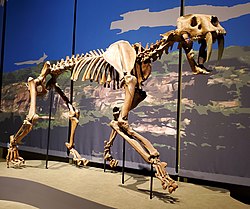
Picture of Smilodon
- Source
- Wikipedia/Commons
- Credit
- JJonahJackalope
- Licence
- CC BY-SA 4.0
- Commercial use
- the licence allows it
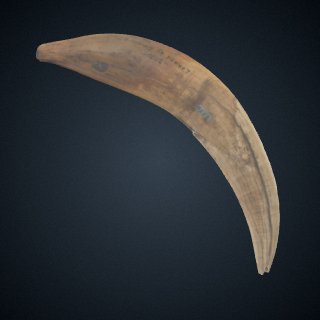
3D scan
- Source
- Smithsonian
- Licence
- CC0 — this site’s default, not the record’s
- Commercial use
- the licence allows it
- Specimen
- Smilodon fatalis (Leidy)
CT scan
- Source
- MorphoSource
- Credit
- Museu Câmara Cascudo
- Licence
- In Copyright
- Commercial use
- cannot be read from the licence given — check the record
- Specimen
- Smilodon populator · MCC:MCC:868V
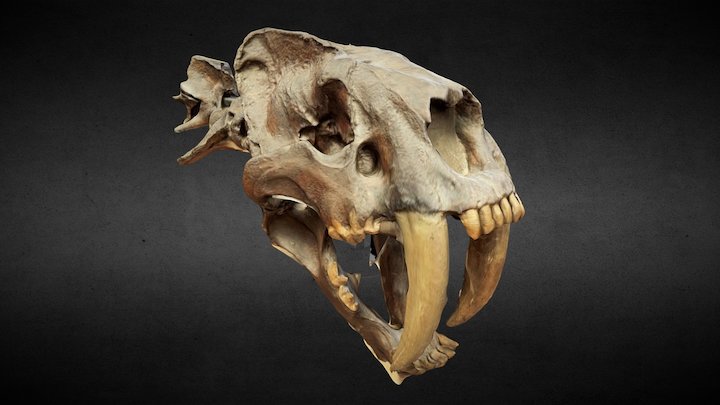
3D model
- Source
- Sketchfab
- Credit
- ARS 3D HERITAGE
- Licence
- CC Attribution
- Commercial use
- cannot be read from the licence given — check the record
The description on this site
- Source
- Wikipedia, “Smilodon”
- Licence
- CC BY-SA 4.0
This is what the site found, which is not the same as what exists.
Keep going
What may have been alongside itSmilodontini through timeFormations of the PleistoceneThe world it lived on
Occurrence data from the Paleobiology Database, CC BY 4.0. Lund 1841