Sivapithecus
Sivapithecus is a genus of extinct apes. Fossil remains of animals now assigned to this genus, dated from 12.2 million years old in the Miocene, have been found since the 19th century in the Sivalik Hills of the Indian subcontinent as well as in Kutch. Any one of the species in this genus may have been the ancestor to the modern orangutans.

Ghedoghedo · CC BY-SA 3.0 · via Wikipedia/Commons. May be a photograph of a specimen, or an artist’s reconstruction — an interpretation of a skeleton, since colour and soft tissue are almost never preserved.
On record
Recorded, not inferred- Sits inside
- SivapitheciniPBDB
- Diet
- omnivorePBDB, for Hominidae
- Life habit
- ground dwellingPBDB, for Hominidae
- Motility
- actively mobilePBDB, for Osteichthyes
- Environment
- terrestrialPBDB, for Eutheria
Time the record covers
At least 2.1 million years on record.
The record covers at least 13.82 Mya to 11.63 Mya. No occurrence read is dated outside 15.98 Mya to 5.333 Mya.
16 occurrences of Sivapithecus on record, most of them in the Miocene. Bar height is expected occurrences, not a count: each fossil is spread across the span it is dated to, so a tall narrow bar means tight dating and a low wide one means loose.
When
16 occurrences- Miocene100%
These are dates about fossils, not the animal: the record can only begin after it arose and end before it died out, so either end may reach further. Shares are expected occurrences: a fossil dated to a span is counted partly in each period it straddles. More on what this infers.
Found in
4 formations
- Maboko Formation4
- Chinji Formation · Siwalik Group3
- Dhok Pathan Formation · Siwalik Group2
- Upper Koru Series Formation · Kericho Phonolites Group1
Loading coastlines…
The named rock units Sivapithecus has been recovered from, largest first. Drawn where the rock is now, not where it formed. 6 occurrences have no formation on record, which is common for older literature.
Sivapithecus and its relatives
MioceneWhere Sivapithecus and its relatives were recorded in the Miocene.
Found in the same rock
276 taxa- Dorcatherium chappuisi4 sites
- Bovidae3 sites
- Climacoceras africanus3 sites
- Limnopithecus legetet3 sites
- Megapedetes3 sites
- Orycteropus3 sites
- Prodeinotherium hobleyi3 sites
- Victoriapithecus macinnesi3 sites
- Amphibia2 sites
- Brachypotherium2 sites
- Cervidae2 sites
- Chamaeleonidae2 sites
- Chilotherium2 sites
- Chiroptera2 sites
- Crocodylus2 sites
- Dissopsalis2 sites
- Dorcabune2 sites
- Dorcatherium2 sites
- Dorcatherium minus2 sites
- Dorcatherium pigotti2 sites
- Equatorius africanus2 sites
- Gazella2 sites
- Gomphotheriidae2 sites
- Gomphotherium2 sites
The Paleobiology Database records 11 sites for Sivapithecus, and this reads all of them. The number is how many of those sites it was catalogued from too. The 24 sharing the most are listed.
This is not a list of everything alive at the time. It is only what has come out of the same ground as this animal and been written down.
Entered from
11 references- Siwalik mammals of the Jammu Sub-Himalaya, India: an appraisal of their diversity and habitats.3
- Stratigraphic summarization of Ramapithecus fossil locality, Lufeng, Yunnan2
- The Miocene fossil beds of Maboko Island, Kenya: Geology, age, taphonomy, and palaeontology2
- New Miocene locality in Turkey with evidence of the origin of Ramapithecus and Sivapithecus2
- First record of the Miocene hominoid Sivapithecus from Kutch, Gujarat state, western India1
- New species of bushbaby from the Middle Miocene of Maboko Island, Kenya1
- Miocene vertebrates from the Siwalik Group, Western Nepal1
- New primate fossils from the Middle Miocene of Maboko Island, Kenya1
- New hominoid skull material from the Miocene of Pakistan1
- New skull remains of Sivapithecus from Pakistan1
- New Potassium-Argon Age Determinations Relevant to the Miocene Fossil Mammal Sequence in East Africa1
Each of the 16 occurrences read was entered from one of these publications, ordered by how many each accounts for. This is not a search for papers mentioning the name. Entries link to doi.org where the Paleobiology Database holds an identifier, and to its own record where it does not. Relayed as the Paleobiology Database holds them, not checked against what they resolve to.
Media and terms
Media content3

Picture of Sivapithecus
- Source
- Wikipedia/Commons
- Credit
- Ghedoghedo
- Licence
- CC BY-SA 3.0
- Commercial use
- the licence allows it
Structured light scan
- Source
- MorphoSource
- Licence
- In Copyright
- Commercial use
- cannot be read from the licence given — check the record
- Specimen
- Sivapithecus sivalensis · YPM:VP:YPM VP 013832
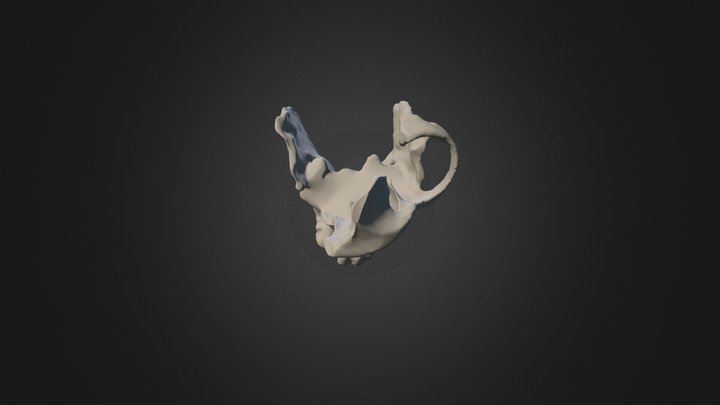
3D model
- Source
- Sketchfab
- Credit
- geronimo0232
- Licence
- CC Attribution
- Commercial use
- cannot be read from the licence given — check the record
Smithsonian Open Access was not reached for this taxon, so this list is what the others held rather than everything there is.
The description on this site
- Licence
- CC BY-SA 4.0
This is what the site found, which is not the same as what exists.
Keep going
What may have been alongside itSivapithecini through timeFormations of the MioceneThe world it lived on
Occurrence data from the Paleobiology Database, CC BY 4.0. Pilgrim 1910