Gomphotherium
Gomphotherium is an extinct genus of gomphothere proboscidean from the Neogene of Eurasia, Africa and North America. It is the most diverse genus of gomphothere, with over a dozen valid species. The genus is probably paraphyletic, and ancestral to other gomphothere genera, as well as ultimately living elephantids.

Ryan Schwark · CC0 · via Wikipedia/Commons. May be a photograph of a specimen, or an artist’s reconstruction — an interpretation of a skeleton, since colour and soft tissue are almost never preserved.
On record
Recorded, not inferred- Sits inside
- GomphotheriidaePBDB
- Diet
- browserPBDB
- Life habit
- ground dwellingPBDB
- Motility
- actively mobilePBDB, for Osteichthyes
- Environment
- terrestrialPBDB, for Eutheria
Time the record covers
At least 22 million years on record.
The record covers at least 23.04 Mya to 129 ka. No occurrence read is dated outside 33.9 Mya to 11.7 ka.
269 occurrences of Gomphotherium on record, most of them in the Miocene. Bar height is expected occurrences, not a count: each fossil is spread across the span it is dated to, so a tall narrow bar means tight dating and a low wide one means loose.
When
269 occurrences- Oligoceneunder 1%
- Miocene95%
- Pliocene2%
- Pleistocene2%
These are dates about fossils, not the animal: the record can only begin after it arose and end before it died out, so either end may reach further. Shares are expected occurrences: a fossil dated to a span is counted partly in each period it straddles. More on what this infers.
Found in
58 formations
- Valentine Formation · Ogallala Group22
- MR Caliente Formation12
- Calvert Formation · Chesapeake Group8
- Ash Hollow Formation7
- NS Caliente Formation7
- Fleming Formation5
Loading coastlines…
The named rock units Gomphotherium has been recovered from, largest first. Drawn where the rock is now, not where it formed. 34 further formations hold fewer occurrences each and are not listed. 129 occurrences have no formation on record, which is common for older literature.
Gomphotherium and its relatives
MioceneWhere Gomphotherium and its relatives were recorded in the Miocene.
Found in the same rock
2,352 taxa- Camelidae37 sites
- Tetrabelodon angustidens28 sites
- Rhinocerotidae27 sites
- Teleoceras23 sites
- Anchitherium aurelianense21 sites
- Aceratherium20 sites
- Hipparionini20 sites
- Leporidae19 sites
- Procervulus dichotomus19 sites
- Testudo19 sites
- Mustelidae18 sites
- Aelurodon ferox17 sites
- Aepycamelus17 sites
- Aves17 sites
- Bunolistriodon17 sites
- Cosoryx (Subcosoryx) cerroensis17 sites
- Hippotherium17 sites
- Mylagaulidae17 sites
- Lagopsis16 sites
- Prodeinotherium bavaricum16 sites
- Prolagus oeningensis16 sites
- Amphicyon15 sites
- Amphicyonidae15 sites
- Cervidae15 sites
The Paleobiology Database records 246 sites for Gomphotherium, and this reads 240 of them. The number is how many of those sites it was catalogued from too. The 24 sharing the most are listed.
This is not a list of everything alive at the time. It is only what has come out of the same ground as this animal and been written down.
Entered from
135 references- Synonymies and reidentifications of North American fossil mammals22
- Paleontology and nonmarine stratigraphy of the Cuyama Valley badlands, California; Part 1, Geology, faunal interpretations, and systematic descriptions of Chiroptera, Insectivora, and Rodentia20
- Les vertebres du Burdigalien superieur de Lisbonne12
- Review of the Miocene Gomphotheriidae (Mammalia: Proboscidea) from the Chesapeake Group, Middle Atlantic Coastal Plain of North America10
- The Burge and Minnechaduza Clarendonian Mammalian Faunas of North-Central Nebraska10
- Vertebrate biostratigraphy of the Ogallala Group in Nebraska8
- Stratigraphy and mammal faunas of the Brackwassermolasse in the surroundings of Ulm (Southwest Germany)6
- Kleinsäugerstratigraphie in der miozänen Hörnlischüttung (Ostschweiz); (Biostratigraphy of small mammals in the Hörnlischüttung of Miocene age (East Switzerland))5
- Srednjomiocenska i donjosarmatska (stajerska) fauna sisara Srbije; Die Mittelmiozäne und Untersarmatische (Steirische) Säugetierfauna Serbiens. (The middle Miocene and lower Sarmatian (Styrian) mammalian fauna of Serbia)5
- Catalogue of Tertiary Fossil Sites of the Land Mammals in the U.S.S.R.5
- Basal middle Miocene Listriodontinae (Suidae, Artiodactyla) from Madrid, Spain4
- Biostratigraphy of the Mexican Continental Miocene: Part I, Introduction and the Northwestern and Central Faunas. Part II, The Southeastern (Oaxacan) Faunas. Part III, The Southeasternmost (Chiapasan) Fauna and Concluding Remarks On the Discussed Vertebrate Record4
Each of the 269 occurrences read was entered from one of these publications, ordered by how many each accounts for. This is not a search for papers mentioning the name. 123 further references are not listed. Entries link to doi.org where the Paleobiology Database holds an identifier, and to its own record where it does not. Relayed as the Paleobiology Database holds them, not checked against what they resolve to.
Media and terms
Media content3

Picture of Gomphotherium
- Source
- Wikipedia/Commons
- Credit
- Ryan Schwark
- Licence
- CC0
- Commercial use
- the licence allows it
Laser scan
- Source
- MorphoSource
- Licence
- not stated by the source
- Commercial use
- cannot be read from the licence given — check the record
- Specimen
- Gomphotherium gomphotherium · UF:VP:19420
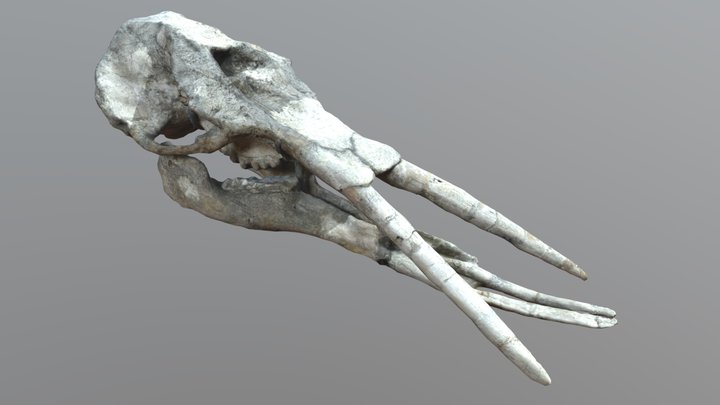
3D model
- Source
- Sketchfab
- Credit
- Tavernier Amaury
- Licence
- CC Attribution-NonCommercial-ShareAlike
- Commercial use
- the licence does not allow it
The description on this site
- Licence
- CC BY-SA 4.0
This is what the site found, which is not the same as what exists.
Keep going
What may have been alongside itGomphotheriidae through timeFormations of the MioceneThe world it lived on
Occurrence data from the Paleobiology Database, CC BY 4.0. Burmeister 1837