Aepycamelus
Aepycamelus is an extinct genus of camelids that lived during the Miocene 20.6–4.9 million years ago, existing for about 15.7 million years. Its name is derived from the Homeric Greek αἰπύς, "high and steep" and κάμηλος – "camel"; thus, "high camel"; alticamelus in Latin.

Ryan Somma · CC BY-SA 2.0 · via Wikipedia/Commons. May be a photograph of a specimen, or an artist’s reconstruction — an interpretation of a skeleton, since colour and soft tissue are almost never preserved.
On record
Recorded, not inferred- Sits inside
- LaminiPBDB
- Diet
- browser, browserPBDB, for Camelidae
- Life habit
- ground dwellingPBDB, for Camelidae
- Motility
- actively mobilePBDB, for Osteichthyes
- Environment
- terrestrialPBDB, for Artiodactyla
Time the record covers
At least 6.9 million years on record.
The record covers at least 16.3 Mya to 9.4 Mya. No occurrence read is dated outside 23.04 Mya to 1.4 Mya.
91 occurrences of Aepycamelus on record, most of them in the Miocene. Bar height is expected occurrences, not a count: each fossil is spread across the span it is dated to, so a tall narrow bar means tight dating and a low wide one means loose.
When
91 occurrences- Miocene98%
- Pliocene2%
- Pleistoceneunder 1%
These are dates about fossils, not the animal: the record can only begin after it arose and end before it died out, so either end may reach further. Shares are expected occurrences: a fossil dated to a span is counted partly in each period it straddles. More on what this infers.
Found in
28 formations
- Valentine Formation · Ogallala Group12
- Ash Hollow Formation8
- Fleming Formation5
- Caliente Formation5
- Tesuque Formation4
- Alachua Formation3
Loading coastlines…
The named rock units Aepycamelus has been recovered from, largest first. Drawn where the rock is now, not where it formed. 4 further formations hold fewer occurrences each and are not listed. 24 occurrences have no formation on record, which is common for older literature.
Aepycamelus and its relatives
MioceneWhere Aepycamelus and its relatives were recorded in the Miocene.
Found in the same rock
814 taxa- Teleoceras19 sites
- Gomphotherium18 sites
- Aphelops megalodus16 sites
- Archaeolaginae15 sites
- Aelurodon ferox14 sites
- Hippotherium13 sites
- Mylagaulidae13 sites
- Paratomarctus temerarius13 sites
- Procamelus grandis13 sites
- Ustatochoerus medius13 sites
- Eucastor tortus12 sites
- Hipparionini12 sites
- Leptocyon vafer12 sites
- Amphicyonidae11 sites
- Aphelops11 sites
- Epicyon saevus11 sites
- Hypolagus parviplicatus11 sites
- Protolabis11 sites
- Camelidae10 sites
- Merychippus insignis10 sites
- Pseudhipparion retrusum10 sites
- Untermannerix copiosus10 sites
- Blastomeryx gemmifer9 sites
- Hipparion tehonense9 sites
The Paleobiology Database records 91 sites for Aepycamelus, and this reads all of them. The number is how many of those sites it was catalogued from too. The 24 sharing the most are listed.
This is not a list of everything alive at the time. It is only what has come out of the same ground as this animal and been written down.
Entered from
58 references- Vertebrate biostratigraphy of the Ogallala Group in Nebraska11
- Synonymies and reidentifications of North American fossil mammals10
- Road Log Neogene geology of the Española Basin, New Mexico4
- The Hottell Ranch rhino quarries (basal Ogallala: medial Barstovian), Banner County, Nebraska. Part I: Geologic setting, faunal lists, lower vertebrates3
- The Burge and Minnechaduza Clarendonian Mammalian Faunas of North-Central Nebraska3
- Two fossil accumulations in the Upper Barstow Formation, Mud Hills, Mojave Desert, CA2
- Stop 15: Early Hemphillian faunas of the Texas and Oklahoma panhandles2
- Biostratigraphy and Correlation of Hemingfordian and Barstovian Land Mammal Assemblages, Caliente Formation, Cuyama Valley Area, California2
- Faunal succession and biochronology of the Arikareean through Hemphillian interval (late Oligocene through earliest Pliocene epochs) in North America2
- Tertiary stratigraphy and the Frick Collection of fossil vertebrates from north-central Nebraska2
- Stratigraphy and vertebrate paleontology of the Horse Creek-Trail Creek area, Laramie County, Wyoming2
- Final report covering the period from March 4, 1939 ro September 30, 1941 for the state-wide paleontologic-mineralogic survey in Texas2
Each of the 91 occurrences read was entered from one of these publications, ordered by how many each accounts for. This is not a search for papers mentioning the name. 46 further references are not listed. Entries link to doi.org where the Paleobiology Database holds an identifier, and to its own record where it does not. Relayed as the Paleobiology Database holds them, not checked against what they resolve to.
Media and terms
Media content2

Picture of Aepycamelus
- Source
- Wikipedia/Commons
- Credit
- Ryan Somma
- Licence
- CC BY-SA 2.0
- Commercial use
- the licence allows it
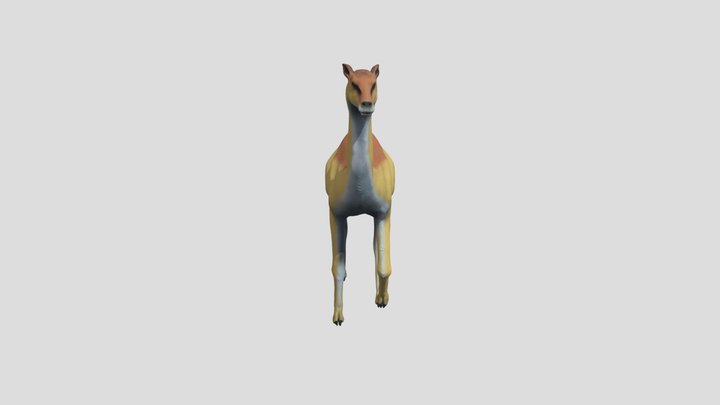
3D model
- Source
- Sketchfab
- Credit
- zippyzoomy1
- Licence
- CC Attribution
- Commercial use
- cannot be read from the licence given — check the record
Smithsonian Open Access and MorphoSource were not reached for this taxon, so this list is what the others held rather than everything there is.
The description on this site
- Source
- Wikipedia, “Aepycamelus”
- Licence
- CC BY-SA 4.0
This is what the site found, which is not the same as what exists.
Keep going
What may have been alongside itLamini through timeFormations of the MioceneThe world it lived on
Occurrence data from the Paleobiology Database, CC BY 4.0. Macdonald 1956