Podiceps
Podiceps is a genus of birds in the grebe family. The genus name comes from Latin podicis, "rear-end" and ped, "foot", and is a reference to the placement of a grebe's legs towards the rear of its body.

PaleoNeolitic (montage creator) Davidvraju Francisco González Táboas Becky Matsubara Mike's Birds Frank Vassen Birdin… · CC BY 2.0 · via Wikipedia/Commons. May be a photograph of a specimen, or an artist’s reconstruction — an interpretation of a skeleton, since colour and soft tissue are almost never preserved.
On record
Recorded, not inferred- Sits inside
- PodicipedidaePBDB
- Diet
- carnivorePBDB, for Coelurosauria
- Life habit
- ground dwelling, solitaryPBDB, for Theropoda
- Motility
- actively mobilePBDB, for Theropoda
- Environment
- terrestrialPBDB, for Theropoda
Time the record covers
At least 8.7 million years on record.
The record covers at least 8.725 Mya to 11.7 ka. No occurrence read is dated outside 11.63 Mya to 0 Mya.
93 occurrences of Podiceps on record, most of them in the Pleistocene. The Paleobiology Database records this as a living group. Bar height is expected occurrences, not a count: each fossil is spread across the span it is dated to, so a tall narrow bar means tight dating and a low wide one means loose.
When
93 occurrences- Miocene4%
- Pliocene12%
- Pleistocene55%
- Holocene28%
These are dates about fossils, not the animal: the record can only begin after it arose and end before it died out, so either end may reach further. Shares are expected occurrences: a fossil dated to a span is counted partly in each period it straddles. More on what this infers.
Found in
12 formations
- San Diego Formation10
- Yorktown Formation · Chesapeake Group2
- Nuapua Formation2
- San Pedro Formation2
- Acredale Formation1
- Kempsville Formation1
Loading coastlines…
The named rock units Podiceps has been recovered from, largest first. Drawn where the rock is now, not where it formed. 69 occurrences have no formation on record, which is common for older literature.
Podiceps and its relatives
PleistoceneWhere Podiceps and its relatives were recorded in the Pleistocene.
Found in the same rock
1,782 taxa- Anas platyrhynchos23 sites
- Branta canadensis21 sites
- Anas20 sites
- Larus20 sites
- Buteo jamaicensis19 sites
- Phalacrocorax auritus18 sites
- Buteo17 sites
- Phalacrocorax penicillatus16 sites
- Corvus corax15 sites
- Fulica americana15 sites
- Haliaeetus leucocephalus15 sites
- Phalacrocorax15 sites
- Podilymbus podiceps15 sites
- Tyto alba15 sites
- Anser caerulescens14 sites
- Antigone canadensis14 sites
- Corvus brachyrhynchos14 sites
- Spatula clypeata14 sites
- Uria aalge14 sites
- Anas acuta13 sites
- Aythya13 sites
- Ptychoramphus aleuticus13 sites
- Anas crecca12 sites
- Ardea herodias12 sites
The Paleobiology Database records 73 sites for Podiceps, and this reads all of them. The number is how many of those sites it was catalogued from too. The 24 sharing the most are listed.
This is not a list of everything alive at the time. It is only what has come out of the same ground as this animal and been written down.
Entered from
48 references- Prehistoric human impacts on California birds: evidence from the Emeryville shellmoumd avifauna16
- Fossil birds of the San Diego Formation, Late Pliocene, Blancan, San Diego County, California9
- Birds of the Late Pleistocene and Holocene from the Palaeolithic Djuktai cave site of Yakutia, eastern Siberia6
- Terminal Pleistocene–Holocene Avifauna of San Miguel and Santa Rosa Islands: Identifications of Previously Unidentified Avian Remains Recovered from Fossil Sites and Prehistoric Cave Deposits4
- Distribution and provenance of fossil avifauna on San Miguel Island4
- Birds in Finnish prehistory3
- A late Pleistocene avifauna from San Miguel Island, California3
- Pleistocene seabirds from Shiriya, northeast Japan: systematics and oceanographic context2
- A remarkable fossil and archaeological avifauna from Marfells Beach, Lake Grassmere, South Island, New Zealand2
- A catalogue of late Quaternary vertebrates from California: Part One, nonmarine lower vertebrate and avian taxa2
- The Eocene to Pleistocene vertebrates of Bolivia and their stratigraphic context: a review2
- Avian fossils from the marine Pleistocene of southern California2
Each of the 93 occurrences read was entered from one of these publications, ordered by how many each accounts for. This is not a search for papers mentioning the name. 36 further references are not listed. Entries link to doi.org where the Paleobiology Database holds an identifier, and to its own record where it does not. Relayed as the Paleobiology Database holds them, not checked against what they resolve to.
Media and terms
Media content3

Picture of Podiceps
- Source
- Wikipedia/Commons
- Credit
- PaleoNeolitic (montage creator) Davidvraju Francisco González Táboas Becky Matsubara Mike's Birds Frank Vassen Birdin…
- Licence
- CC BY 2.0
- Commercial use
- the licence allows it
CT scan
- Source
- MorphoSource
- Credit
- ISM Zoology Collection
- Licence
- In Copyright
- Commercial use
- cannot be read from the licence given — check the record
- Specimen
- Podilymbus podiceps · ISM:ISM-Aves:683844
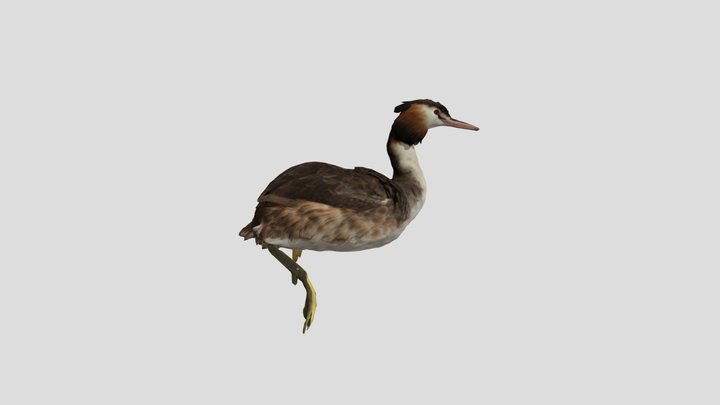
3D model
- Source
- Sketchfab
- Licence
- CC Attribution-NonCommercial
- Commercial use
- the licence does not allow it
The description on this site
- Source
- Wikipedia, “Podiceps”
- Licence
- CC BY-SA 4.0
This is what the site found, which is not the same as what exists.
Keep going
What may have been alongside itPodicipedidae through timeFormations of the PleistoceneThe world it lived on
Occurrence data from the Paleobiology Database, CC BY 4.0. Latham 1787