Platyceras
Platyceras is a genus of extinct Paleozoic sea snails, marine gastropod mollusks in the family Platyceratidae. This genus is known from the Silurian to the Middle Triassic periods and especially abundant in the Devonian and Carboniferous. It is the type genus of the family Platyceratidae.

Wilson44691 · Public Domain · via Wikipedia/Commons. May be a photograph of a specimen, or an artist’s reconstruction — an interpretation of a skeleton, since colour and soft tissue are almost never preserved.
On record
Recorded, not inferred- Sits inside
- PlatyceratidaePBDB
- Diet
- parasitePBDB
- Life habit
- epifaunalPBDB
- Motility
- facultatively mobile, epibiontPBDB
- Vision
- limitedPBDB, for Gastropoda
- Environment
- marinePBDB, for Platyceratidae
Time the record covers
At least 212 million years on record.
The record covers at least 449.9 Mya to 237 Mya. No occurrence read is dated outside 452.8 Mya to 201.4 Mya.
549 occurrences of Platyceras on record, most of them in the Devonian. Bar height is expected occurrences, not a count: each fossil is spread across the span it is dated to, so a tall narrow bar means tight dating and a low wide one means loose.
When
549 occurrences- Ordovicianunder 1%
- Silurian15%
- Devonian54%
- Carboniferous26%
- Permian5%
- Late Triassicunder 1%
These are dates about fossils, not the animal: the record can only begin after it arose and end before it died out, so either end may reach further. Shares are expected occurrences: a fossil dated to a span is counted partly in each period it straddles. More on what this infers.
Found in
170 formations
- Ludlowville Formation · Hamilton Group37
- Silica Formation · Traverse Group24
- Onondaga Formation23
- Moscow Formation · Hamilton Group19
- Edwardsville Formation18
- Torquay Formation · Tamar Group18
Loading coastlines…
The named rock units Platyceras has been recovered from, largest first. Drawn where the rock is now, not where it formed. 146 further formations hold fewer occurrences each and are not listed. 51 occurrences have no formation on record, which is common for older literature.
Platyceras and its relatives
DevonianWhere Platyceras and its relatives were recorded in the Devonian.
Found in the same rock
2,127 taxa- Crinoidea79 sites
- Bryozoa76 sites
- Fenestella74 sites
- Favosites68 sites
- Schuchertella56 sites
- Rhipidomella51 sites
- Camarotoechia43 sites
- Nucleospira40 sites
- Spirifer40 sites
- Atrypa reticularis38 sites
- Douvillina37 sites
- Cyrtina36 sites
- Brachiopoda35 sites
- Fistulipora34 sites
- Platycrinites34 sites
- Punctospirifer34 sites
- Actinopteria33 sites
- Cypricardinia33 sites
- Atrypa32 sites
- Bivalvia32 sites
- Gastropoda32 sites
- Cleiothyridina31 sites
- Cyathocrinites31 sites
- Echinoidea31 sites
The Paleobiology Database records 431 sites for Platyceras, and this reads 240 of them. Of that, one read hit the database's own return limit, so every count below is a floor rather than a total. The number is how many of those sites it was catalogued from too. The 24 sharing the most are listed.
This is not a list of everything alive at the time. It is only what has come out of the same ground as this animal and been written down.
Entered from
191 references- Stratigraphy of the Onondaga Limestone in Central New York20
- The Clinton of Western and Central New York19
- Stratigraphy and Paleontology of the Jaycox Shale Member, Hamilton Group of the Finger Lakes Region of New York State17
- Strata and megafossils of the Middle Devonian Silica Formation15
- A monograph of the Devonian fauna of the south of England. Volume I - Part III. The fauna of the limestones of Lummaton, Wolborough, Chircombe Bridge, and Chudleigh15
- Community Organization, Paleontology, and Sedimentology of the Lower Mississippian Borden Delta Platform (Edwardsville Formation, Southern Indiana)14
- Relative taxonomic and ecological stability in Devonian marine faunas of New York State: a test of coordinated stasis13
- Faunal and Lithologic Cyclicity in the Centerfield Member (Middle Devonian: Hamilton Group) of Western New York: A Reinterpretation of Depositional History13
- Testing for faunal stability across a regional biotic transition: quantifying stasis and variation among recurring coral-rich biofacies in the Middle Devonian Appalachian Basin10
- Caradocian-Gedinnian echinoderm associations of Central and Eastern North America10
- Geology and mineral deposits of southeastern Alaska10
- Community paleoecological study of the Silica Shale equivalent of northeastern Indiana9
Each of the 549 occurrences read was entered from one of these publications, ordered by how many each accounts for. This is not a search for papers mentioning the name. 179 further references are not listed. Entries link to doi.org where the Paleobiology Database holds an identifier, and to its own record where it does not. Relayed as the Paleobiology Database holds them, not checked against what they resolve to.
Media and terms
Media content2

Picture of Platyceras
- Source
- Wikipedia/Commons
- Credit
- Wilson44691
- Licence
- Public Domain
- Commercial use
- the licence allows it
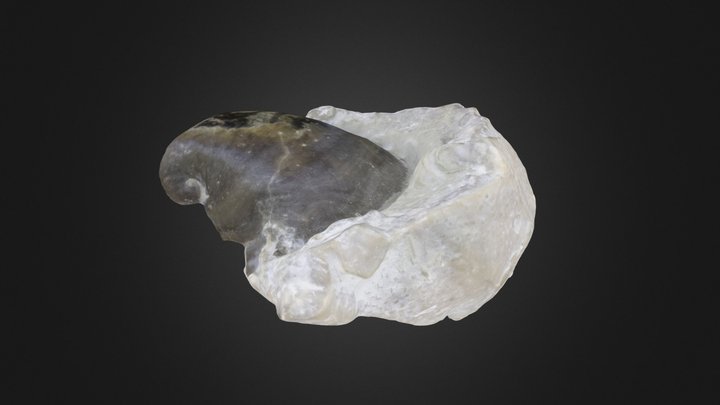
3D model
- Source
- Sketchfab
- Licence
- CC0 Public Domain
- Commercial use
- the licence allows it
Smithsonian Open Access and MorphoSource were not reached for this taxon, so this list is what the others held rather than everything there is.
The description on this site
- Source
- Wikipedia, “Platyceras”
- Licence
- CC BY-SA 4.0
This is what the site found, which is not the same as what exists.
Keep going
What may have been alongside itPlatyceratidae through timeFormations of the DevonianThe world it lived on
Occurrence data from the Paleobiology Database, CC BY 4.0. Conrad 1840