Phocoena phocoena
The harbour porpoise is one of eight extant species of porpoise. It is one of the smallest species of cetacean. As its name implies, it stays close to coastal areas or river estuaries, and as such, is the most familiar porpoise to whale watchers. This porpoise often ventures up rivers, and has been seen hundreds of kilometres from the sea. The harbour porpoise may be polytypic, with geographically distinct populations representing distinct races: P. p. phocoena in the North Atlantic and West Africa, P. p. relicta in the Black Sea and Sea of Azov, an unnamed population in the northwestern Pacific and P. p. vomerina in the northeastern Pacific.

Ecomare/Salko de Wolf · CC BY-SA 4.0 · via Wikipedia/Commons. May be a photograph of a specimen, or an artist’s reconstruction — an interpretation of a skeleton, since colour and soft tissue are almost never preserved.
On record
Recorded, not inferred- Also called
- harbor porpoisePBDB
- Sits inside
- PhocoenaPBDB
- Diet
- piscivorePBDB, for Phocoenidae
- Life habit
- aquatic, depth=surfacePBDB, for Cetacea
- Motility
- actively mobilePBDB, for Cetacea
- Environment
- marine,freshwaterPBDB, for Odontoceti
Time the record covers
At least 3.5 million years on record.
The record covers at least 3.6 Mya to 11.7 ka. No occurrence read is dated outside 5.333 Mya to 0 Mya.
21 occurrences of Phocoena phocoena on record. The Paleobiology Database records this as a living group. Bar height is expected occurrences, not a count: each fossil is spread across the span it is dated to, so a tall narrow bar means tight dating and a low wide one means loose.
When
21 occurrences- Pliocene10%
- Pleistocene5%
- Holocene86%
These are dates about fossils, not the animal: the record can only begin after it arose and end before it died out, so either end may reach further. Shares are expected occurrences: a fossil dated to a span is counted partly in each period it straddles. More on what this infers.
Found in the same rock
83 taxa- Phocoenoides dalli5 sites
- Orcinus orca3 sites
- Tursiops truncatus3 sites
- Callorhinus ursinus2 sites
- Cetacea2 sites
- Delphinapterus leucas2 sites
- Delphinidae2 sites
- Delphinus delphis2 sites
- Enhydra lutris2 sites
- Erignathus barbatus2 sites
- Eubalaena glacialis2 sites
- Homo sapiens2 sites
- Monodon monoceros2 sites
- Phoca vitulina2 sites
- Physeter macrocephalus2 sites
- Pusa hispida2 sites
- Sagmatias obliquidens2 sites
- Ursus maritimus2 sites
- Alces alces1 site
- Alcidae1 site
- Apodemus sylvaticus1 site
- Arvicola terrestris1 site
- Balaena1 site
- Balaenoptera1 site
The Paleobiology Database records 21 sites for Phocoena phocoena, and this reads all of them. The number is how many of those sites it was catalogued from too. The 24 sharing the most are listed.
This is not a list of everything alive at the time. It is only what has come out of the same ground as this animal and been written down.
Entered from
12 references- Determining the ages of sub-fossil cetacean remains, found in the Carse of Stirling, Scotland4
- Alaska marine mammal stock assessments4
- Earliest Records of Holocene Cetaceans in the Black Sea3
- Hidden population turnover of small odontocetes in the northwestern North Pacific during the Holocene2
- Sea ice expansion in the Bering Sea during the Neoglacial: evidence from archaeozoology1
- Whales, dorphines [dolphins] and porpoises off Shiretoko1
- Weer een schedel van Protophocaena minima erbij!1
- Sea mammal hunting and the Neoglacial: An archaeofaunal study of environmental change and subsistence technology at Margaret Bay, Unalaska1
- Contribution to the record of fossil mammals from the Meuse Levels1
- Prehistory in permafrost1
- Marine mammals of the Champlain Sea, and the problem of whales in Michigan1
- O delfinakh iz otozhenii apsheronskogo yarusa1
Each of the 21 occurrences read was entered from one of these publications, ordered by how many each accounts for. This is not a search for papers mentioning the name. Entries link to doi.org where the Paleobiology Database holds an identifier, and to its own record where it does not. Relayed as the Paleobiology Database holds them, not checked against what they resolve to.
Media and terms
Media content3
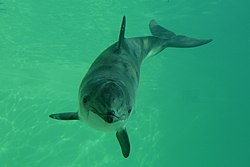
Picture of Phocoena phocoena
- Source
- Wikipedia/Commons
- Credit
- Ecomare/Salko de Wolf
- Licence
- CC BY-SA 4.0
- Commercial use
- the licence allows it
Laser scan
- Source
- MorphoSource
- Licence
- not stated by the source
- Commercial use
- cannot be read from the licence given — check the record
- Specimen
- Phocoena phocoena · USNM:MAMM:USNM 571765
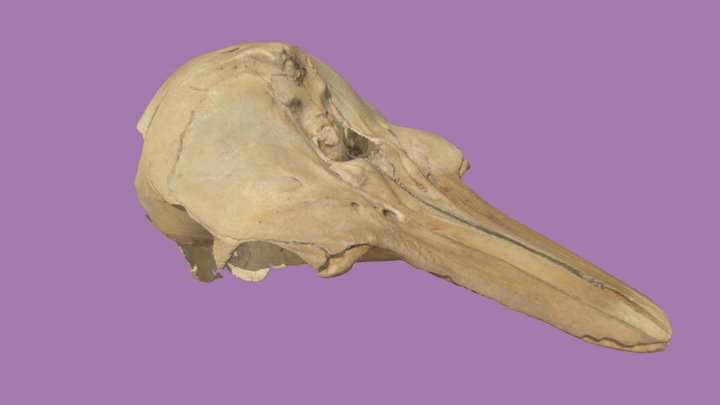
3D model
- Source
- Sketchfab
- Credit
- SchmalhausenEvolMorph
- Licence
- CC Attribution
- Commercial use
- cannot be read from the licence given — check the record
Smithsonian Open Access was not reached for this taxon, so this list is what the others held rather than everything there is.
The description on this site
- Licence
- CC BY-SA 4.0
This is what the site found, which is not the same as what exists.
Keep going
What may have been alongside itPhocoena through timeThe world it lived on
Occurrence data from the Paleobiology Database, CC BY 4.0. (Linnaeus 1758)