Callorhinus ursinus

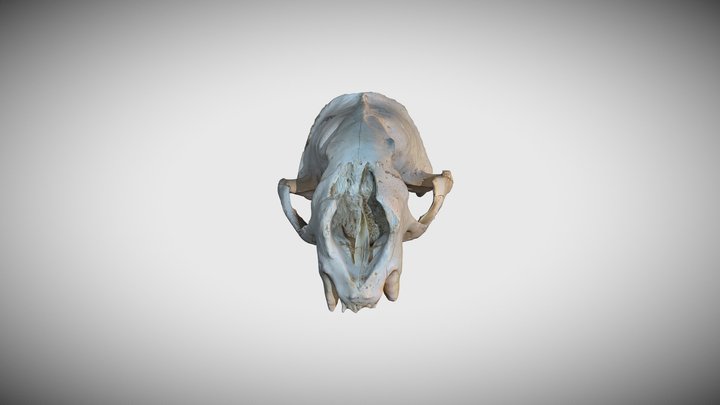
M. Boylan · Public Domain · via Wikidata/Commons. May be a photograph of a specimen, or an artist’s reconstruction — an interpretation of a skeleton, since colour and soft tissue are almost never preserved.
On record
Recorded, not inferred- Also called
- northern fur sealPBDB
- Sits inside
- CallorhinusPBDB
- Diet
- piscivorePBDB, for Otariidae
- Life habit
- amphibiousPBDB, for Pinnipedia
- Motility
- actively mobilePBDB, for Osteichthyes
- Environment
- marinePBDB, for Pinnipedia
Time the record covers
At least 762 thousand years on record.
The record covers at least 774 ka to 11.7 ka. No occurrence read is dated outside 2.58 Mya to 0 Mya.
15 occurrences of Callorhinus ursinus on record. The Paleobiology Database records this as a living group. Bar height is expected occurrences, not a count: each fossil is spread across the span it is dated to, so a tall narrow bar means tight dating and a low wide one means loose.
When
15 occurrences- Pleistocene40%
- Holocene60%
These are dates about fossils, not the animal: the record can only begin after it arose and end before it died out, so either end may reach further. Shares are expected occurrences: a fossil dated to a span is counted partly in each period it straddles. More on what this infers.
Found in
1 formation
Loading coastlines…
The named rock units Callorhinus ursinus has been recovered from, largest first. Drawn where the rock is now, not where it formed. 14 occurrences have no formation on record, which is common for older literature.
Found in the same rock
107 taxa- Enhydra lutris9 sites
- Eumetopias jubatus9 sites
- Phoca vitulina7 sites
- Cetacea5 sites
- Phocoena4 sites
- Zalophus californianus4 sites
- Apodemus3 sites
- Canis lupus3 sites
- Crocidura3 sites
- Microtus3 sites
- Mogera wogura3 sites
- Mustela3 sites
- Myodes3 sites
- Phoca largha3 sites
- Sinomegaceros3 sites
- Sorex3 sites
- Urotrichus talpoides3 sites
- Ursus arctos3 sites
- Ursus maritimus3 sites
- Aethia cristatella2 sites
- Anas platyrhynchos2 sites
- Ardenna grisea2 sites
- Bison2 sites
- Capricornis crispus2 sites
The Paleobiology Database records 15 sites for Callorhinus ursinus, and this reads all of them. The number is how many of those sites it was catalogued from too. The 24 sharing the most are listed.
This is not a list of everything alive at the time. It is only what has come out of the same ground as this animal and been written down.
Entered from
10 references- Archaeological and Historical Evidence for an 18th-Century "Blip" in the Distribution of the Northern Fur Seal at Kodiak Island, Alaska4
- Quaternary vertebrates from Shiriya area, Shimokita Pininsula, northeastern Japan3
- Investigations at an eroded shell midden reveal direct evidence for fur seal hunting and diverse subsistence strategies on Late Holocene Santa Rosa (Wima) Island, California1
- Reconstruction of Northeastern Pacific Ocean Holocene Production Using Marine Mammal Archaeofauna1
- Sea ice expansion in the Bering Sea during the Neoglacial: evidence from archaeozoology1
- Site fidelity, territory acquisition and mating success in male northern fur seals (Callorhinus ursinus)1
- Sea mammal hunting and the Neoglacial: An archaeofaunal study of environmental change and subsistence technology at Margaret Bay, Unalaska1
- Summary of the fossil record of pinnipeds of Japan, and comparisons with that from the eastern North Pacific1
- Kurten and Anderson, 19801
- Otarioid seals of the Neogene1
Each of the 15 occurrences read was entered from one of these publications, ordered by how many each accounts for. This is not a search for papers mentioning the name. Entries link to doi.org where the Paleobiology Database holds an identifier, and to its own record where it does not. Relayed as the Paleobiology Database holds them, not checked against what they resolve to.
Media and terms
Media content2
Picture of Callorhinus ursinus
- Source
- Wikidata/Commons
- Credit
- M. Boylan
- Licence
- Public Domain
- Commercial use
- the licence allows it
Smithsonian Open Access and MorphoSource were not reached for this taxon, so this list is what the others held rather than everything there is.
This is what the site found, which is not the same as what exists.
Keep going
What may have been alongside itCallorhinus through timeThe world it lived on
Occurrence data from the Paleobiology Database, CC BY 4.0. (Linnaeus 1758)