Enhydra lutris
The sea otter is a marine mammal native to the coasts of the northern and eastern North Pacific Ocean. Adult sea otters typically weigh between 14 and 45 kg (30–100 lb), making them the heaviest members of the weasel family, but among the smallest marine mammals. Unlike most marine mammals, the sea otter's primary form of insulation is an exceptionally thick coat of fur, the densest in the animal kingdom. Although it can walk on land, the sea otter is capable of living exclusively in the ocean.

Marshal Hedin from San Diego · CC BY-SA 2.0 · via Wikipedia/Commons. May be a photograph of a specimen, or an artist’s reconstruction — an interpretation of a skeleton, since colour and soft tissue are almost never preserved.
On record
Recorded, not inferred- Also called
- sea otterPBDB
- Sits inside
- EnhydraPBDB
- Diet
- carnivore, omnivorePBDB, for Mustelidae
- Life habit
- amphibiousPBDB, for Enhydra
- Motility
- actively mobilePBDB, for Osteichthyes
- Environment
- marinePBDB, for Enhydra
- Length
- 148 cmWikidata
- Mass
- 32.5 kgWikidata
Time the record covers
At least 117 thousand years on record.
The record covers at least 129 ka to 11.7 ka. No occurrence read is dated outside 774 ka to 0 Mya.
20 occurrences of Enhydra lutris on record. The Paleobiology Database records this as a living group. Bar height is expected occurrences, not a count: each fossil is spread across the span it is dated to, so a tall narrow bar means tight dating and a low wide one means loose.
When
20 occurrences- Pleistocene45%
- Holocene55%
These are dates about fossils, not the animal: the record can only begin after it arose and end before it died out, so either end may reach further. Shares are expected occurrences: a fossil dated to a span is counted partly in each period it straddles. More on what this infers.
Found in
5 formations
- Palos Verdes Sand Formation2
- San Pedro Formation1
- Montezuma Formation1
- Santa Rosa Island Formation1
- Timms Point Silt Formation1
Loading coastlines…
The named rock units Enhydra lutris has been recovered from, largest first. Drawn where the rock is now, not where it formed. 14 occurrences have no formation on record, which is common for older literature.
Found in the same rock
228 taxa- Callorhinus ursinus9 sites
- Eumetopias jubatus7 sites
- Phoca vitulina6 sites
- Chendytes lawi4 sites
- Phocoena4 sites
- Phoebastria albatrus4 sites
- Zalophus californianus4 sites
- Ardenna grisea3 sites
- Branta canadensis3 sites
- Cetacea3 sites
- Equus3 sites
- Fulmarus glacialis3 sites
- Mysticeti3 sites
- Osteichthyes3 sites
- Phalacrocorax penicillatus3 sites
- Puffinus opisthomelas3 sites
- Ursus maritimus3 sites
- Aechmophorus occidentalis2 sites
- Aenocyon dirus2 sites
- Anas2 sites
- Anser albifrons2 sites
- Anura2 sites
- Bison latifrons2 sites
- Camelops2 sites
The Paleobiology Database records 20 sites for Enhydra lutris, and this reads all of them. The number is how many of those sites it was catalogued from too. The 24 sharing the most are listed.
This is not a list of everything alive at the time. It is only what has come out of the same ground as this animal and been written down.
Entered from
12 references- A catalogue of late Quaternary Vertebrates from California: Part Two, Mammals4
- Archaeological and Historical Evidence for an 18th-Century "Blip" in the Distribution of the Northern Fur Seal at Kodiak Island, Alaska4
- Northeastern Pacific Pleistocene Sea Otters3
- Investigations at an eroded shell midden reveal direct evidence for fur seal hunting and diverse subsistence strategies on Late Holocene Santa Rosa (Wima) Island, California1
- Reconstruction of Northeastern Pacific Ocean Holocene Production Using Marine Mammal Archaeofauna1
- Sea ice expansion in the Bering Sea during the Neoglacial: evidence from archaeozoology1
- Dynamics of sea mammal and bird populations of the Bearing Sea region over the last several millennia1
- Annotated Bibliography of Quaternary Vertebrates of Northern North America1
- Sea mammal hunting and the Neoglacial: An archaeofaunal study of environmental change and subsistence technology at Margaret Bay, Unalaska1
- Preliminary List of the Marine Fishes and Other Vertebrate Remains from the Late Pleistocene Palos Verdes Sand Formation at Costa Mesa, Orange County, California1
- Sea otters reestablished in British Columbia1
- Geology of San Nicolas Island, California1
Each of the 20 occurrences read was entered from one of these publications, ordered by how many each accounts for. This is not a search for papers mentioning the name. Entries link to doi.org where the Paleobiology Database holds an identifier, and to its own record where it does not. Relayed as the Paleobiology Database holds them, not checked against what they resolve to.
Media and terms
Media content2

Picture of Enhydra lutris
- Source
- Wikipedia/Commons
- Credit
- Marshal Hedin from San Diego
- Licence
- CC BY-SA 2.0
- Commercial use
- the licence allows it
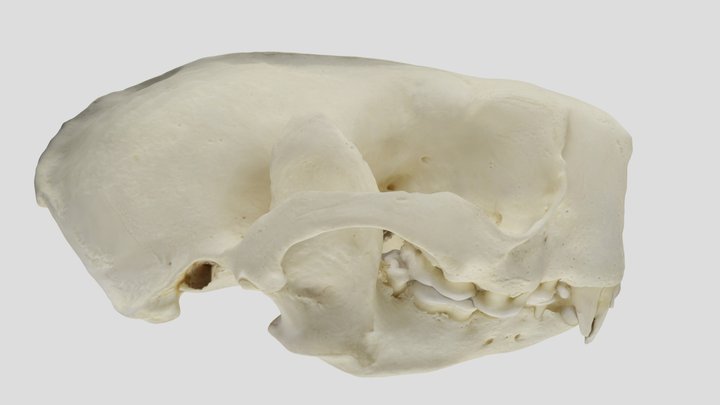
3D model
- Source
- Sketchfab
- Licence
- CC Attribution
- Commercial use
- cannot be read from the licence given — check the record
Smithsonian Open Access and MorphoSource were not reached for this taxon, so this list is what the others held rather than everything there is.
The description on this site
- Source
- Wikipedia, “Sea otter”
- Licence
- CC BY-SA 4.0
This is what the site found, which is not the same as what exists.
Keep going
What may have been alongside itEnhydra through timeThe world it lived on
Occurrence data from the Paleobiology Database, CC BY 4.0. (Linnaeus 1758)