Monodonta
Monodonta is a genus of sea snails, marine gastropod mollusks in the family Trochidae, the top snails.

ふうけ · Public Domain · via Wikipedia/Commons. May be a photograph of a specimen, or an artist’s reconstruction — an interpretation of a skeleton, since colour and soft tissue are almost never preserved.
On record
Recorded, not inferred- Sits inside
- TrochinaePBDB
- Diet
- grazerPBDB, for Trochidae
- Life habit
- epifaunalPBDB, for Trochidae
- Motility
- actively mobilePBDB, for Trochidae
- Vision
- limitedPBDB, for Gastropoda
Time the record covers
At least 233 million years on record.
The record covers at least 233.6 Mya to 11.7 ka. No occurrence read is dated outside 237 Mya to 0 Mya.
39 occurrences of Monodonta on record, most of them in the Pleistocene. The Paleobiology Database records this as a living group. Bar height is expected occurrences, not a count: each fossil is spread across the span it is dated to, so a tall narrow bar means tight dating and a low wide one means loose.
When
39 occurrences- Late Triassic3%
- Middle Jurassic3%
- Late Cretaceous5%
- Paleocene5%
- Miocene15%
- Pliocene3%
- Pleistocene64%
- Holocene3%
These are dates about fossils, not the animal: the record can only begin after it arose and end before it died out, so either end may reach further. Shares are expected occurrences: a fossil dated to a span is counted partly in each period it straddles. More on what this infers.
Found in
9 formations
- Termofourà Formation2
- Neylandville Marl Formation1
- Calcaire de Mons Formation1
- Agatdal Formation1
- Nicosia Formation1
- Calcaire de Caen Formation1
Loading coastlines…
The named rock units Monodonta has been recovered from, largest first. Drawn where the rock is now, not where it formed. 29 occurrences have no formation on record, which is common for older literature.
Monodonta and its relatives
PleistoceneWhere Monodonta and its relatives were recorded in the Pleistocene.
Found in the same rock
1,286 taxa- Barbatia6 sites
- Patella6 sites
- Turritella6 sites
- Acmaea5 sites
- Calliostoma5 sites
- Cerithium5 sites
- Chlamys5 sites
- Emarginula5 sites
- Striarca5 sites
- Acteon4 sites
- Bittium4 sites
- Fusinus4 sites
- Glycymeris4 sites
- Mitra4 sites
- Nassarius4 sites
- Nerita4 sites
- Nucula4 sites
- Odostomia4 sites
- Solariella4 sites
- Syrnola4 sites
- Anomia ephippium3 sites
- Barbatia (Barbatia) barbata3 sites
- Bittium reticulatum3 sites
- Calliomphalus3 sites
The Paleobiology Database records 15 sites for Monodonta, and this reads all of them. The number is how many of those sites it was catalogued from too. The 24 sharing the most are listed.
This is not a list of everything alive at the time. It is only what has come out of the same ground as this animal and been written down.
Entered from
19 references- Recherches sur le Neogene et le Quaternaire marins de la cote Atlantique du Maroc12
- The marine Quaternary of the Canary Islands9
- Lower to Middle Miocene Mollusc assemblages from the Torino Hills (NW Italy): Synthesis of new data and chronostratigraphical arrangement2
- A fauna da Idade do Ferro e da Época Romana de Monte Molião (Lagos, Algarve): continuidades e rupturas na dieta alimentar1
- Facies pattern and molluscan fauna of the Late Pleistocene raised coral reef of Rabigh area, Red Sea coast, Saudi Arabia1
- Miocene tropical sandy and rocky bottom molluscan assemblages of the Shimo Formation, Uchiura Group, Fukui Prefecture, Central Japan1
- The Cenomanian Gastropoda of the Kassenberg quarry in Mülheim (Germany, Late Cretaceous)1
- The paleoenvironment of an early Middle Miocene Paratethys sequence in NE Austria with special emphasis on mollusks and foraminifera1
- Paleoecology of a Pliocene coral reef in Cyprus: recovery of a marine community from the Messinian Salinity Crisis1
- Cenozoic Molluscs and Echinoids of Barrow Island, Western Australia1
- Skwarko, 19941
- Presenza di «Ospiti boreali» (Mollusca, Gastropoda) nel Pleistocene di Contrada Case Alte (Villa S. Giovanni)1
Each of the 39 occurrences read was entered from one of these publications, ordered by how many each accounts for. This is not a search for papers mentioning the name. 7 further references are not listed. Entries link to doi.org where the Paleobiology Database holds an identifier, and to its own record where it does not. Relayed as the Paleobiology Database holds them, not checked against what they resolve to.
Media and terms
Media content2

Picture of Monodonta
- Source
- Wikipedia/Commons
- Credit
- ふうけ
- Licence
- Public Domain
- Commercial use
- the licence allows it
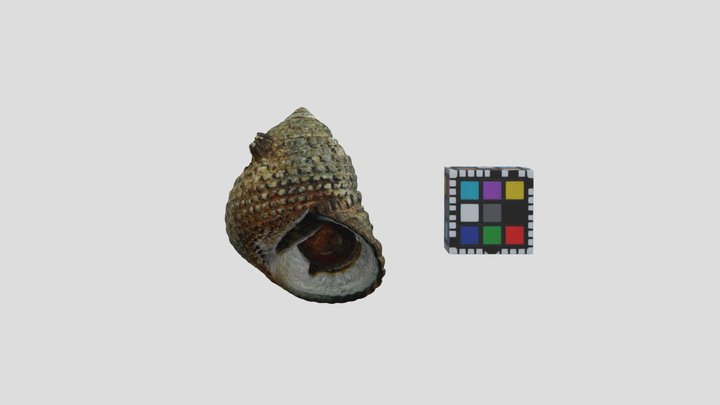
3D model
- Source
- Sketchfab
- Licence
- CC0 Public Domain
- Commercial use
- the licence allows it
Smithsonian Open Access and MorphoSource were not reached for this taxon, so this list is what the others held rather than everything there is.
The description on this site
- Source
- Wikipedia, “Monodonta”
- Licence
- CC BY-SA 4.0
This is what the site found, which is not the same as what exists.
Keep going
What may have been alongside itTrochinae through timeFormations of the PleistoceneThe world it lived on
Occurrence data from the Paleobiology Database, CC BY 4.0. (Lamarck 1799)