Patella
Patella is a genus of herbivorous marine sea snails, commonly known as limpets, in the family Patellidae within the class Gastropoda. Primarily a marine group of prosobranch gastropods, they typically live on tidal shores in non-tropical climates. As limpets in the family Patellidae, they are a sister group to the other three accepted genera: Cymbula, Helcion, and Scutellastra. Members of the genus Patella are characterized by a cup-shaped shell and gills, and move by means of muscular waves along their

Tango22 · CC BY-SA 3.0 · via Wikipedia/Commons. May be a photograph of a specimen, or an artist’s reconstruction — an interpretation of a skeleton, since colour and soft tissue are almost never preserved.
On record
Recorded, not inferred- Sits inside
- PatellinaePBDB
- Diet
- grazerPBDB, for Patellidae
- Life habit
- epifaunalPBDB, for Patellidae
- Motility
- facultatively mobilePBDB, for Patellidae
- Vision
- limitedPBDB, for Gastropoda
- Environment
- marine,brackishPBDB, for Patellidae
Time the record covers
At least 283 million years on record.
The record covers at least 283.3 Mya to 11.7 ka. No occurrence read is dated outside 290.1 Mya to 0 Mya.
210 occurrences of Patella on record, most of them in the Pleistocene. The Paleobiology Database records this as a living group. Bar height is expected occurrences, not a count: each fossil is spread across the span it is dated to, so a tall narrow bar means tight dating and a low wide one means loose.
When
210 occurrences- Permian1%
- Middle Triassic3%
- Late Triassic7%
- Early Jurassic2%
- Middle Jurassic1%
- Late Jurassic2%
- Early Cretaceous2%
- Late Cretaceous6%
- Paleocene4%
- Eocene4%
- Oligoceneunder 1%
- Miocene7%
- Pliocene9%
- Pleistocene47%
- Holocene3%
These are dates about fossils, not the animal: the record can only begin after it arose and end before it died out, so either end may reach further. Shares are expected occurrences: a fossil dated to a span is counted partly in each period it straddles. More on what this infers.
Found in
38 formations
- Fels Formation8
- Cassian Formation6
- Agatdal Formation3
- Bredasdorp Formation3
- Krasnoyarka Formation2
- Varswater Formation · Sandveld Group2
Loading coastlines…
The named rock units Patella has been recovered from, largest first. Drawn where the rock is now, not where it formed. 14 further formations hold fewer occurrences each and are not listed. 144 occurrences have no formation on record, which is common for older literature.
Patella and its relatives
PleistoceneWhere Patella and its relatives were recorded in the Pleistocene.
Found in the same rock
2,694 taxa- Conus12 sites
- Chlamys11 sites
- Ostrea11 sites
- Arca10 sites
- Emarginula10 sites
- Fusus10 sites
- Tellina10 sites
- Cerithiopsis9 sites
- Fissurella9 sites
- Modiolus9 sites
- Pecten9 sites
- Turricula9 sites
- Turritella9 sites
- Vermetus9 sites
- Astarte8 sites
- Barbatia8 sites
- Calliostoma8 sites
- Cerithiella8 sites
- Diodora8 sites
- Gemmula8 sites
- Turbo8 sites
- Turris8 sites
- Buccinum digitale7 sites
- Calyptraea7 sites
The Paleobiology Database records 91 sites for Patella, and this reads all of them. Of that, one read hit the database's own return limit, so every count below is a floor rather than a total. The number is how many of those sites it was catalogued from too. The 24 sharing the most are listed.
This is not a list of everything alive at the time. It is only what has come out of the same ground as this animal and been written down.
Entered from
82 references- Revised list of South African late Tertiary and Pleistocene marine Mollusca19
- The marine Quaternary of the Canary Islands17
- Late Tertiary and Early Quaternary Fossil Mollusca for the Hondeklip Area, Cape Province, South Africa13
- Recherches sur le Neogene et le Quaternaire marins de la cote Atlantique du Maroc10
- Computer-based mollusc stratigraphy - a case study from the Eggenburgian (Lower Miocene) type region (NE Austria)8
- Pleistocene shorelines in the Western Cape and South-West Africa8
- Palaeoecology of the Pleistocene (MIS 5) outcrops of Santa Maria Island (Azores) in a complex oceanic tectonic setting5
- The Early Pliocene Gastropoda (Mollusca) of Estepona, Southern Spain. Part 1: Vetigastropoda5
- Pleistocene raised marine terraces of the Spanish Mediterranean and Atlantic coasts: Records of coastal uplift, sea-level highstands and climate changes5
- Checklist of the Pleistocene marine molluscs of Prainha and Lagoinhas (Santa Maria Island, Azores)4
- Molluschi delle spiagge emerse del Mar Rosso e dell'Oceano Indiano, introduzione e parte I (gasteropodi) [Mollusks from raised beaches bordering the Red Sea and the Indian Ocean, introduction and part I (gastropods)]4
- Deshayes, 18244
Each of the 210 occurrences read was entered from one of these publications, ordered by how many each accounts for. This is not a search for papers mentioning the name. 70 further references are not listed. Entries link to doi.org where the Paleobiology Database holds an identifier, and to its own record where it does not. Relayed as the Paleobiology Database holds them, not checked against what they resolve to.
Media and terms
Media content3

Picture of Patella
- Source
- Wikipedia/Commons
- Credit
- Tango22
- Licence
- CC BY-SA 3.0
- Commercial use
- the licence allows it
CT scan
- Source
- MorphoSource
- Licence
- not stated by the source
- Commercial use
- cannot be read from the licence given — check the record
- Specimen
- Patella rustica · NHMUK:zoo:20240100
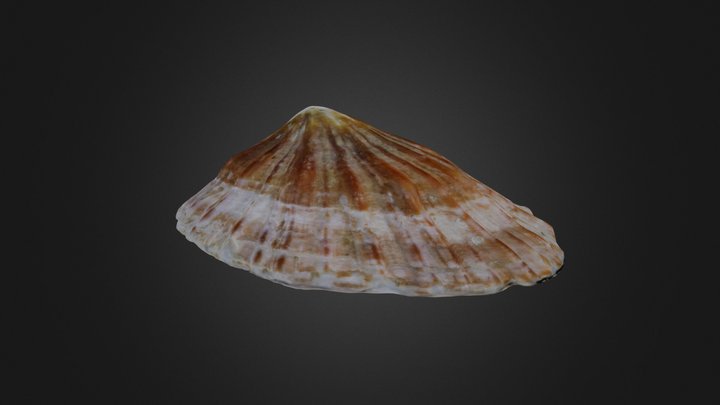
3D model
- Source
- Sketchfab
- Licence
- CC0 Public Domain
- Commercial use
- the licence allows it
The description on this site
- Licence
- CC BY-SA 4.0
This is what the site found, which is not the same as what exists.
Keep going
What may have been alongside itPatellinae through timeFormations of the PleistoceneThe world it lived on
Occurrence data from the Paleobiology Database, CC BY 4.0. Linnaeus 1758