Chlamys
Chlamys is a genus of small scallops, marine bivalve molluscs in the family Pectinidae. The name is taken from the Ancient Greek, χλαμΰς or Chlamys, a cloak worn by soldiers.

Wilson44691 · CC0 · via Wikipedia/Commons. May be a photograph of a specimen, or an artist’s reconstruction — an interpretation of a skeleton, since colour and soft tissue are almost never preserved.
On record
Recorded, not inferred- Sits inside
- ChlamydiniPBDB
- Diet
- suspension feederPBDB
- Life habit
- epifaunalPBDB
- Motility
- stationary, attachedPBDB
- Vision
- limitedPBDB, for Pectinidae
- Environment
- marinePBDB, for Pectinida
Time the record covers
At least 259 million years on record.
The record covers at least 259.857 Mya to 11.7 ka. No occurrence read is dated outside 264.28 Mya to 0 Mya.
3,101 occurrences of Chlamys on record, most of them in the Miocene. The Paleobiology Database records this as a living group. Bar height is expected occurrences, not a count: each fossil is spread across the span it is dated to, so a tall narrow bar means tight dating and a low wide one means loose.
When
3,101 occurrences- Permianunder 1%
- Early Triassicunder 1%
- Middle Triassicunder 1%
- Late Triassic5%
- Early Jurassic15%
- Middle Jurassic8%
- Late Jurassic5%
- Early Cretaceous2%
- Late Cretaceous4%
- Paleoceneunder 1%
- Eocene15%
- Oligocene4%
- Miocene20%
- Pliocene9%
- Pleistocene10%
- Holocene1%
These are dates about fossils, not the animal: the record can only begin after it arose and end before it died out, so either end may reach further. Shares are expected occurrences: a fossil dated to a span is counted partly in each period it straddles. More on what this infers.
Found in
607 formations
- Dhruma Formation · Shaqra Group77
- Castle Hayne Formation · Jackson Group57
- Moodys Branch Formation · Jackson Group54
- Vaqueros Formation46
- Chari Formation41
- Timms Point Silt Formation30
Loading coastlines…
The named rock units Chlamys has been recovered from, largest first. Drawn where the rock is now, not where it formed. 583 further formations hold fewer occurrences each and are not listed. 946 occurrences have no formation on record, which is common for older literature.
Chlamys and its relatives
MioceneWhere Chlamys and its relatives were recorded in the Miocene.
Found in the same rock
2,582 taxa- Nanogyra (Nanogyra) nana52 sites
- Plagiostoma43 sites
- Serpula40 sites
- Pleuromya uniformis38 sites
- Ostrea34 sites
- Modiolus33 sites
- Dentalium32 sites
- Isognomon30 sites
- Turritella30 sites
- Panopea29 sites
- Radulopecten fibrosus27 sites
- Bryozoa26 sites
- Eburneopecten scintillatus26 sites
- Actinostreon gregarea25 sites
- Vertebrata24 sites
- Cucullaea23 sites
- Nucula23 sites
- Nuculana23 sites
- Pholadomya23 sites
- Venericardia23 sites
- Gastropoda22 sites
- Plicatula22 sites
- Protocardia22 sites
- Pseudomelania22 sites
The Paleobiology Database records at least 1,527 sites for Chlamys, and this reads 240 of them. The number is how many of those sites it was catalogued from too. The 24 sharing the most are listed.
This is not a list of everything alive at the time. It is only what has come out of the same ground as this animal and been written down.
Entered from
652 references- Palokologie und zeitliche Verbreitung benthischer Faunengemeinschaften im Unterjura von Chile109
- Stratigraphic Distribution of Paleocene and Eocene Fossils in the Eastern Gulf Coast Region94
- Le Jurassique D`Arabie Centrale93
- Contribution a la connaissance des pectinides badeniennes de Roumanie [Badenian pectinids of Romania]73
- Catalogue of the Paleocene and Eocene mollusca of the southern and eastern United States. Part 1. Pelecypoda, Amphineura, Pteropoda, Scaphopoda and Cephalopoda62
- Unpublished data55
- Unpublished data from Kachchh48
- Neogene and Paleogene Molluscan (Bivalvia) Cenozones of the Russian Northeast.45
- Cenozoic Pectinids of Alaska, Iceland, and Other Northern Regions45
- The Vaqueros Formation, Lower Miocene of California. I. Paleontology42
- The Lower Jurassic Rocks of East Greenland Part 141
- Biozonation of the Neogene invertebrate megafauna of the Hellenic area40
Each of the 3,101 occurrences read was entered from one of these publications, ordered by how many each accounts for. This is not a search for papers mentioning the name. 640 further references are not listed. Entries link to doi.org where the Paleobiology Database holds an identifier, and to its own record where it does not. Relayed as the Paleobiology Database holds them, not checked against what they resolve to.
Media and terms
Media content3

Picture of Chlamys
- Source
- Wikipedia/Commons
- Credit
- Wilson44691
- Licence
- CC0
- Commercial use
- the licence allows it
CT scan
- Source
- MorphoSource
- Licence
- In Copyright
- Commercial use
- cannot be read from the licence given — check the record
- Specimen
- Chlamys islandica · FMNH:Invertebrate Zoology:163336
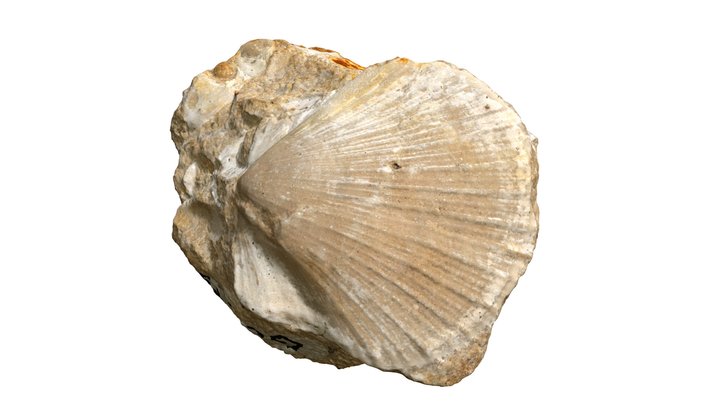
3D model
- Source
- Sketchfab
- Licence
- CC Attribution
- Commercial use
- cannot be read from the licence given — check the record
The description on this site
- Licence
- CC BY-SA 4.0
This is what the site found, which is not the same as what exists.
Keep going
What may have been alongside itChlamydini through timeFormations of the MioceneThe world it lived on
Occurrence data from the Paleobiology Database, CC BY 4.0. (Röding 1798)