Nucula
Nucula is a genus of very small saltwater clams. They are part of the family Nuculidae.

Eric A. Lazo-Wasem · CC0 · via Wikipedia/Commons. May be a photograph of a specimen, or an artist’s reconstruction — an interpretation of a skeleton, since colour and soft tissue are almost never preserved.
On record
Recorded, not inferred- Sits inside
- NuculidaePBDB
- Diet
- deposit feeder, suspension feederPBDB, for Nuculidae
- Life habit
- infaunalPBDB, for Nuculidae
- Motility
- facultatively mobilePBDB, for Nuculidae
- Vision
- blindPBDB, for Bivalvia
- Environment
- coastal,inner shelf,outer shelf,oceanicPBDB, for Nuculidae
Time the record covers
At least 467 million years on record.
The record covers at least 468 Mya to 11.7 ka. No occurrence read is dated outside 477.1 Mya to 0 Mya.
2,010 occurrences of Nucula on record, most of them in the Late Cretaceous. The Paleobiology Database records this as a living group. Bar height is expected occurrences, not a count: each fossil is spread across the span it is dated to, so a tall narrow bar means tight dating and a low wide one means loose.
When
2,010 occurrences- Ordovicianunder 1%
- Silurianunder 1%
- Devonianunder 1%
- Carboniferous2%
- Permianunder 1%
- Early Triassicunder 1%
- Middle Triassic1%
- Late Triassic3%
- Early Jurassicunder 1%
- Middle Jurassicunder 1%
- Late Jurassicunder 1%
- Early Cretaceous5%
- Late Cretaceous24%
- Paleocene6%
- Eocene21%
- Oligocene6%
- Miocene12%
- Pliocene6%
- Pleistocene7%
- Holocene1%
These are dates about fossils, not the animal: the record can only begin after it arose and end before it died out, so either end may reach further. Shares are expected occurrences: a fossil dated to a span is counted partly in each period it straddles. More on what this infers.
Found in
441 formations
- Providence Formation59
- Moodys Branch Formation · Jackson Group58
- Cook Mountain Formation · Claiborne Group56
- Prairie Bluff Formation · Selma Group41
- Lisbon Formation · Claiborne Group38
- Corsicana Marl Formation34
Loading coastlines…
The named rock units Nucula has been recovered from, largest first. Drawn where the rock is now, not where it formed. 417 further formations hold fewer occurrences each and are not listed. 405 occurrences have no formation on record, which is common for older literature.
Nucula and its relatives
Late CretaceousWhere Nucula and its relatives were recorded in the Late Cretaceous.
Found in the same rock
2,292 taxa- Nuculana86 sites
- Gastropoda53 sites
- Eburneopecten scintillatus44 sites
- Crassatella vadosa43 sites
- Cyprimeria43 sites
- Veniella conradi43 sites
- Bivalvia41 sites
- Panopea41 sites
- Pycnodonte vesicularis41 sites
- Exogyra (Exogyra) costata40 sites
- Turritella40 sites
- Dentalium37 sites
- Idonearca capax37 sites
- Anomia argentaria36 sites
- Bryozoa35 sites
- Caestocorbula wailesiana35 sites
- Modiolus33 sites
- Venericardia (Rotundicardia) diversidentata33 sites
- Vertebrata33 sites
- Aphrodina32 sites
- Corbula densata32 sites
- Syncyclonema32 sites
- Granocardium31 sites
- Gryphaeostrea vomer31 sites
The Paleobiology Database records 1,417 sites for Nucula, and this reads 240 of them. Of that, one read hit the database's own return limit, so every count below is a floor rather than a total. The number is how many of those sites it was catalogued from too. The 24 sharing the most are listed.
This is not a list of everything alive at the time. It is only what has come out of the same ground as this animal and been written down.
Entered from
500 references- Unpublished data on Cretaceous-Paleocene molluscan assemblages83
- Upper Cretaceous (Maestrichtian) Mollusca from the Haustator bilira Assemblage Zone in the East Gulf Coastal Plain83
- Resilience of marine invertebrate communities during the early Cenozoic hyperthermals74
- Upper Cretaceous (Maestrichtian) larger invertebrate Fossils from the Haustator bilira Assemblage Zone in the west gulf Coastal Plain48
- Upper Cretaceous (Maestrichtian) larger invertebrates from the Haustator bilira Assemblage Zone in the Atlantic Coastal Plain with further data for the East Gulf44
- Fossil assemblages of a marine transgressive sand, Moody''s Branch Formation (Upper Eocene), Louisiana and Mississippi39
- Catalogue of the Paleocene and Eocene mollusca of the southern and eastern United States. Part 1. Pelecypoda, Amphineura, Pteropoda, Scaphopoda and Cephalopoda38
- The Molluscan Fauna of the Alum Bluff Group of Florida35
- Stratigraphic Distribution of Paleocene and Eocene Fossils in the Eastern Gulf Coast Region33
- Jura Vaudois et Neuchatelois29
- Ecological control of evolutionary rates in Paleocene - Eocene marine molluscs25
- Unpublished census data from Atlantic coastal plain and circum-Caribbean Neogene assemblages and taxonomic opinions24
Each of the 2,010 occurrences read was entered from one of these publications, ordered by how many each accounts for. This is not a search for papers mentioning the name. 488 further references are not listed. Entries link to doi.org where the Paleobiology Database holds an identifier, and to its own record where it does not. Relayed as the Paleobiology Database holds them, not checked against what they resolve to.
Media and terms
Media content3

Picture of Nucula
- Source
- Wikipedia/Commons
- Credit
- Eric A. Lazo-Wasem
- Licence
- CC0
- Commercial use
- the licence allows it
CT scan
- Source
- MorphoSource
- Licence
- In Copyright
- Commercial use
- cannot be read from the licence given — check the record
- Specimen
- Nucula (Lamellinucula) crenulata · FMNH:Invertebrate Zoology:306096
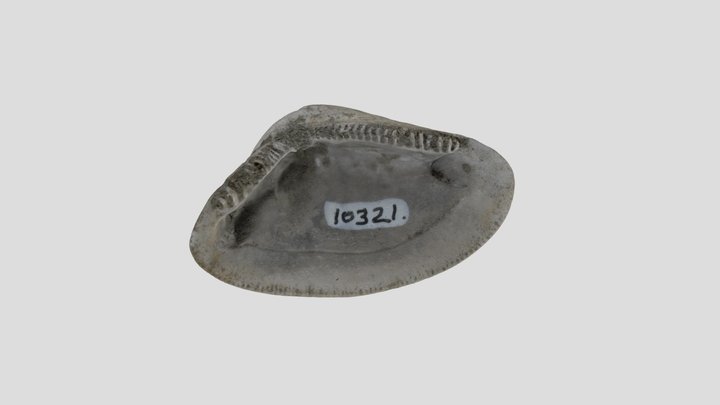
3D model
- Source
- Sketchfab
- Licence
- CC Attribution-NonCommercial
- Commercial use
- the licence does not allow it
The description on this site
- Source
- Wikipedia, “Nucula”
- Licence
- CC BY-SA 4.0
This is what the site found, which is not the same as what exists.
Keep going
Everything alive alongside itNuculidae through timeFormations of the Late CretaceousThe world it lived on
Occurrence data from the Paleobiology Database, CC BY 4.0. (Lamarck 1799)