Mitra

Uncredited · via Wikidata/Commons. May be a photograph of a specimen, or an artist’s reconstruction — an interpretation of a skeleton, since colour and soft tissue are almost never preserved.
On record
Recorded, not inferred- Sits inside
- MitrinaePBDB
- Diet
- carnivorePBDB, for Mitridae
- Life habit
- epifaunalPBDB, for Mitridae
- Motility
- actively mobilePBDB, for Mitridae
- Vision
- limitedPBDB, for Gastropoda
Time the record covers
At least 61 million years on record.
The record covers at least 61.66 Mya to 11.7 ka. No occurrence read is dated outside 66 Mya to 0 Mya.
366 occurrences of Mitra on record, most of them in the Miocene. The Paleobiology Database records this as a living group. Bar height is expected occurrences, not a count: each fossil is spread across the span it is dated to, so a tall narrow bar means tight dating and a low wide one means loose.
When
366 occurrencesThese are dates about fossils, not the animal: the record can only begin after it arose and end before it died out, so either end may reach further. Shares are expected occurrences: a fossil dated to a span is counted partly in each period it straddles. More on what this infers.
Found in
113 formations
- Termofourà Formation39
- Waimanalo Formation12
- Red Bluff Formation · Vicksburg Group11
- Lower Menkrawit Formation10
- Gurabo Formation9
- Chipola Formation · Alum Bluff Group7
Loading coastlines…
The named rock units Mitra has been recovered from, largest first. Drawn where the rock is now, not where it formed. 89 further formations hold fewer occurrences each and are not listed. 96 occurrences have no formation on record, which is common for older literature.
Mitra and its relatives
MioceneWhere Mitra and its relatives were recorded in the Miocene.
Found in the same rock
3,997 taxa- Conus30 sites
- Turritella28 sites
- Ostrea23 sites
- Turricula22 sites
- Cerithium21 sites
- Fusinus21 sites
- Glycymeris21 sites
- Nuculana20 sites
- Anadara19 sites
- Chlamys19 sites
- Architectonica17 sites
- Cancellaria17 sites
- Dentalium17 sites
- Ringicula17 sites
- Corbula16 sites
- Hipponix16 sites
- Mitrella16 sites
- Natica16 sites
- Nucula16 sites
- Olivella16 sites
- Polinices16 sites
- Sassia16 sites
- Turris16 sites
- Latirus15 sites
The Paleobiology Database records 171 sites for Mitra, and this reads all of them. Of that, one read hit the database's own return limit, so every count below is a floor rather than a total. The number is how many of those sites it was catalogued from too. The 24 sharing the most are listed.
This is not a list of everything alive at the time. It is only what has come out of the same ground as this animal and been written down.
Entered from
135 references- Lower to Middle Miocene Mollusc assemblages from the Torino Hills (NW Italy): Synthesis of new data and chronostratigraphical arrangement45
- Skwarko, 199433
- Die Fauna des marinen Miozäns von Kevelaer (Niederrhein). Band 4 Gastropoda ab Mitridae13
- Fossil mollusks of Oahu, Hawaii Islands12
- Suite des mémoires sur les fossiles des environs de Paris12
- Lower Oligocene Gastropoda, Scaphopoda, and Cephalopoda of the Vicksburg Group in Mississippi11
- The Molluscan Fauna of the Alum Bluff Group of Florida9
- Santo Domingo type sections and fossils9
- Fossil mollusks from Carriacou, West Indies7
- Fauna of the Type Tejon: Its relation to the Cowlitz Phase of the Tejon Group of Washington7
- Stratigraphy and Mollusca of the Eocene of western Oregon6
- Localidades fossiliferas da Formacao Pirabas (Mioceno Inferior)5
Each of the 366 occurrences read was entered from one of these publications, ordered by how many each accounts for. This is not a search for papers mentioning the name. 123 further references are not listed. Entries link to doi.org where the Paleobiology Database holds an identifier, and to its own record where it does not. Relayed as the Paleobiology Database holds them, not checked against what they resolve to.
Media and terms
Media content3
Picture of Mitra
- Source
- Wikidata/Commons
- Credit
- nobody named on the record
- Licence
- not stated by the source
- Commercial use
- cannot be read from the licence given — check the record
Photogrammetry
- Source
- MorphoSource
- Licence
- In Copyright
- Commercial use
- cannot be read from the licence given — check the record
- Specimen
- Mitra florida · UF:Invertebrate Zoology:128292-Mollusca
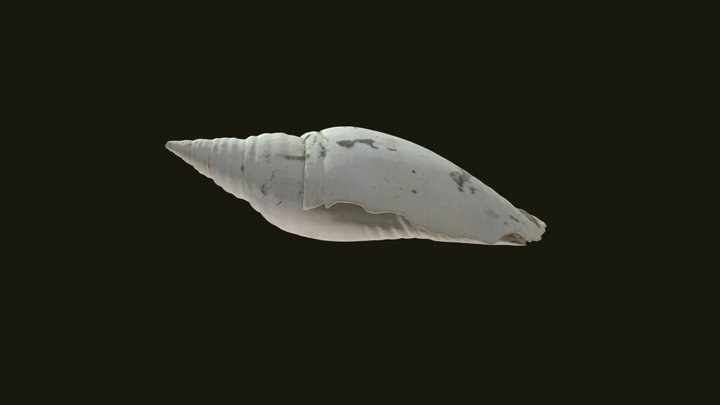
3D model
- Source
- Sketchfab
- Credit
- Shellie Luallin
- Licence
- CC Attribution
- Commercial use
- cannot be read from the licence given — check the record
Smithsonian Open Access was not reached for this taxon, so this list is what the others held rather than everything there is.
This is what the site found, which is not the same as what exists.
Keep going
What may have been alongside itMitrinae through timeFormations of the MioceneThe world it lived on
Occurrence data from the Paleobiology Database, CC BY 4.0. (Lamarck 1798)