Inoceramus (Inoceramus) pictus

Wallace, Steve · CC BY-NC 4.0 · via GBIF. May be a photograph of a specimen, or an artist’s reconstruction — an interpretation of a skeleton, since colour and soft tissue are almost never preserved.
On record
Recorded, not inferred- Sits inside
- Inoceramus (Inoceramus)PBDB
- Diet
- suspension feederPBDB, for Inoceramus
- Life habit
- epifaunalPBDB, for Inoceramus
- Motility
- facultatively mobilePBDB, for Inoceramus
- Vision
- blindPBDB, for Bivalvia
Time the record covers
At least 6.6 million years on record.
The record covers at least 100.5 Mya to 93.9 Mya. No occurrence read is dated outside 113.2 Mya to 66 Mya.
126 occurrences of Inoceramus (Inoceramus) pictus on record, most of them in the Late Cretaceous. Bar height is expected occurrences, not a count: each fossil is spread across the span it is dated to, so a tall narrow bar means tight dating and a low wide one means loose.
When
126 occurrencesThese are dates about fossils, not the animal: the record can only begin after it arose and end before it died out, so either end may reach further. Shares are expected occurrences: a fossil dated to a span is counted partly in each period it straddles. More on what this infers.
Found in
21 formations
- Mancos Shale Formation23
- Greenhorn Limestone Formation22
- Tropic Shale Formation21
- Holywell Nodular Chalk Formation3
- Branderfleck Formation3
- Haida Formation3
Loading coastlines…
The named rock units Inoceramus (Inoceramus) pictus has been recovered from, largest first. Drawn where the rock is now, not where it formed. 32 occurrences have no formation on record, which is common for older literature.
Inoceramus (Inoceramus) pictus and its relatives
Late CretaceousWhere Inoceramus (Inoceramus) pictus and its relatives were recorded in the Late Cretaceous.
Found in the same rock
357 taxa- Inoceramidae45 sites
- Pycnodonte37 sites
- Drepanocheilus28 sites
- Ostreidae28 sites
- Lucina27 sites
- Sciponoceras27 sites
- Phelopteria26 sites
- Corbula16 sites
- Ammonoidea15 sites
- Neocardioceras15 sites
- Astarte14 sites
- Camptonectes14 sites
- Turritella14 sites
- Mytiloides13 sites
- Bivalvia12 sites
- Euspira12 sites
- Exogyra10 sites
- Metoicoceras geslinianum9 sites
- Sciponoceras gracile9 sites
- Worthoceras9 sites
- Cerithiopsis8 sites
- Entolium8 sites
- Solemya8 sites
- Euomphaloceras7 sites
The Paleobiology Database records 113 sites for Inoceramus (Inoceramus) pictus, and this reads all of them. The number is how many of those sites it was catalogued from too. The 24 sharing the most are listed.
This is not a list of everything alive at the time. It is only what has come out of the same ground as this animal and been written down.
Entered from
30 references- The paleoecology of the Cenomanian-Turonian (Cretaceous) stage boundary extinctions at Black Mesa, Arizona54
- Die Oberkreide der Sack-Mulde bei Alfeld (Cenoman-Unter-Coniac) Lithologie, Biostratigraphie und Inoceramen28
- Paleontology of the Greenhorn cylcothem (Cretaceous: late Cenomanian to middle Turonian) at Black Mesa, northeastern Arizona7
- Integrated stratigraphy and palaeoenvironment of the Cenomanian-Lower Turonian (Upper Cretaceous) of Northern Westphalia, North Germany3
- Bivalven, Gastropoden und Serpuliden aus den Branderfleckschichten (Cenoman) der Fahrenbergmulde (Nördliche Kalkalpen, Bayern): Taxonomie und Palökologie [Bivalves, gastropods and serpulids from the Branderfleck Formation (Cenomanian) of Fahrenbergmulde (Bavarian Alps): taxonomy and palaeoecology]3
- Stratigraphic investigations of the Cretaceous Queen Chartlotte Group, Queen Charlotte Islands, British Columbia3
- The Cenomanian/Turonian boundary in Sakhalin, Far East Russia: ammonites, inoceramids, foraminifera, and radiolarians2
- Tarrantoceras Stephenson and related ammonoid genera from Cenomanian (Upper Cretaceous) rocks in Texas and the western interior of the United States2
- New and little-known ammonites from the Upper Cretaceous (Cenomanian and Turonian) of the western interior of the United States2
- The palaeoecology of the Actinocamax plenus subzone (lowest Turonian) in the Anglo-Paris basin2
- Carbon and oxygen stable isotopes of selected Cenomanian and Turonian rudists from Egypt and Czech Republic, and a note on changes in rudist diversity1
- First fossil sponge from Antarctica and its paleobiogeographical significance1
Each of the 126 occurrences read was entered from one of these publications, ordered by how many each accounts for. This is not a search for papers mentioning the name. 18 further references are not listed. Entries link to doi.org where the Paleobiology Database holds an identifier, and to its own record where it does not. Relayed as the Paleobiology Database holds them, not checked against what they resolve to.
Media and terms
Media content3
Picture of Inoceramus (Inoceramus) pictus
- Source
- GBIF
- Credit
- Wallace, Steve
- Licence
- CC BY-NC 4.0
- Commercial use
- the licence does not allow it
Laser scan
- Source
- MorphoSource
- Licence
- not stated by the source
- Commercial use
- cannot be read from the licence given — check the record
- Specimen
- Inoceramus sp. · ypm:ip:YPM IP 614951
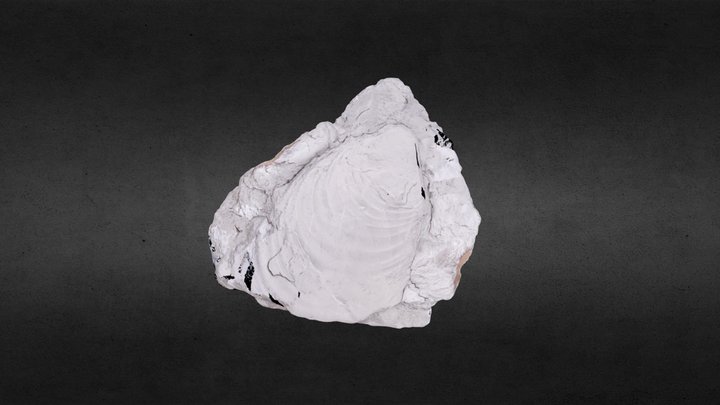
3D model
- Source
- Sketchfab
- Credit
- Shellie Luallin
- Licence
- CC Attribution
- Commercial use
- cannot be read from the licence given — check the record
This is what the site found, which is not the same as what exists.
Keep going
What may have been alongside itInoceramus (Inoceramus) through timeFormations of the Late CretaceousThe world it lived on
Occurrence data from the Paleobiology Database, CC BY 4.0. (Sowerby 1829)