Hydrochoerus
The genus Hydrochoerus contains two living and three extinct species of rodents from South America, the Caribbean island of Grenada, California and Panama. Capybaras are the largest living rodents. The name of the genus is derived from Ancient Greek ὕδωρ (húdor), meaning "water", and χοῖρος (khoîros), meaning "pig".

Phillip Capper from Wellington, New Zealand · CC BY 2.0 · via Wikipedia/Commons. May be a photograph of a specimen, or an artist’s reconstruction — an interpretation of a skeleton, since colour and soft tissue are almost never preserved.
On record
Recorded, not inferred- Also called
- capybaraPBDB
- Sits inside
- HydrochoerinaePBDB
- Diet
- herbivorePBDB, for Caviidae
- Life habit
- amphibiousPBDB
- Motility
- actively mobilePBDB, for Osteichthyes
- Environment
- terrestrialPBDB, for Eutheria
Time the record covers
At least 4.6 million years on record.
The record covers at least 4.7 Mya to 11.7 ka. No occurrence read is dated outside 9.4 Mya to 0 Mya.
41 occurrences of Hydrochoerus on record, most of them in the Pleistocene. The Paleobiology Database records this as a living group. Bar height is expected occurrences, not a count: each fossil is spread across the span it is dated to, so a tall narrow bar means tight dating and a low wide one means loose.
When
41 occurrences- Miocene2%
- Pliocene9%
- Pleistocene65%
- Holocene25%
These are dates about fossils, not the animal: the record can only begin after it arose and end before it died out, so either end may reach further. Shares are expected occurrences: a fossil dated to a span is counted partly in each period it straddles. More on what this infers.
Found in
8 formations
- Nuapua Formation4
- Touro Passo Formation3
- Tarija Formation2
- Sopas Formation2
- Agua Blanca Formation1
- Santa Vitória Formation1
Loading coastlines…
The named rock units Hydrochoerus has been recovered from, largest first. Drawn where the rock is now, not where it formed. 26 occurrences have no formation on record, which is common for older literature.
Hydrochoerus and its relatives
PleistoceneWhere Hydrochoerus and its relatives were recorded in the Pleistocene.
Found in the same rock
655 taxa- Panthera onca10 sites
- Myocastor coypus7 sites
- Smilodon populator7 sites
- Tapirus terrestris7 sites
- Dasypus (Dasypus) novemcinctus6 sites
- Equus6 sites
- Glyptodon6 sites
- Glyptodon reticulatus6 sites
- Hippidion6 sites
- Hippidion principale6 sites
- Megatherium americanum6 sites
- Morenelaphus6 sites
- Odocoileus virginianus6 sites
- Pampatherium6 sites
- Panochthus6 sites
- Propraopus sulcatus6 sites
- Puma concolor6 sites
- Tapirus6 sites
- Aenocyon dirus5 sites
- Cuniculus paca5 sites
- Equus caballus5 sites
- Euphractus sexcinctus5 sites
- Leopardus pardalis5 sites
- Lestodon armatus5 sites
The Paleobiology Database records 36 sites for Hydrochoerus, and this reads all of them. The number is how many of those sites it was catalogued from too. The 24 sharing the most are listed.
This is not a list of everything alive at the time. It is only what has come out of the same ground as this animal and been written down.
Entered from
30 references- Imigrantes em um continente perdido: O registro fossilífero de roedores Caviomorpha (Mammalia: Rodentia: Ctenohystrica) do Cenozoico do Brasil6
- Capybaras (Rodentia: Hystricognathi: Hydrochoeridae) from the late Pleistocene of southern Brazil3
- Pleistocene mammals from Uruguay: Biostratigraphic, biogeographic and environmental connotations2
- The Eocene to Pleistocene vertebrates of Bolivia and their stratigraphic context: a review2
- Hoffstetter, 19682
- Notas sobre algunos mamíferos fósiles nuevos ó poco conocidos del Valle de Tarija2
- Vertebrate continental assemblage from the Last Interglacial in southern South America (Entre Ríos, Argentina). Biostratigraphy and paleoenvironment1
- The fossil mammals collected by Charles Darwin in South America during his travels on board the HMS Beagle1
- Tropical marsh and savanna of the late Pleistocene in northeastern Sonora, Mexico1
- Protocyon troglodytes (Lund) (Mammalia, Carnivora) in the Late Pleistocene of Rio Grande do Sul and their paleoecological significance1
- Late Cenozoic Land Mammals from Grenada, Lesser Antilles Island-Arc1
- La fauna de vertebrados pleistocénicos del Bajo San José (provincia de Buenos Aires, Argentina). Aspectos paleoambientales1
Each of the 41 occurrences read was entered from one of these publications, ordered by how many each accounts for. This is not a search for papers mentioning the name. 18 further references are not listed. Entries link to doi.org where the Paleobiology Database holds an identifier, and to its own record where it does not. Relayed as the Paleobiology Database holds them, not checked against what they resolve to.
Media and terms
Media content3

Picture of Hydrochoerus
- Source
- Wikipedia/Commons
- Credit
- Phillip Capper from Wellington, New Zealand
- Licence
- CC BY 2.0
- Commercial use
- the licence allows it
Photogrammetry
- Source
- MorphoSource
- Credit
- Kwata Association
- Licence
- not stated by the source
- Commercial use
- cannot be read from the licence given — check the record
- Specimen
- Hydrochoerus hydrochaeris · KWATA:JAGUARS:M5866
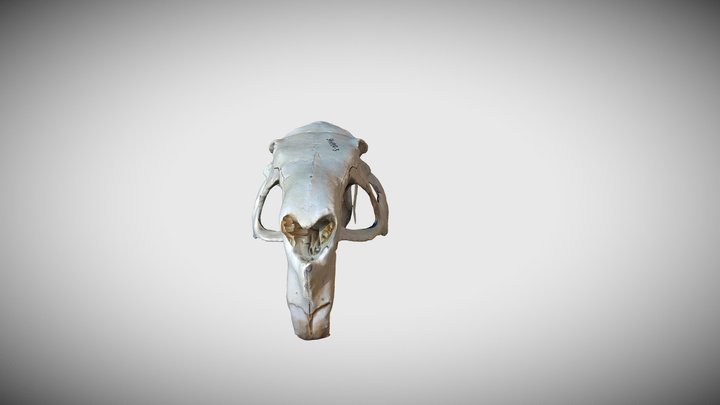
Smithsonian Open Access was not reached for this taxon, so this list is what the others held rather than everything there is.
The description on this site
- Licence
- CC BY-SA 4.0
This is what the site found, which is not the same as what exists.
Keep going
What may have been alongside itHydrochoerinae through timeFormations of the PleistoceneThe world it lived on
Occurrence data from the Paleobiology Database, CC BY 4.0. Brisson 1762