Myocastor coypus
The nutria or coypu is an herbivorous, semiaquatic rodent native to South America.

Petar Milošević · CC BY-SA 3.0 · via Wikipedia/Commons. May be a photograph of a specimen, or an artist’s reconstruction — an interpretation of a skeleton, since colour and soft tissue are almost never preserved.
On record
Recorded, not inferred- Also called
- coypuPBDB
- Sits inside
- MyocastorPBDB
- Diet
- herbivorePBDB, for Echimyidae
- Life habit
- amphibiousPBDB, for Myocastor
- Motility
- actively mobilePBDB, for Osteichthyes
- Environment
- terrestrialPBDB, for Eutheria
- Mass
- 6.7 kgWikidata
Time the record covers
At least 762 thousand years on record.
The record covers at least 774 ka to 11.7 ka. No occurrence read is dated outside 2.58 Mya to 0 Mya.
19 occurrences of Myocastor coypus on record, most of them in the Pleistocene. The Paleobiology Database records this as a living group. Bar height is expected occurrences, not a count: each fossil is spread across the span it is dated to, so a tall narrow bar means tight dating and a low wide one means loose.
When
19 occurrences- Pleistocene67%
- Holocene33%
These are dates about fossils, not the animal: the record can only begin after it arose and end before it died out, so either end may reach further. Shares are expected occurrences: a fossil dated to a span is counted partly in each period it straddles. More on what this infers.
Found in
7 formations
- Nuapua Formation2
- Sopas Formation1
- Tarija Formation1
- Santa Vitória Formation1
- Touro Passo Formation1
- Botucatu Formation1
Loading coastlines…
The named rock units Myocastor coypus has been recovered from, largest first. Drawn where the rock is now, not where it formed. 11 occurrences have no formation on record, which is common for older literature.
Myocastor coypus and its relatives
PleistoceneWhere Myocastor coypus and its relatives were recorded in the Pleistocene.
Found in the same rock
184 taxa- Hydrochoerus hydrochaeris7 sites
- Ctenomys4 sites
- Hippidion principale4 sites
- Morenelaphus4 sites
- Tapirus terrestris4 sites
- Euphractus sexcinctus3 sites
- Lagostomus maximus3 sites
- Lama guanicoe3 sites
- Notiomastodon platensis3 sites
- Ozotoceros bezoarticus3 sites
- Propraopus sulcatus3 sites
- Puma concolor3 sites
- Smilodon populator3 sites
- Zaedyus pichiy3 sites
- Antifer ultra2 sites
- Caiman2 sites
- Calomys2 sites
- Cavia aperea2 sites
- Columbidae2 sites
- Dasypus (Dasypus) novemcinctus2 sites
- Dicolpomys fossor2 sites
- Doedicurus clavicaudatus2 sites
- Dolichotinae2 sites
- Dusicyon2 sites
The Paleobiology Database records 14 sites for Myocastor coypus, and this reads all of them. The number is how many of those sites it was catalogued from too. The 24 sharing the most are listed.
This is not a list of everything alive at the time. It is only what has come out of the same ground as this animal and been written down.
Entered from
14 references- Imigrantes em um continente perdido: O registro fossilífero de roedores Caviomorpha (Mammalia: Rodentia: Ctenohystrica) do Cenozoico do Brasil5
- Pre-Hispanic mammal exploitation and hunting strategies in the eastern Pampa subregion of Argentina2
- Mammalian fossils from Gruta do Ioiô cave and past of the Chapada Diamantina, northeastern Brazil, using taphonomy, radiocarbon dating and paleoecology1
- Taguatagua 1: New insights into the late Pleistocene fauna, paleoenvironment, and human subsistence in a unique lacustrine context in central Chile1
- Occurrence of Dicolpomys (Echimyidae) in the late Holocene of Argentina: The most recently extinct South American caviomorph genus1
- New remains of Late Pleistocene mammals from the Chuí Creek, Southern Brazil1
- Caviomorphs (Mammalia, Rodentia) from the Holocene of Río Grande do Sul state Brazil: Systematics and paleoenvironmental context1
- Human exploitation of seabirds in coastal southern Chile during the mid-Holocene1
- The Eocene to Pleistocene vertebrates of Bolivia and their stratigraphic context: a review1
- Hippidion sp. (Mammalia, Perissodactyla, Equidae) en Sedimentos del Pleistoceno Superior del Uruguay (Edad Mamifero Luganense)1
- Descriçao de um novo genero e especie de Macraucheniidae (Mammalia, Litopterna) do Pleistoceno do Brasil1
- Additions to the knowledge of Hippocamelus, Ctenomys and Myocastor from the middle Pleistocene of Tarija basin, Bolivia1
Each of the 19 occurrences read was entered from one of these publications, ordered by how many each accounts for. This is not a search for papers mentioning the name. 2 further references are not listed. Entries link to doi.org where the Paleobiology Database holds an identifier, and to its own record where it does not. Relayed as the Paleobiology Database holds them, not checked against what they resolve to.
Media and terms
Media content3
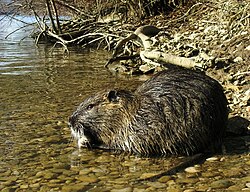
Picture of Myocastor coypus
- Source
- Wikipedia/Commons
- Credit
- Petar Milošević
- Licence
- CC BY-SA 3.0
- Commercial use
- the licence allows it
CT scan
- Source
- MorphoSource
- Licence
- not stated by the source
- Commercial use
- cannot be read from the licence given — check the record
- Specimen
- Myocastor coypus · UNMDP:Vertebrados FCEyN:2A
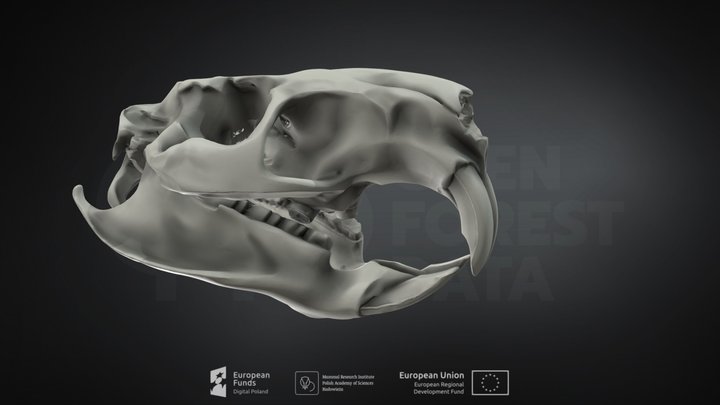
3D model
- Source
- Sketchfab
- Licence
- CC Attribution
- Commercial use
- cannot be read from the licence given — check the record
Smithsonian Open Access was not reached for this taxon, so this list is what the others held rather than everything there is.
The description on this site
- Source
- Wikipedia, “Nutria”
- Licence
- CC BY-SA 4.0
This is what the site found, which is not the same as what exists.
Keep going
What may have been alongside itMyocastor through timeFormations of the PleistoceneThe world it lived on
Occurrence data from the Paleobiology Database, CC BY 4.0. (Molina 1782)