Ctenomys
A tuco-tuco is a neotropical rodent in the family Ctenomyidae. Tuco-tucos belong to the only living genus of the family Ctenomyidae, Ctenomys, but they include approximately 60 different species. The common name, "tuco-tuco", comes from the "tuc-tuc" sound they make while they dig their burrows.

Ezequiel Racker · CC BY 4.0 · via Wikipedia/Commons. May be a photograph of a specimen, or an artist’s reconstruction — an interpretation of a skeleton, since colour and soft tissue are almost never preserved.
On record
Recorded, not inferred- Sits inside
- CtenomyidaePBDB
- Diet
- herbivorePBDB
- Life habit
- fossorialPBDB
- Motility
- actively mobilePBDB, for Osteichthyes
- Environment
- terrestrialPBDB, for Eutheria
Time the record covers
At least 2.9 million years on record.
The record covers at least 3 Mya to 11.7 ka. No occurrence read is dated outside 3.8 Mya to 0 Mya.
57 occurrences of Ctenomys on record, most of them in the Pleistocene. The Paleobiology Database records this as a living group. Bar height is expected occurrences, not a count: each fossil is spread across the span it is dated to, so a tall narrow bar means tight dating and a low wide one means loose.
When
57 occurrences- Pliocene13%
- Pleistocene62%
- Holocene25%
These are dates about fossils, not the animal: the record can only begin after it arose and end before it died out, so either end may reach further. Shares are expected occurrences: a fossil dated to a span is counted partly in each period it straddles. More on what this infers.
Found in
17 formations
- Tarija Formation4
- Uquía Formation4
- Lujan Formation3
- San Andres Formation3
- Matadero Saldungaray Formation2
- Nuapua Formation2
Loading coastlines…
The named rock units Ctenomys has been recovered from, largest first. Drawn where the rock is now, not where it formed. 28 occurrences have no formation on record, which is common for older literature.
Ctenomys and its relatives
PleistoceneWhere Ctenomys and its relatives were recorded in the Pleistocene.
Found in the same rock
332 taxa- Reithrodon auritus11 sites
- Chaetophractus villosus9 sites
- Akodon8 sites
- Lama guanicoe8 sites
- Galea leucoblephara7 sites
- Zaedyus pichiy7 sites
- Eutatus seguini6 sites
- Lagostomus maximus6 sites
- Calomys5 sites
- Calomys musculinus5 sites
- Glyptodon5 sites
- Hippidion5 sites
- Lestodon armatus5 sites
- Microcavia5 sites
- Microcavia australis5 sites
- Tolypeutes5 sites
- Abrocoma4 sites
- Eumysops4 sites
- Glossotherium4 sites
- Gomphotheriidae4 sites
- Graomys griseoflavus4 sites
- Lama4 sites
- Morenelaphus4 sites
- Myocastor4 sites
The Paleobiology Database records 40 sites for Ctenomys, and this reads all of them. The number is how many of those sites it was catalogued from too. The 24 sharing the most are listed.
This is not a list of everything alive at the time. It is only what has come out of the same ground as this animal and been written down.
Entered from
41 references- An exceptionally well-preserved fossil rodent of the South American subterranean clade Ctenomys (Rodentia, Ctenomyidae). Phylogeny and adaptive profile4
- Small mammals taphonomy and environmental evolution during Late Pleistocene-Holocene in Monte Desert: The evidence of Gruta del Indio (central west Argentina)3
- Late Cenozoic mammal bio-chronostratigraphy in southwestern Buenos Aires Province, Argentina3
- Notas sobre algunos mamíferos fósiles nuevos ó poco conocidos del Valle de Tarija3
- A new Pleistocene Ctenomys and divergence dating of the hyperdiverse South American rodent family Ctenomyidae2
- Biochronology and biostratigraphy of the Uquía Formation (Pliocene- early Pleistocene, NW Argentina) and its significance in the Great American Biotic Interchange2
- The caviomorph rodents from the San Andrés Formation, east-central Argentina, and global Late Pliocene climatic change2
- Reassesment of the Pliocene-Pleistocene continental time scale of Southern South America. Correlation of the type Chapadmalalan with Bolivian sections2
- Formas Terminales de Hippidion (Mammalia, Perissodactyla) de los Yacimientos del Pleistoceno Tardio-Holoceno de la Patagonia (Argentina y Chile)2
- La Unidad Mamifero (Fauna) Lujanense. Proyeccion de la Estratigrafia Mamaliana al Cuaternario de la Region Pampeana2
- Geología y Paleontología de los sedimentos del Pleistoceno en el área de Punta Hermengo (Miramar, Prov. de Buenos Aires, Rep. Argentina): Aspectos paleoclimáticos2
- Una nueva especie fósil de Ctenomys (Rodentia) y breve panorama paleontológico del género en Bolivia1
Each of the 57 occurrences read was entered from one of these publications, ordered by how many each accounts for. This is not a search for papers mentioning the name. 29 further references are not listed. Entries link to doi.org where the Paleobiology Database holds an identifier, and to its own record where it does not. Relayed as the Paleobiology Database holds them, not checked against what they resolve to.
Media and terms
Media content3

Picture of Ctenomys
- Source
- Wikipedia/Commons
- Credit
- Ezequiel Racker
- Licence
- CC BY 4.0
- Commercial use
- the licence allows it
CT scan
- Source
- MorphoSource
- Licence
- In Copyright
- Commercial use
- cannot be read from the licence given — check the record
- Specimen
- Ctenomys avitus · MLP:Pv:91-IV-25-212
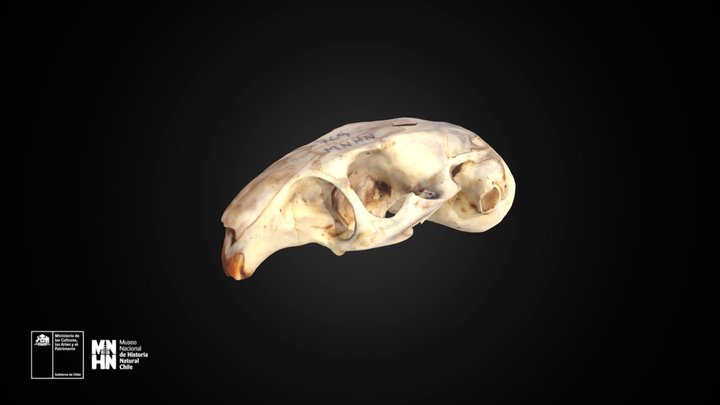
3D model
- Source
- Sketchfab
- Licence
- CC0 Public Domain
- Commercial use
- the licence allows it
Smithsonian Open Access was not reached for this taxon, so this list is what the others held rather than everything there is.
The description on this site
- Source
- Wikipedia, “Tuco-tuco”
- Licence
- CC BY-SA 4.0
This is what the site found, which is not the same as what exists.
Keep going
What may have been alongside itCtenomyidae through timeFormations of the PleistoceneThe world it lived on
Occurrence data from the Paleobiology Database, CC BY 4.0. de Blainville 1826