Gafrarium

Andrey Butko · CC BY-SA 3.0 · via Wikidata/Commons. May be a photograph of a specimen, or an artist’s reconstruction — an interpretation of a skeleton, since colour and soft tissue are almost never preserved.
On record
Recorded, not inferred- Sits inside
- GouldiinaePBDB
- Diet
- suspension feederPBDB, for Veneridae
- Life habit
- infaunalPBDB, for Veneridae
- Motility
- facultatively mobilePBDB, for Veneridae
- Vision
- blindPBDB, for Bivalvia
Time the record covers
At least 61 million years on record.
The record covers at least 61.66 Mya to 11.7 ka. No occurrence read is dated outside 66 Mya to 0 Mya.
32 occurrences of Gafrarium on record, most of them in the Pleistocene. The Paleobiology Database records this as a living group. Bar height is expected occurrences, not a count: each fossil is spread across the span it is dated to, so a tall narrow bar means tight dating and a low wide one means loose.
When
32 occurrences- Paleocene6%
- Miocene9%
- Pliocene13%
- Pleistocene69%
- Holocene3%
These are dates about fossils, not the animal: the record can only begin after it arose and end before it died out, so either end may reach further. Shares are expected occurrences: a fossil dated to a span is counted partly in each period it straddles. More on what this infers.
Found in
9 formations
- Togopi Formation4
- Chatti Mudstone Formation2
- Nullarbor Limestone Formation1
- Abbas Formation1
- Dampier Limestone Formation1
- Point Allen Formation1
Loading coastlines…
The named rock units Gafrarium has been recovered from, largest first. Drawn where the rock is now, not where it formed. 19 occurrences have no formation on record, which is common for older literature.
Gafrarium and its relatives
PleistoceneWhere Gafrarium and its relatives were recorded in the Pleistocene.
Found in the same rock
641 taxa- Chama7 sites
- Cardita5 sites
- Codakia tigerina5 sites
- Chlamys4 sites
- Corbula4 sites
- Saccostrea cuccullata4 sites
- Strombus4 sites
- Tellina4 sites
- Anadara3 sites
- Anadara (Anadara) antiquata3 sites
- Arca imbricata arabica3 sites
- Asaphis deflorata3 sites
- Barbatia3 sites
- Cardium3 sites
- Cerithium3 sites
- Cerithium caeruleum3 sites
- Chicoreus3 sites
- Circe (Circe) scripta3 sites
- Circe pectinata3 sites
- Conus3 sites
- Dendostrea folium3 sites
- Diplodonta3 sites
- Dosinia3 sites
- Haliotis3 sites
The Paleobiology Database records 19 sites for Gafrarium, and this reads all of them. The number is how many of those sites it was catalogued from too. The 24 sharing the most are listed.
This is not a list of everything alive at the time. It is only what has come out of the same ground as this animal and been written down.
Entered from
24 references- Preliminary notes on fossil records of East Malaysia and Brunei4
- Molluschi delle spiagge emerse del Mar Rosso e dell'Oceano Indiano, parte II (Lamellibranchi) [Mollusks from raised beaches bordering the Red Sea and the Indian Ocean, part II (bivalves)]4
- Pleistocene mollusc assemblage in the slightly raised atoll lagoon of Niau (Tuamotu, French Polynesia)2
- Hunting Survey Corporation, LTD, 19612
- Pleistocene Coral Reef Terraces on the Saudi Arabian Side of the Gulf of Aqaba, Red Sea1
- Diversity and Paleoecology of Miocene Coral-Associated Mollusks from East Kalimantan (Indonesia)1
- The Cainozoic palaeontology and stratigraphy of KwaZulu-Natal. Part 5. The False Bay Coral Limestone Formation. Stratigraphy and fauna1
- Facies pattern and molluscan fauna of the Late Pleistocene raised coral reef of Rabigh area, Red Sea coast, Saudi Arabia1
- Palaeoecology of well-preserved coral communities in a siliciclastic environment from the Late Pleistocene (MIS 7), Kish Island, Persian Gulf (Iran): the development of low-relief reef frameworks (biostromes) in increasingly restricted environments1
- Facies and faunal assemblage changes in response to the Holocene transgression in the Lagoon of Mayotte (Comoro Archipelago, SW Indian Ocean)1
- Bivalve Molluscs from the Badenian of Northwestern Bulgaria1
- Cenozoic Molluscs and Echinoids of Barrow Island, Western Australia1
Each of the 32 occurrences read was entered from one of these publications, ordered by how many each accounts for. This is not a search for papers mentioning the name. 12 further references are not listed. Entries link to doi.org where the Paleobiology Database holds an identifier, and to its own record where it does not. Relayed as the Paleobiology Database holds them, not checked against what they resolve to.
Media and terms
Media content3
Picture of Gafrarium
- Source
- Wikidata/Commons
- Credit
- Andrey Butko
- Licence
- CC BY-SA 3.0
- Commercial use
- the licence allows it
CT scan
- Source
- MorphoSource
- Licence
- In Copyright
- Commercial use
- cannot be read from the licence given — check the record
- Specimen
- Gafrarium pectinatum · fmnh:invertebrate zoology:319867
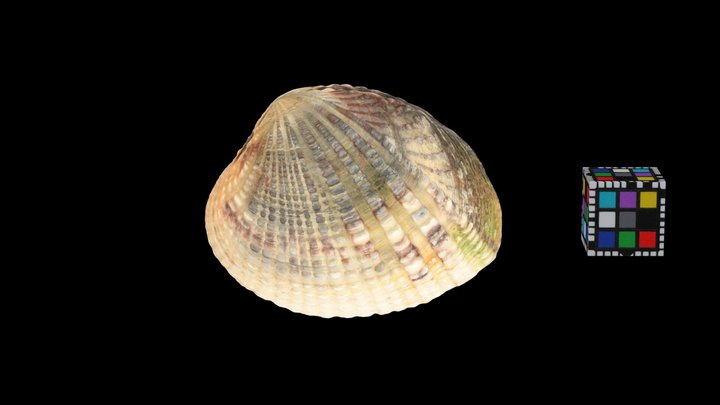
3D model
- Source
- Sketchfab
- Licence
- CC0 Public Domain
- Commercial use
- the licence allows it
Smithsonian Open Access was not reached for this taxon, so this list is what the others held rather than everything there is.
This is what the site found, which is not the same as what exists.
Keep going
What may have been alongside itGouldiinae through timeFormations of the PleistoceneThe world it lived on
Occurrence data from the Paleobiology Database, CC BY 4.0. (Ršding 1798)