Crocodylomorpha
Searched as Crocodylomorpha indet.. The Paleobiology Database treats Crocodylomorpha as the accepted name.
Crocodylomorpha is a group of pseudosuchian archosaurs that includes the crocodilians and their extinct relatives. They were the only members of Pseudosuchia to survive the end-Triassic extinction. Extinct crocodylomorphs were considerably more ecologically diverse than modern crocodilians. The earliest and most primitive crocodylomorphs are represented by "sphenosuchians", a paraphyletic assemblage containing small-bodied, slender forms with elongated limbs that walked upright, which represents the ancestral morphology of Crocodylomorpha. These forms persisted until the end of the Jurassic. During the Jurassic, crocodylomorphs morphologically diversified into numerous niches, with the subgroups Neosuchia and the extinct Thalattosuchia adapting to aquatic life, while some terrestrial groups adopted herbivorous and omnivorous lifestyles. Terrestrial crocodylomorphs would continue to co-exist alongside aquatic forms until becoming extinct during the Miocene.

LiterallyMiguel · CC BY 4.0 · via Wikipedia/Commons. May be a photograph of a specimen, or an artist’s reconstruction — an interpretation of a skeleton, since colour and soft tissue are almost never preserved.
On record
Recorded, not inferred- Also called
- crocodilianPBDB
- Sits inside
- LoricataPBDB
- Diet
- carnivorePBDB, for Pseudosuchia
- Motility
- actively mobilePBDB, for Osteichthyes
- Environment
- terrestrialPBDB, for Diapsida
Time the record covers
At least 227 million years on record.
The record covers at least 227.3 Mya to 129 ka. No occurrence read is dated outside 237 Mya to 0 Mya.
133 occurrences of Crocodylomorpha on record, most of them in the Late Cretaceous. The Paleobiology Database records this as a living group. Bar height is expected occurrences, not a count: each fossil is spread across the span it is dated to, so a tall narrow bar means tight dating and a low wide one means loose.
When
133 occurrences- Late Triassic13%
- Early Jurassic11%
- Middle Jurassic15%
- Late Jurassic12%
- Early Cretaceous15%
- Late Cretaceous23%
- Paleocene2%
- Eocene7%
- Oligoceneunder 1%
- Pliocene2%
- Pleistoceneunder 1%
- Holoceneunder 1%
These are dates about fossils, not the animal: the record can only begin after it arose and end before it died out, so either end may reach further. Shares are expected occurrences: a fossil dated to a span is counted partly in each period it straddles. More on what this infers.
Found in
71 formations
- Isalo IIIb Formation · Isalo Group15
- Kayenta Formation · Glen Canyon Group6
- Ksar Metlili Formation6
- Uinta Formation5
- Chinle Formation3
- Villar del Arzobispo Formation3
Loading coastlines…
The named rock units Crocodylomorpha has been recovered from, largest first. Drawn where the rock is now, not where it formed. 47 further formations hold fewer occurrences each and are not listed. 13 occurrences have no formation on record, which is common for older literature.
Crocodylomorpha and its relatives
Late CretaceousWhere Crocodylomorpha and its relatives were recorded in the Late Cretaceous.
Found in the same rock
2,948 taxa- Crocodylus66 sites
- Crocodylia50 sites
- Equus38 sites
- Trionychidae36 sites
- Clarias35 sites
- Bovidae34 sites
- Alcelaphini33 sites
- Geochelone33 sites
- Trionyx33 sites
- Lepisosteus31 sites
- Crocodylus niloticus30 sites
- Osteichthyes29 sites
- Hipparion28 sites
- Euthecodon brumpti26 sites
- Aves24 sites
- Palaeoloxodon recki24 sites
- Reptilia24 sites
- Gazella22 sites
- Kobus22 sites
- Mammalia22 sites
- Suidae22 sites
- Theropithecus oswaldi22 sites
- Giraffidae21 sites
- Lates21 sites
The Paleobiology Database records at least 1,454 sites for Crocodylomorpha, and this reads 240 of them. The number is how many of those sites it was catalogued from too. The 24 sharing the most are listed.
This is not a list of everything alive at the time. It is only what has come out of the same ground as this animal and been written down.
Entered from
82 references- Assessing diversity and paleoecology of a Middle Jurassic microvertebrate assemblage from Madagascar15
- New data on the microvertebrate fauna from the Upper Jurassic or lowest Cretaceous of Ksar Metlili (Anoual Syncline, eastern Morocco)6
- The marine vertebrate faunas from the Late Cretaceous phosphates of Syria6
- Geometric morphometrics and anatomical network analyses reveal ecospace partitioning among geoemydid turtles from the Uinta Formation, Utah5
- High-handed opinions on taxonomy and other matters5
- South American Crocodylomorphs (Archosauria; Crocodylomorpha): A review of the early fossil record in the continent and its relevance on understanding the origins of the clade3
- Calcium isotopes offer clues on resource partitioning among Cretaceous predatory dinosaurs3
- Personal opinions3
- An Early Jurassic microvertebrate fauna from the Kayenta Formation of northeastern Arizona: microfaunal change across the Triassic-Jurassic boundary3
- Vertebrate biostratigraphy of the Glen Canyon Group in northern Arizona3
- Latest Cretaceous palaeogeographic evolution of northeast Iberia: Insights from the Campanian continental Montalbán subbasin (Spain)2
- New longirostrine crocodylomorph remains from the Blesa Formation (Barremian) in the Iberian Peninsula (Spain)2
Each of the 133 occurrences read was entered from one of these publications, ordered by how many each accounts for. This is not a search for papers mentioning the name. 70 further references are not listed. Entries link to doi.org where the Paleobiology Database holds an identifier, and to its own record where it does not. Relayed as the Paleobiology Database holds them, not checked against what they resolve to.
Media and terms
Media content2

Picture of Crocodylomorpha
- Source
- Wikipedia/Commons
- Credit
- LiterallyMiguel
- Licence
- CC BY 4.0
- Commercial use
- the licence allows it
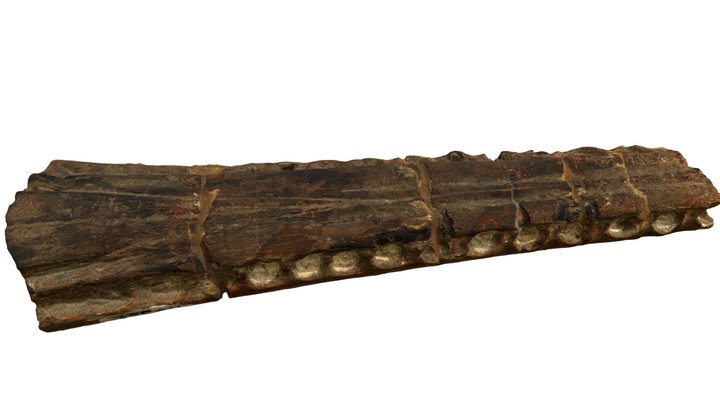
3D model
- Source
- Sketchfab
- Licence
- CC Attribution
- Commercial use
- cannot be read from the licence given — check the record
Smithsonian Open Access and MorphoSource were not reached for this taxon, so this list is what the others held rather than everything there is.
The description on this site
- Licence
- CC BY-SA 4.0
This is what the site found, which is not the same as what exists.
Keep going
What may have been alongside itLoricata through timeFormations of the Late CretaceousThe world it lived on
Occurrence data from the Paleobiology Database, CC BY 4.0. (Hay 1930)