Lepisosteus
Lepisosteus is a genus of gars in the family Lepisosteidae. It contains four extant species, found throughout eastern and central North America. It is one of two extant gar genera alongside Atractosteus.

Greg Goebel from Loveland CO, USA · CC BY-SA 2.0 · via Wikipedia/Commons. May be a photograph of a specimen, or an artist’s reconstruction — an interpretation of a skeleton, since colour and soft tissue are almost never preserved.
On record
Recorded, not inferred- Sits inside
- LepisosteidaePBDB
- Diet
- carnivorePBDB, for Lepisosteiformes
- Life habit
- nektonicPBDB, for Lepisosteiformes
- Motility
- actively mobilePBDB, for Lepisosteiformes
- Environment
- freshwaterPBDB, for Lepisosteiformes
Time the record covers
At least 132 million years on record.
The record covers at least 132.6 Mya to 11.7 ka. No occurrence read is dated outside 139.1 Mya to 0 Mya.
429 occurrences of Lepisosteus on record, most of them in the Late Cretaceous. The Paleobiology Database records this as a living group. Bar height is expected occurrences, not a count: each fossil is spread across the span it is dated to, so a tall narrow bar means tight dating and a low wide one means loose.
When
429 occurrences- Early Cretaceousunder 1%
- Late Cretaceous59%
- Paleocene6%
- Eocene22%
- Miocene5%
- Plioceneunder 1%
- Pleistocene6%
- Holoceneunder 1%
These are dates about fossils, not the animal: the record can only begin after it arose and end before it died out, so either end may reach further. Shares are expected occurrences: a fossil dated to a span is counted partly in each period it straddles. More on what this infers.
Found in
100 formations
- Hell Creek Formation · Montana Group76
- Willwood Formation56
- Dinosaur Park Formation · Belly River Group34
- Lance Formation28
- Oldman Formation · Belly River Group20
- North Horn Formation8
Loading coastlines…
The named rock units Lepisosteus has been recovered from, largest first. Drawn where the rock is now, not where it formed. 76 further formations hold fewer occurrences each and are not listed. 41 occurrences have no formation on record, which is common for older literature.
Lepisosteus and its relatives
Late CretaceousWhere Lepisosteus and its relatives were recorded in the Late Cretaceous.
Found in the same rock
2,349 taxa- Myledaphus bipartitus99 sites
- Scapherpeton tectum97 sites
- Trionychidae96 sites
- Crocodylia83 sites
- Ceratopsidae82 sites
- Baenidae76 sites
- Opisthotriton kayi72 sites
- Teleostei70 sites
- Chelydridae68 sites
- Hadrosauridae64 sites
- Champsosaurus63 sites
- Anura60 sites
- Aves57 sites
- Belonostomus longirostris54 sites
- Paralbula casei54 sites
- Brachychampsa montana51 sites
- Paronychodon51 sites
- Coriops amnicolus50 sites
- Multituberculata50 sites
- Theropoda50 sites
- Adocus48 sites
- Borealosuchus sternbergii47 sites
- Compsemys victa46 sites
- Lacertilia43 sites
The Paleobiology Database records 416 sites for Lepisosteus, and this reads 240 of them. The number is how many of those sites it was catalogued from too. The 24 sharing the most are listed.
This is not a list of everything alive at the time. It is only what has come out of the same ground as this animal and been written down.
Entered from
184 references- Stratigraphy and mammalian paleontology of the McCullough Peaks, northern Bighorn Basin, Wyoming: Implications for biochronology, basin development, and community reorganization across the Paleocene-Eocene boundary40
- Fossil Vertebrate Collections35
- Vertebrate biostratigraphy of the Hell Creek Formation in southwestern North Dakota and northwestern South Dakota31
- Fossil vertebrates from the Late Cretaceous Lance Formation, eastern Wyoming20
- Vertebrate microsite assemblages (exclusive of mammals) from the Foremost and Oldman Formations of the Judith River Group (Campanian) of southeastern Alberta: an illustrated guide18
- Paleontology of the Judith River Formation (Campanian) of Dinosaur National Park, Alberta, Canada: evidence from vertebrate microfossil locality16
- Paleoecology of an estuarine, incised-valley fill in the Dinosaur Park Formation (Judith River Group, Upper Cretaceous) of southern Alberta, Canada14
- New earliest Wasatchian mammalian fauna from the Eocene of northwestern Wyoming: composition and diversity in a rarely sampled high-floodplain assemblage14
- Paleocene (Puercan-Torrejonian) mammalian faunas of the North Horn Formation, central Utah8
- Contributions to the geology and paleontology of San Juan County, New Mexico. 2. Vertebrate faunas of the Ojo Alamo, Kirtland and Fruitland Formations6
- Vertebrate fauna from the infra- and inter-trappean beds of Andhra Pradesh: age implications5
- Additions to the mammalian paleofauna of Saskatchewan4
Each of the 429 occurrences read was entered from one of these publications, ordered by how many each accounts for. This is not a search for papers mentioning the name. 172 further references are not listed. Entries link to doi.org where the Paleobiology Database holds an identifier, and to its own record where it does not. Relayed as the Paleobiology Database holds them, not checked against what they resolve to.
Media and terms
Media content2

Picture of Lepisosteus
- Source
- Wikipedia/Commons
- Credit
- Greg Goebel from Loveland CO, USA
- Licence
- CC BY-SA 2.0
- Commercial use
- the licence allows it
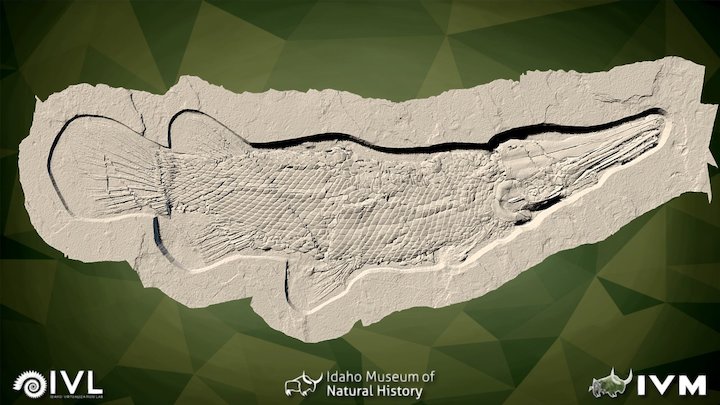
3D model
- Source
- Sketchfab
- Licence
- CC Attribution-NonCommercial-NoDerivs
- Commercial use
- the licence does not allow it
Smithsonian Open Access and MorphoSource were not reached for this taxon, so this list is what the others held rather than everything there is.
The description on this site
- Source
- Wikipedia, “Lepisosteus”
- Licence
- CC BY-SA 4.0
This is what the site found, which is not the same as what exists.
Keep going
What may have been alongside itLepisosteidae through timeFormations of the Late CretaceousThe world it lived on
Occurrence data from the Paleobiology Database, CC BY 4.0. Agassiz 1843