Champsosaurus
Champsosaurus is an extinct genus of crocodile-like choristodere reptile, known from the Late Cretaceous and early Paleogene periods of North America and Europe (Campanian–Paleocene). The name Champsosaurus is thought to come from champsai (χαμψαι), said in an Ancient Greek source to be an Egyptian word for "crocodiles", and sauros, (σαύρος) Greek for "lizard". The morphology of Champsosaurus resembles that of gharials, with a long, elongated snout. It was native to freshwater environments where it likely preyed on fish, similar to living gharials.

D. Gordon E. Robertson · CC BY-SA 3.0 · via Wikipedia/Commons. May be a photograph of a specimen, or an artist’s reconstruction — an interpretation of a skeleton, since colour and soft tissue are almost never preserved.
On record
Recorded, not inferred- Sits inside
- NeochoristoderaPBDB
- Diet
- piscivorePBDB
- Life habit
- aquaticPBDB
- Motility
- actively mobilePBDB, for Osteichthyes
- Environment
- freshwaterPBDB
Time the record covers
At least 36 million years on record.
The record covers at least 93.9 Mya to 57.5 Mya. No occurrence read is dated outside 100.5 Mya to 56 Mya.
232 occurrences of Champsosaurus on record, most of them in the Late Cretaceous. Bar height is expected occurrences, not a count: each fossil is spread across the span it is dated to, so a tall narrow bar means tight dating and a low wide one means loose.
When
232 occurrences- Late Cretaceous85%
- Paleocene15%
These are dates about fossils, not the animal: the record can only begin after it arose and end before it died out, so either end may reach further. Shares are expected occurrences: a fossil dated to a span is counted partly in each period it straddles. More on what this infers.
Found in
28 formations
- Hell Creek Formation · Montana Group74
- Dinosaur Park Formation · Belly River Group41
- Oldman Formation · Belly River Group28
- Lance Formation15
- Fort Union Formation10
- Frenchman Formation6
Loading coastlines…
The named rock units Champsosaurus has been recovered from, largest first. Drawn where the rock is now, not where it formed. 4 further formations hold fewer occurrences each and are not listed. 7 occurrences have no formation on record, which is common for older literature.
Champsosaurus and its relatives
Late CretaceousWhere Champsosaurus and its relatives were recorded in the Late Cretaceous.
Found in the same rock
1,046 taxa- Trionychidae110 sites
- Myledaphus bipartitus103 sites
- Scapherpeton tectum99 sites
- Baenidae97 sites
- Ceratopsidae90 sites
- Chelydridae81 sites
- Hadrosauridae81 sites
- Lepisosteus occidentalis78 sites
- Opisthotriton kayi76 sites
- Teleostei76 sites
- Crocodylia66 sites
- Anura65 sites
- Lepisosteus56 sites
- Belonostomus longirostris55 sites
- Coriops amnicolus53 sites
- Theropoda53 sites
- Paronychodon51 sites
- Adocus50 sites
- Paralbula casei49 sites
- Compsemys victa48 sites
- Brachychampsa montana47 sites
- Aves44 sites
- Borealosuchus sternbergii44 sites
- Multituberculata44 sites
The Paleobiology Database records 225 sites for Champsosaurus, and this reads all of them. The number is how many of those sites it was catalogued from too. The 24 sharing the most are listed.
This is not a list of everything alive at the time. It is only what has come out of the same ground as this animal and been written down.
Entered from
79 references- Vertebrate biostratigraphy of the Hell Creek Formation in southwestern North Dakota and northwestern South Dakota27
- Fossil Vertebrate Collections22
- Paleontology of the Judith River Formation (Campanian) of Dinosaur National Park, Alberta, Canada: evidence from vertebrate microfossil locality20
- Vertebrate microsite assemblages (exclusive of mammals) from the Foremost and Oldman Formations of the Judith River Group (Campanian) of southeastern Alberta: an illustrated guide18
- Patterns of geographic variation in latest Cretaceous vertebrates: evidence from the turtle component14
- Paleoecology of an estuarine, incised-valley fill in the Dinosaur Park Formation (Judith River Group, Upper Cretaceous) of southern Alberta, Canada14
- New choristoderes (Reptilia: Diapsida) from the Upper Cretaceous and Palaeocene, Alberta and Saskatchewan, Canada, a phylogenetic relationships of Choristodera8
- Vertebrate faunal changes through Lancian and Puercan time in southern Wyoming6
- The lignite field of northwestern South Dakota6
- Exceptional continental record of biotic recovery after the Cretaceous–Paleogene mass extinction4
- The Cretaceous reptiles Champsosaurus natator Parks4
- Stratigraphy and mammalian paleontology of the McCullough Peaks, northern Bighorn Basin, Wyoming: Implications for biochronology, basin development, and community reorganization across the Paleocene-Eocene boundary3
Each of the 232 occurrences read was entered from one of these publications, ordered by how many each accounts for. This is not a search for papers mentioning the name. 67 further references are not listed. Entries link to doi.org where the Paleobiology Database holds an identifier, and to its own record where it does not. Relayed as the Paleobiology Database holds them, not checked against what they resolve to.
Media and terms
Media content3
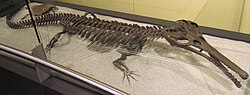
Picture of Champsosaurus
- Source
- Wikipedia/Commons
- Credit
- D. Gordon E. Robertson
- Licence
- CC BY-SA 3.0
- Commercial use
- the licence allows it
CT scan
- Source
- MorphoSource
- Licence
- not stated by the source
- Commercial use
- cannot be read from the licence given — check the record
- Specimen
- Champsosaurus lindoei · cmn:fv:8920
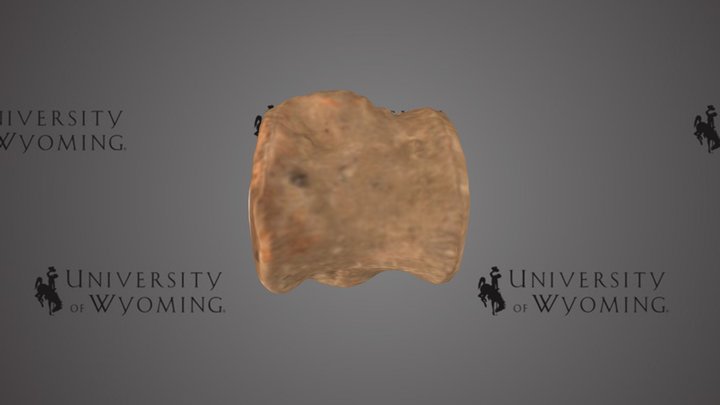
3D model
- Source
- Sketchfab
- Licence
- CC Attribution-NonCommercial
- Commercial use
- the licence does not allow it
The description on this site
- Licence
- CC BY-SA 4.0
This is what the site found, which is not the same as what exists.
Keep going
What may have been alongside itNeochoristodera through timeFormations of the Late CretaceousThe world it lived on
Occurrence data from the Paleobiology Database, CC BY 4.0. Cope 1876