Caretta caretta
The loggerhead sea turtle, loggerhead turtle or loggerhead, is a species of sea turtle distributed throughout the world. It is a marine reptile, belonging to the family Cheloniidae. The average loggerhead measures around 90 cm (35 in) in carapace length when fully grown. The adult loggerhead sea turtle weighs approximately 135 kg (298 lb), with the largest specimens weighing about 200 kg (440 lb). The skin ranges from yellow to brown in color, and the shell is typically reddish brown. No external differences in sex are seen until the turtle becomes an adult, the most obvious difference being the adult males have thicker tails and shorter plastrons than the females.

ukanda · CC BY 2.0 · via Wikipedia/Commons. May be a photograph of a specimen, or an artist’s reconstruction — an interpretation of a skeleton, since colour and soft tissue are almost never preserved.
On record
Recorded, not inferred- Also called
- loggerhead sea turtlePBDB
- Sits inside
- CarettaPBDB
- Diet
- omnivorePBDB, for Cryptodira
- Life habit
- aquaticPBDB, for Cryptodira
- Motility
- actively mobilePBDB, for Osteichthyes
- Environment
- marinePBDB, for Chelonioidea
Time the record covers
At least 762 thousand years on record.
The record covers at least 774 ka to 11.7 ka. No occurrence read is dated outside 1.8 Mya to 0 Mya.
6 occurrences of Caretta caretta on record, most of them in the Pleistocene. The Paleobiology Database records this as a living group. Bar height is expected occurrences, not a count: each fossil is spread across the span it is dated to, so a tall narrow bar means tight dating and a low wide one means loose.
When
6 occurrences- Pleistocene65%
- Holocene35%
These are dates about fossils, not the animal: the record can only begin after it arose and end before it died out, so either end may reach further. Shares are expected occurrences: a fossil dated to a span is counted partly in each period it straddles. More on what this infers.
Found in
1 formation
Loading coastlines…
The named rock units Caretta caretta has been recovered from, largest first. Drawn where the rock is now, not where it formed. 5 occurrences have no formation on record, which is common for older literature.
Caretta caretta and its relatives
PleistoceneWhere Caretta caretta and its relatives were recorded in the Pleistocene.
Found in the same rock
393 taxa- Equus4 sites
- Alligator mississippiensis3 sites
- Lepisosteus3 sites
- Mammut americanum3 sites
- Odocoileus virginianus3 sites
- Apalone ferox2 sites
- Archosargus probatocephalus2 sites
- Ardea2 sites
- Atractosteus spatula2 sites
- Caranx2 sites
- Carcharhinus leucas2 sites
- Carcharias taurus2 sites
- Carcharodon carcharias2 sites
- Carditamera floridana2 sites
- Castoroides dilophidus2 sites
- Chelonia mydas2 sites
- Chelydra serpentina2 sites
- Chione2 sites
- Chione cancellata2 sites
- Crotalus adamanteus2 sites
- Cuvieronius tropicus2 sites
- Dasypus bellus2 sites
- Gopherus polyphemus2 sites
- Hemiauchenia macrocephala2 sites
The Paleobiology Database records 6 sites for Caretta caretta, and this reads all of them. The number is how many of those sites it was catalogued from too. The 24 sharing the most are listed.
This is not a list of everything alive at the time. It is only what has come out of the same ground as this animal and been written down.
Entered from
6 references- Climate-driven environmental changes around 8,200 years ago favoured increases in cetacean strandings and Mediterranean hunter-gatherers exploited them1
- Terminal Pleistocene and Early Holocene Occupations of Isla de Cedros, Baja California, Mexico1
- The Tucker Borrow Pit: Paleontology and Stratigraphy of a Plio-Pleistocene fossil site in Brevard County, Florida1
- Pleistocene amphibians and reptiles from the Leisey Shell Pit, Hillsborough County, Florida1
- Tropical Rainforests of North Queensland: Their Conservation Significance1
- Vertebrata mostly from Stratum No. 3, at Vero, Florida, together with descriptions of new species1
Each of the 6 occurrences read was entered from one of these publications, ordered by how many each accounts for. This is not a search for papers mentioning the name. Entries link to doi.org where the Paleobiology Database holds an identifier, and to its own record where it does not. Relayed as the Paleobiology Database holds them, not checked against what they resolve to.
Media and terms
Media content2
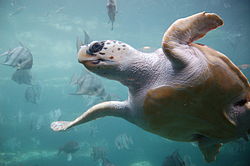
Picture of Caretta caretta
- Source
- Wikipedia/Commons
- Credit
- ukanda
- Licence
- CC BY 2.0
- Commercial use
- the licence allows it
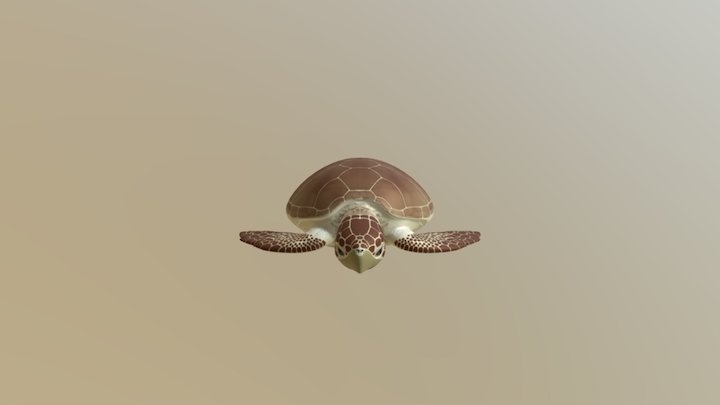
3D model
- Source
- Sketchfab
- Credit
- royalrebel2016
- Licence
- CC Attribution
- Commercial use
- cannot be read from the licence given — check the record
Smithsonian Open Access and MorphoSource were not reached for this taxon, so this list is what the others held rather than everything there is.
The description on this site
- Licence
- CC BY-SA 4.0
This is what the site found, which is not the same as what exists.
Keep going
What may have been alongside itCaretta through timeFormations of the PleistoceneThe world it lived on
Occurrence data from the Paleobiology Database, CC BY 4.0. (Linnaeus 1758)