Carcharias taurus
The sand tiger shark, also commonly known as the spotted ragged-tooth shark in South Africa, grey nurse shark in Australia, or blue-nurse sand tiger in India, is a species of shark that inhabits subtropical and temperate waters worldwide. It inhabits the continental shelf, from sandy shorelines and submerged reefs to a depth of around 191 m (627 ft). They dwell in the waters of Japan, Australia, South Africa, and the east coasts of North and South America. The sand tiger shark also inhabited the Mediterranean; however, it was last seen there in 2003 and is presumed extirpated. Despite its common names, it is not closely related to either the tiger shark or the nurse shark.

Bryce Watts-Parker · CC BY 4.0 · via Wikipedia/Commons. May be a photograph of a specimen, or an artist’s reconstruction — an interpretation of a skeleton, since colour and soft tissue are almost never preserved.
On record
Recorded, not inferred- Also called
- sand tiger sharkPBDB
- Sits inside
- CarchariasPBDB
- Diet
- carnivorePBDB, for Lamniformes
- Life habit
- nektonicPBDB, for Lamniformes
- Motility
- actively mobilePBDB, for Lamniformes
Time the record covers
At least 37 million years on record.
The record covers at least 37.71 Mya to 11.7 ka. No occurrence read is dated outside 41.03 Mya to 0 Mya.
71 occurrences of Carcharias taurus on record, most of them in the Miocene. The Paleobiology Database records this as a living group. Bar height is expected occurrences, not a count: each fossil is spread across the span it is dated to, so a tall narrow bar means tight dating and a low wide one means loose.
When
71 occurrencesThese are dates about fossils, not the animal: the record can only begin after it arose and end before it died out, so either end may reach further. Shares are expected occurrences: a fossil dated to a span is counted partly in each period it straddles. More on what this infers.
Found in
32 formations
- Arenas de Huelva Formation4
- Lagos-Portimão Formation4
- Globigerina Limestone Formation3
- Jan Juc Formation2
- Alachua Formation2
- Bermont Formation2
Loading coastlines…
The named rock units Carcharias taurus has been recovered from, largest first. Drawn where the rock is now, not where it formed. 8 further formations hold fewer occurrences each and are not listed. 23 occurrences have no formation on record, which is common for older literature.
Carcharias taurus and its relatives
MioceneWhere Carcharias taurus and its relatives were recorded in the Miocene.
Found in the same rock
1,408 taxa- Carcharhinus37 sites
- Isurus oxyrinchus36 sites
- Otodus megalodon35 sites
- Hemipristis serra33 sites
- Carcharodon hastalis30 sites
- Galeocerdo aduncus26 sites
- Negaprion brevirostris25 sites
- Galeocerdo cuvier24 sites
- Myliobatis24 sites
- Carcharodon carcharias23 sites
- Carcharhinus leucas18 sites
- Dasyatis14 sites
- Sphyrna zygaena14 sites
- Carcharhinus priscus12 sites
- Isurus12 sites
- Negaprion eurybathrodon12 sites
- Squatina12 sites
- Carcharhinus plumbeus11 sites
- Aetobatus10 sites
- Carcharhinus brachyurus10 sites
- Carcharhinus egertoni9 sites
- Carcharhinus falciformis9 sites
- Carcharhinus obscurus9 sites
- Isurus retroflexus9 sites
The Paleobiology Database records 69 sites for Carcharias taurus, and this reads all of them. The number is how many of those sites it was catalogued from too. The 24 sharing the most are listed.
This is not a list of everything alive at the time. It is only what has come out of the same ground as this animal and been written down.
Entered from
49 references- A review of the Tertiary fossil Cetacea (Mammalia) localities in Australia6
- Additions to, and review of, the Miocene shark and ray fauna of Malta5
- Los tiburones Lamniformes (Chondrichthyes, Galeomorphii) del Plioceno inferior de la Formación Arenas de Huelva, suroeste de la cuenca del Guadalquivir, España4
- Vertébrés (crocodiliens, poissons) du Miocène marin de l'Argarve occidentale4
- Carcharocles megalodon unpublished collections from Natural History Museums around the world3
- South Brazil pre-colonial sharks: insights into biodiversity and species distributions2
- Lamniform and Carcharhiniform Sharks from the Pungo River and Yorktown Formations (Miocene-Pliocene) of the submerged continental shelf, Onslow Bay, North Carolina, USA2
- Selachian fishes from Bhuban Formation, Surma Group, Aizawl, Mizoram2
- Pleistocene (Rancholabrean) vertebrate faunas from coastal Georgia2
- Faunes ichthyologiques du Néogène supérieur d'Angola, leur âge, remarques sur le Pliocène marin en Afrique australe2
- Presència de Tomistoma cf. lusitanica (Vianna i Moraes, 1945) (Reptilia: Crocodylia) al Burdigalià inferior de Mallorca (Illes Balears, Mediterrània occidental). Implicacions paleoambientals1
- Oldest record of the Great White Shark (Lamnidae, Carcharodon; Miocene) in the Southern Atlantic1
Each of the 71 occurrences read was entered from one of these publications, ordered by how many each accounts for. This is not a search for papers mentioning the name. 37 further references are not listed. Entries link to doi.org where the Paleobiology Database holds an identifier, and to its own record where it does not. Relayed as the Paleobiology Database holds them, not checked against what they resolve to.
Media and terms
Media content3

Picture of Carcharias taurus
- Source
- Wikipedia/Commons
- Credit
- Bryce Watts-Parker
- Licence
- CC BY 4.0
- Commercial use
- the licence allows it
CT scan
- Source
- MorphoSource
- Licence
- not stated by the source
- Commercial use
- cannot be read from the licence given — check the record
- Specimen
- Carcharias taurus · L-MEP:SndTg221_221.0FL_female
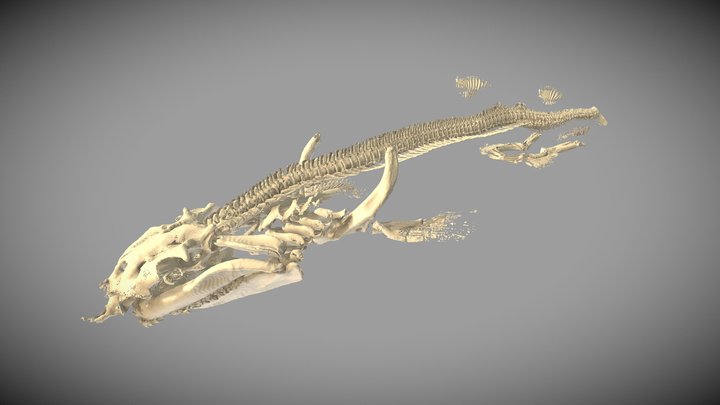
3D model
- Source
- Sketchfab
- Licence
- CC Attribution
- Commercial use
- cannot be read from the licence given — check the record
The description on this site
- Licence
- CC BY-SA 4.0
This is what the site found, which is not the same as what exists.
Keep going
What may have been alongside itCarcharias through timeFormations of the MioceneThe world it lived on
Occurrence data from the Paleobiology Database, CC BY 4.0. (Rafinesque 1810)