Caretta

Uncredited · via Wikidata/Commons. May be a photograph of a specimen, or an artist’s reconstruction — an interpretation of a skeleton, since colour and soft tissue are almost never preserved.
On record
Recorded, not inferred- Also called
- loggerheadPBDB
- Sits inside
- CarettinaePBDB
- Diet
- omnivorePBDB, for Cryptodira
- Life habit
- aquaticPBDB, for Cryptodira
- Motility
- actively mobilePBDB, for Osteichthyes
- Environment
- marinePBDB, for Chelonioidea
Time the record covers
At least 48 million years on record.
The record covers at least 48.07 Mya to 11.7 ka. No occurrence read is dated outside 56 Mya to 0 Mya.
18 occurrences of Caretta on record, most of them in the Eocene. The Paleobiology Database records this as a living group. Bar height is expected occurrences, not a count: each fossil is spread across the span it is dated to, so a tall narrow bar means tight dating and a low wide one means loose.
When
18 occurrences- Eocene28%
- Miocene23%
- Pliocene10%
- Pleistocene27%
- Holocene12%
These are dates about fossils, not the animal: the record can only begin after it arose and end before it died out, so either end may reach further. Shares are expected occurrences: a fossil dated to a span is counted partly in each period it straddles. More on what this infers.
Found in
9 formations
- Peace River Formation · Hawthorn Group3
- Gafsa Phosphates Formation2
- Bermont Formation1
- Yorktown Formation · Chesapeake Group1
- Citronelle Formation1
- Qasr el-Sagha Formation1
Loading coastlines…
The named rock units Caretta has been recovered from, largest first. Drawn where the rock is now, not where it formed. 6 occurrences have no formation on record, which is common for older literature.
Caretta and its relatives
EoceneWhere Caretta and its relatives were recorded in the Eocene.
Found in the same rock
837 taxa- Equus4 sites
- Kogiidae4 sites
- Ontocetus emmonsi4 sites
- Phocidae4 sites
- Testudines4 sites
- Alligator mississippiensis3 sites
- Archosargus probatocephalus3 sites
- Carcharhinus leucas3 sites
- Carcharias taurus3 sites
- Carcharodon carcharias3 sites
- Castoroides dilophidus3 sites
- Cormohipparion emsliei3 sites
- Lepisosteus3 sites
- Mammut americanum3 sites
- Mysticeti3 sites
- Negaprion brevirostris3 sites
- Ninoziphius platyrostris3 sites
- Odocoileus virginianus3 sites
- Pogonias cromis3 sites
- Prionotus3 sites
- Pristis3 sites
- Aetobatus2 sites
- Anas platyrhynchos2 sites
- Apalone ferox2 sites
The Paleobiology Database records 16 sites for Caretta, and this reads all of them. The number is how many of those sites it was catalogued from too. The 24 sharing the most are listed.
This is not a list of everything alive at the time. It is only what has come out of the same ground as this animal and been written down.
Entered from
14 references- Fossil sea turtles from the early Pliocene Bone Valley Formation, central Florida4
- African Chelonians from the Jurassic to the Present: Phases of development and preliminary catalogue of the fossil record2
- The first fossil loggerhead sea turtle (Cheloniidae: Caretta) from the North Pacific and its nannofossil biostratigraphy1
- Climate-driven environmental changes around 8,200 years ago favoured increases in cetacean strandings and Mediterranean hunter-gatherers exploited them1
- Terminal Pleistocene and Early Holocene Occupations of Isla de Cedros, Baja California, Mexico1
- Turtles of the Lee Creek Mine (Pliocene: North Carolina)1
- A fossil marine turtle from east central Louisiana1
- The Tucker Borrow Pit: Paleontology and Stratigraphy of a Plio-Pleistocene fossil site in Brevard County, Florida1
- Pleistocene amphibians and reptiles from the Leisey Shell Pit, Hillsborough County, Florida1
- Tropical Rainforests of North Queensland: Their Conservation Significance1
- Marine Tetrapoden im tertären Nordsee-Becken1
- Vertebrata mostly from Stratum No. 3, at Vero, Florida, together with descriptions of new species1
Each of the 18 occurrences read was entered from one of these publications, ordered by how many each accounts for. This is not a search for papers mentioning the name. 2 further references are not listed. Entries link to doi.org where the Paleobiology Database holds an identifier, and to its own record where it does not. Relayed as the Paleobiology Database holds them, not checked against what they resolve to.
Media and terms
Media content3
Picture of Caretta
- Source
- Wikidata/Commons
- Credit
- nobody named on the record
- Licence
- not stated by the source
- Commercial use
- cannot be read from the licence given — check the record
Structured light scan
- Source
- MorphoSource
- Licence
- In Copyright
- Commercial use
- cannot be read from the licence given — check the record
- Specimen
- Caretta caretta · zmuc:rept:H002000
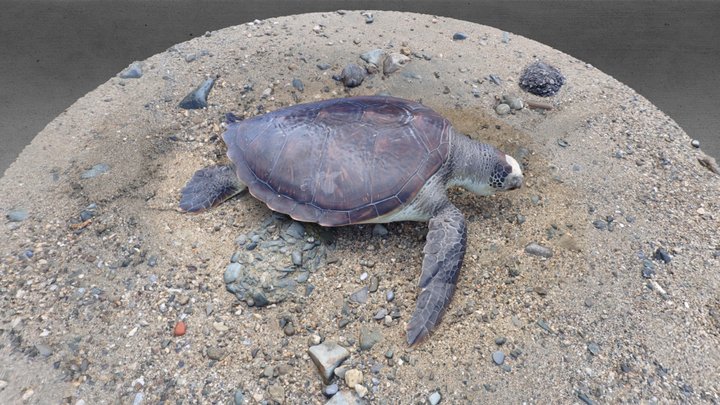
3D model
- Source
- Sketchfab
- Licence
- CC0 Public Domain
- Commercial use
- the licence allows it
Smithsonian Open Access was not reached for this taxon, so this list is what the others held rather than everything there is.
This is what the site found, which is not the same as what exists.
Keep going
What may have been alongside itCarettinae through timeFormations of the EoceneThe world it lived on
Occurrence data from the Paleobiology Database, CC BY 4.0. Rafinesque 1814