Camponotus
Carpenter ants are a genus of ants in the subfamily Formicinae found nearly worldwide except in Antarctica and a few islands. This genus is the most species-rich genus of ants in terms of described species, comprising over 1,500 described species as of 2025. Although they are commonly referred to as carpenter ants, only a few members, mostly in the subgenera Camponotus and Myrmentoma, nest in wood.

Muhammad Mahdi Karim · GFDL 1.2 · via Wikipedia/Commons. May be a photograph of a specimen, or an artist’s reconstruction — an interpretation of a skeleton, since colour and soft tissue are almost never preserved.
On record
Recorded, not inferred- Sits inside
- CamponotiniPBDB
- Motility
- actively mobilePBDB, for Arthropoda
- Environment
- terrestrialPBDB, for Insecta
Time the record covers
At least 41 million years on record.
The record covers at least 41.03 Mya to 11.7 ka. No occurrence read is dated outside 48.07 Mya to 0 Mya.
33 occurrences of Camponotus on record, most of them in the Miocene. The Paleobiology Database records this as a living group. Bar height is expected occurrences, not a count: each fossil is spread across the span it is dated to, so a tall narrow bar means tight dating and a low wide one means loose.
When
33 occurrencesThese are dates about fossils, not the animal: the record can only begin after it arose and end before it died out, so either end may reach further. Shares are expected occurrences: a fossil dated to a span is counted partly in each period it straddles. More on what this infers.
Found in
10 formations
- Kap København Formation7
- Shanwang Formation4
- Upper Freshwater-Molasse Formation2
- Miyajima Formation · Shiobara Group2
- Messel Formation1
- Imuruk Volcanics Formation1
Loading coastlines…
The named rock units Camponotus has been recovered from, largest first. Drawn where the rock is now, not where it formed. 12 occurrences have no formation on record, which is common for older literature.
Camponotus and its relatives
MioceneWhere Camponotus and its relatives were recorded in the Miocene.
Found in the same rock
1,265 taxa- Chrysomelidae6 sites
- Ichneumonidae6 sites
- Aegialia (Psammoporus) terminalis5 sites
- Carabidae5 sites
- Cerambycidae5 sites
- Coccinellidae5 sites
- Crematogaster5 sites
- Curculionidae5 sites
- Dolichoderus5 sites
- Formicidae5 sites
- Formicinae5 sites
- Staphylinidae5 sites
- Tapinoma5 sites
- Anisoptera4 sites
- Azteca4 sites
- Braconidae4 sites
- Calosoma maderae4 sites
- Grypus equiseti4 sites
- Hypoponera4 sites
- Myrmicinae4 sites
- Pentatomidae4 sites
- Pheidole4 sites
- Solenopsis4 sites
- Acrididae3 sites
The Paleobiology Database records 30 sites for Camponotus, and this reads all of them. The number is how many of those sites it was catalogued from too. The 24 sharing the most are listed.
This is not a list of everything alive at the time. It is only what has come out of the same ground as this animal and been written down.
Entered from
20 references- Palaeoentomology of the Kap København Formation, a Plio-Pleistocene sequence in Peary Land, North Greenland7
- Zhang, 19894
- Winged formicine ant fossils (Hymenoptera, Formicidae) from the Chibanian (Middle Pleistocene) Shiobara Group, Tochigi Prefecture, Japan2
- A preliminary review of Colombia ants (Hymenoptera: Formicidae) preserved in copal2
- Miocenovye muravwi (Hymenoptera, Formicidae) CCCP2
- Heer, 18492
- Et latet et lucet: Discoveries from the Phyletisches Museum amber and copal collection in Jena, Germany1
- Fossil ants (Hymenoptera: Formicidae) of the early Oligocene Canyon Ferry Reservoir deposit1
- Ants (Hymenoptera: Formicidae) from localities of the Russian far east (Amgu, Velikaya Kema)1
- The mid-Miocene Zhangpu biota reveals an outstandingly rich rainforest biome in East Asia1
- Ants from the Miocene Totolapa amber (Chiapas, Mexico), with the first record of the genus Forelius (Hymenoptera, Formicidae)1
- Systematic, palaeoecology, and palaeobiogeography of the insect fauna from Mexican amber1
Each of the 33 occurrences read was entered from one of these publications, ordered by how many each accounts for. This is not a search for papers mentioning the name. 8 further references are not listed. Entries link to doi.org where the Paleobiology Database holds an identifier, and to its own record where it does not. Relayed as the Paleobiology Database holds them, not checked against what they resolve to.
Media and terms
Media content3
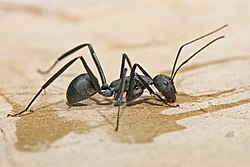
Picture of Camponotus
- Source
- Wikipedia/Commons
- Credit
- Muhammad Mahdi Karim
- Licence
- GFDL 1.2
- Commercial use
- the licence allows it
CT scan
- Source
- MorphoSource
- Credit
- UTEP Insects (Arctos)
- Licence
- not stated by the source
- Commercial use
- cannot be read from the licence given — check the record
- Specimen
- Camponotus etiolatus · UTEP:Ento:UTEP:Ento:17097
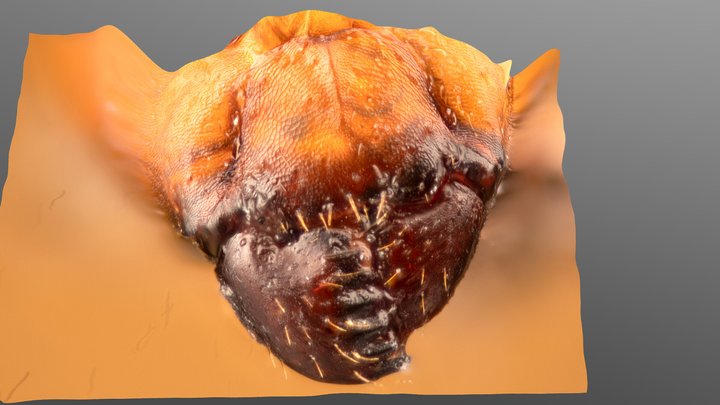
3D model
- Source
- Sketchfab
- Credit
- Benoît Rogez
- Licence
- CC Attribution-NonCommercial-ShareAlike
- Commercial use
- the licence does not allow it
The description on this site
- Licence
- CC BY-SA 4.0
This is what the site found, which is not the same as what exists.
Keep going
What may have been alongside itCamponotini through timeFormations of the MioceneThe world it lived on
Occurrence data from the Paleobiology Database, CC BY 4.0. Mayr 1861