Solenopsis
Fire ants are several species of ants in the genus Solenopsis, which includes over 200 species. Solenopsis are stinging ants, and most of their common names reflect this, for example, ginger ants and tropical fire ants. Many of the names shared by this genus are often used interchangeably to refer to other species of ant, such as the term red ant, mostly because of their similar coloration despite not being in the genus Solenopsis. Both Myrmica rubra and Pogonomyrmex barbatus are common examples of non-Solenopsis ants being termed red ants.

Uncredited · Public Domain · via Wikipedia/Commons. May be a photograph of a specimen, or an artist’s reconstruction — an interpretation of a skeleton, since colour and soft tissue are almost never preserved.
On record
Recorded, not inferred- Sits inside
- SolenopsidiniPBDB
- Motility
- actively mobilePBDB, for Arthropoda
- Environment
- terrestrialPBDB, for Insecta
Time the record covers
At least 303 million years on record.
The record covers at least 303.7 Mya to 11.7 ka. No occurrence read is dated outside 306 Mya to 0 Mya.
41 occurrences of Solenopsis on record, most of them in the Oligocene. The Paleobiology Database records this as a living group. Bar height is expected occurrences, not a count: each fossil is spread across the span it is dated to, so a tall narrow bar means tight dating and a low wide one means loose.
When
41 occurrences- Carboniferous5%
- Permian2%
- Early Triassic2%
- Oligocene51%
- Miocene34%
- Plioceneunder 1%
- Holocene5%
These are dates about fossils, not the animal: the record can only begin after it arose and end before it died out, so either end may reach further. Shares are expected occurrences: a fossil dated to a span is counted partly in each period it straddles. More on what this infers.
Found in
5 formations
- Salt Formation6
- Conemaugh Formation2
- Wandrawandian Formation1
- Mazantic Shale Formation · Simojovel Group1
- Hachiya Formation · Kani Group1
Loading coastlines…
The named rock units Solenopsis has been recovered from, largest first. Drawn where the rock is now, not where it formed. 30 occurrences have no formation on record, which is common for older literature.
Solenopsis and its relatives
OligoceneWhere Solenopsis and its relatives were recorded in the Oligocene.
Found in the same rock
779 taxa- Apioninae4 sites
- Camponotus4 sites
- Cydnus armiger4 sites
- Aphanus contractus3 sites
- Azteca3 sites
- Camponotites vehemens3 sites
- Cephalotes3 sites
- Crematogaster3 sites
- Cydnus brevicollis3 sites
- Cydnus solutus3 sites
- Eysarcoris3 sites
- Heterogaster sundgoviensis3 sites
- Pachycondyla3 sites
- Pheidole3 sites
- Plecia foersteri3 sites
- Plecia rhenana3 sites
- Polyphaga3 sites
- Tapinoma3 sites
- Tipula3 sites
- Acharax (Nacrosolemya) trapezoides2 sites
- Amphiscapha catilloides2 sites
- Anchomenus bipunctatus2 sites
- Anthraconeilo taffiana2 sites
- Aphidecta marginata2 sites
The Paleobiology Database records 18 sites for Solenopsis, and this reads all of them. The number is how many of those sites it was catalogued from too. The 24 sharing the most are listed.
This is not a list of everything alive at the time. It is only what has come out of the same ground as this animal and been written down.
Entered from
11 references- Les insectes fossiles des terrains oligocènes de France12
- Solenopsis (Hymenoptera, Formicidae) thief ants in Dominican amber and putative subfossil resin10
- Die Insekten der "Plattigen Steinmergels" von Brunstatt9
- A preliminary review of Colombia ants (Hymenoptera: Formicidae) preserved in copal2
- The fauna of the Ames and Brush Creek shales of the Conemaugh Formation of western Maryland2
- Miocene ants (Hymenoptera, Formicidae) from Crimea1
- Systematic, palaeoecology, and palaeobiogeography of the insect fauna from Mexican amber1
- Early Miocene insect fauna of the Hachiya Formation, Gifu Prefecture, Japan1
- Arthropodes fossiles de la Montagne d'Andance, Massif du Coiron - Ardèche1
- Palaeontology of the lower Shoalhaven River1
- Arktische Triasfaunen. Beiträge zur palaeontologischen Charakteristik der arktisch-pacifischen Triasprovinz1
Each of the 41 occurrences read was entered from one of these publications, ordered by how many each accounts for. This is not a search for papers mentioning the name. Entries link to doi.org where the Paleobiology Database holds an identifier, and to its own record where it does not. Relayed as the Paleobiology Database holds them, not checked against what they resolve to.
Media and terms
Media content2

Picture of Solenopsis
- Source
- Wikipedia/Commons
- Credit
- nobody named on the record
- Licence
- Public Domain
- Commercial use
- the licence allows it
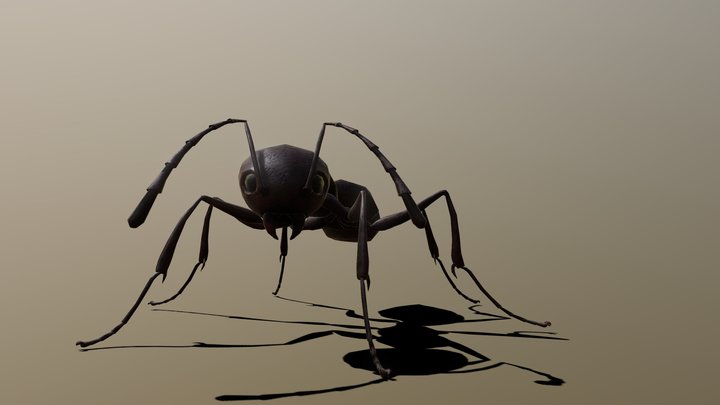
3D model
- Source
- Sketchfab
- Credit
- SpiderBight [ArachnoBoy]
- Licence
- CC Attribution-NonCommercial-ShareAlike
- Commercial use
- the licence does not allow it
The description on this site
- Source
- Wikipedia, “Fire ant”
- Licence
- CC BY-SA 4.0
This is what the site found, which is not the same as what exists.
Keep going
What may have been alongside itSolenopsidini through timeFormations of the OligoceneThe world it lived on
Occurrence data from the Paleobiology Database, CC BY 4.0. Westwood 1840