Aythya affinis
The lesser scaup is a small North American diving duck that migrates south as far as Central America in winter. It is colloquially known as the little bluebill or broadbill because of its distinctive blue bill. The origin of the name scaup may stem from the bird's preference for feeding on scalp—the Scottish word for clams, oysters, and mussels; however, some credit it to the female's discordant scaup call as the name's source. It is apparently a very close relative of the Holarctic greater scaup or "bluebill", with which it forms a superspecies. The scientific name is derived from Ancient Greek and Latin, with aithuia being an Ancient Greek term for an unidentified seabird, used by Hesychius and Aristotle, among other authors, and affinis, Latin for "related to", from the lesser scaup's resemblance to the greater scaup.

Chuck Homler d/b/a Focus On Wildlife · CC BY-SA 4.0 · via Wikipedia/Commons. May be a photograph of a specimen, or an artist’s reconstruction — an interpretation of a skeleton, since colour and soft tissue are almost never preserved.
On record
Recorded, not inferred- Also called
- lesser scaupPBDB
- Sits inside
- AythyaPBDB
- Diet
- herbivorePBDB, for Anatinae
- Life habit
- volantPBDB, for Anatinae
- Motility
- actively mobilePBDB, for Theropoda
- Environment
- freshwaterPBDB, for Anatinae
- Mass
- 748 gWikidata
Time the record covers
At least 3.5 million years on record.
The record covers at least 3.6 Mya to 11.7 ka. No occurrence read is dated outside 5.333 Mya to 0 Mya.
19 occurrences of Aythya affinis on record, most of them in the Pleistocene. The Paleobiology Database records this as a living group. Bar height is expected occurrences, not a count: each fossil is spread across the span it is dated to, so a tall narrow bar means tight dating and a low wide one means loose.
When
19 occurrences- Pliocene5%
- Pleistocene68%
- Holocene26%
These are dates about fossils, not the animal: the record can only begin after it arose and end before it died out, so either end may reach further. Shares are expected occurrences: a fossil dated to a span is counted partly in each period it straddles. More on what this infers.
Found in
3 formations
- Alamosa Formation1
- Yorktown Formation · Chesapeake Group1
- Bermont Formation1
Loading coastlines…
The named rock units Aythya affinis has been recovered from, largest first. Drawn where the rock is now, not where it formed. 16 occurrences have no formation on record, which is common for older literature.
Aythya affinis and its relatives
PleistoceneWhere Aythya affinis and its relatives were recorded in the Pleistocene.
Found in the same rock
947 taxa- Podilymbus podiceps9 sites
- Anas platyrhynchos8 sites
- Fulica americana8 sites
- Equus7 sites
- Ardea herodias6 sites
- Bucephala albeola6 sites
- Urocyon cinereoargenteus6 sites
- Anas acuta5 sites
- Anas crecca carolinensis5 sites
- Aythya collaris5 sites
- Branta canadensis5 sites
- Corvus brachyrhynchos5 sites
- Dasypus bellus5 sites
- Haliaeetus leucocephalus5 sites
- Mammut americanum5 sites
- Numenius americanus5 sites
- Odocoileus virginianus5 sites
- Oxyura jamaicensis5 sites
- Pelecanus erythrorhynchos5 sites
- Phalacrocorax5 sites
- Phalacrocorax auritus5 sites
- Rallus limicola5 sites
- Spatula clypeata5 sites
- Aenocyon dirus4 sites
The Paleobiology Database records 19 sites for Aythya affinis, and this reads all of them. The number is how many of those sites it was catalogued from too. The 24 sharing the most are listed.
This is not a list of everything alive at the time. It is only what has come out of the same ground as this animal and been written down.
Entered from
17 references- Prehistoric human impacts on California birds: evidence from the Emeryville shellmoumd avifauna2
- The avifauna of the Pleistocene in Florida2
- New Record of Capybara (Rodentia: Caviidae: Hydrochoerinae) from the Pleistocene of San Diego County, California with Remarks on Their Biogeography and Dispersal in the Pleistocene of Western North America1
- Avian material from Rancho del Oro, a Pleistocene locality in San Diego County, California1
- Prehistoric exploitation of birds on the Pacific coast of Chiapas, Mexico1
- Miocene and Pliocene birds from the Lee Creek Mine, North Carolina1
- An early Irvingtonian avifauna from Leisey Shell Pit, Florida1
- Recent discoveries of fossil vertebrates in the lower peninsula of Michigan1
- Middle Pleistocene (late Irvingtonian: Nebraskan) climatic changes in south-central Colorado1
- An archaeological record for the white-faced whistling-duck (Dendrocygna viduata) in central Panama1
- Pleistocene birds from the Valley of Mexico1
- Avian fossils from three Pleistocene sites in central Mexico1
Each of the 19 occurrences read was entered from one of these publications, ordered by how many each accounts for. This is not a search for papers mentioning the name. 5 further references are not listed. Entries link to doi.org where the Paleobiology Database holds an identifier, and to its own record where it does not. Relayed as the Paleobiology Database holds them, not checked against what they resolve to.
Media and terms
Media content2

Picture of Aythya affinis
- Source
- Wikipedia/Commons
- Credit
- Chuck Homler d/b/a Focus On Wildlife
- Licence
- CC BY-SA 4.0
- Commercial use
- the licence allows it
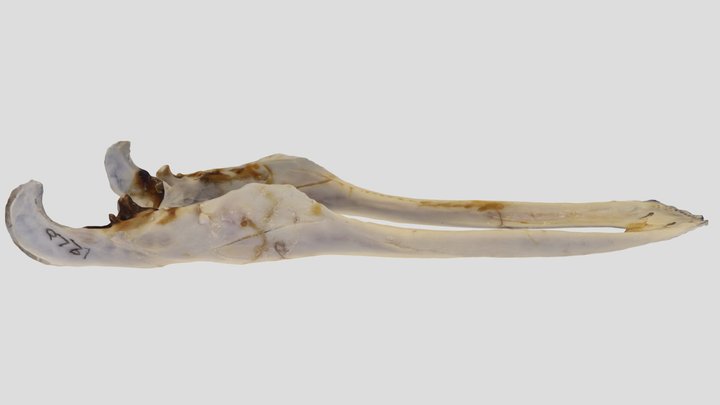
3D model
- Source
- Sketchfab
- Licence
- CC Attribution
- Commercial use
- cannot be read from the licence given — check the record
Smithsonian Open Access and MorphoSource were not reached for this taxon, so this list is what the others held rather than everything there is.
The description on this site
- Licence
- CC BY-SA 4.0
This is what the site found, which is not the same as what exists.
Keep going
What may have been alongside itAythya through timeFormations of the PleistoceneThe world it lived on
Occurrence data from the Paleobiology Database, CC BY 4.0. (Eyton 1838)