Anatina
Anatina is a genus of saltwater clams, marine bivalve molluscs in the family Mactridae.

Fritzmann2002 · CC BY-SA 4.0 · via Wikipedia/Commons. May be a photograph of a specimen, or an artist’s reconstruction — an interpretation of a skeleton, since colour and soft tissue are almost never preserved.
On record
Recorded, not inferred- Sits inside
- KymatoxinaePBDB
- Diet
- suspension feederPBDB
- Life habit
- infaunalPBDB
- Motility
- facultatively mobilePBDB
- Vision
- blindPBDB, for Bivalvia
Time the record covers
At least 233 million years on record.
The record covers at least 233.6 Mya to 129 ka. No occurrence read is dated outside 237 Mya to 11.7 ka.
58 occurrences of Anatina on record, most of them in the Late Triassic. The Paleobiology Database records this as a living group. Bar height is expected occurrences, not a count: each fossil is spread across the span it is dated to, so a tall narrow bar means tight dating and a low wide one means loose.
When
58 occurrences- Late Triassic38%
- Early Jurassic2%
- Middle Jurassic2%
- Late Jurassic10%
- Early Cretaceous14%
- Late Cretaceous22%
- Miocene3%
- Pliocene3%
- Pleistocene5%
These are dates about fossils, not the animal: the record can only begin after it arose and end before it died out, so either end may reach further. Shares are expected occurrences: a fossil dated to a span is counted partly in each period it straddles. More on what this infers.
Found in
25 formations
- Owl Creek Formation3
- Calcare di Zu Formation3
- Vuache Formation2
- Mancos Shale Formation2
- Buda Limestone Formation2
- Coleraine Formation1
Loading coastlines…
The named rock units Anatina has been recovered from, largest first. Drawn where the rock is now, not where it formed. One further formation holds fewer occurrences and is not listed. 26 occurrences have no formation on record, which is common for older literature.
Anatina and its relatives
Late TriassicWhere Anatina and its relatives were recorded in the Late Triassic.
Found in the same rock
1,284 taxa- Ostrea11 sites
- Cardium8 sites
- Gervillia8 sites
- Nucula8 sites
- Panopea7 sites
- Corbula6 sites
- Mytilus6 sites
- Nuculana6 sites
- Palaeocardita austriaca6 sites
- Pinna6 sites
- Rhaetavicula contorta6 sites
- Cymbophora5 sites
- Laternula5 sites
- Myophoria inflata5 sites
- Tellina5 sites
- Acutostrea plumosa4 sites
- Ammonoidea4 sites
- Anchura4 sites
- Aporrhais4 sites
- Arca4 sites
- Astarte4 sites
- Cardita4 sites
- Cyprimeria4 sites
- Exogyra (Exogyra) costata4 sites
The Paleobiology Database records 45 sites for Anatina, and this reads all of them. The number is how many of those sites it was catalogued from too. The 24 sharing the most are listed.
This is not a list of everything alive at the time. It is only what has come out of the same ground as this animal and been written down.
Entered from
33 references- Géologie et paléontologie des couches à Avicula contorta en Lombardie8
- Jura Vaudois et Neuchatelois6
- Upper Cretaceous (Maestrichtian) Mollusca from the Haustator bilira Assemblage Zone in the East Gulf Coastal Plain4
- Contributo allo studio della fauna Giurese della Dancalia centrale [The Jurassic fauna of the central Danakil]4
- Etude géologique et paléontologique des environs de St-Ambroix (Gard). Première partie (Houiller, Trias, Infralias)4
- Semilla Sandstone, a new member of the Mancos Shale in the southeastern part of the San Juan Basin, New Mexico2
- The Miocene of Northern Costa Rica2
- Obere Trias von Sumatra (Die Padang-Schichten von West-Sumatra nebst Anhang)2
- The Mollusca of the Buda limestone, with an appendix on the corals of the Buda limestone, by Thomas Wayland Vaughan2
- Late Triassic–Jurassic bivalves from volcanic sediments of the Lhasa block, Tibet1
- Die Muschelfauna der Nayband-Formation (Obertrias, Nor - Rhät) des östlichen Zentraliran1
- End-triassic bivalve extinction: Lombardian alps, Italy1
Each of the 58 occurrences read was entered from one of these publications, ordered by how many each accounts for. This is not a search for papers mentioning the name. 21 further references are not listed. Entries link to doi.org where the Paleobiology Database holds an identifier, and to its own record where it does not. Relayed as the Paleobiology Database holds them, not checked against what they resolve to.
Media and terms
Media content3

Picture of Anatina
- Source
- Wikipedia/Commons
- Credit
- Fritzmann2002
- Licence
- CC BY-SA 4.0
- Commercial use
- the licence allows it
CT scan
- Source
- MorphoSource
- Licence
- In Copyright
- Commercial use
- cannot be read from the licence given — check the record
- Specimen
- Anatina anatina · fmnh:invertebrate zoology:208398
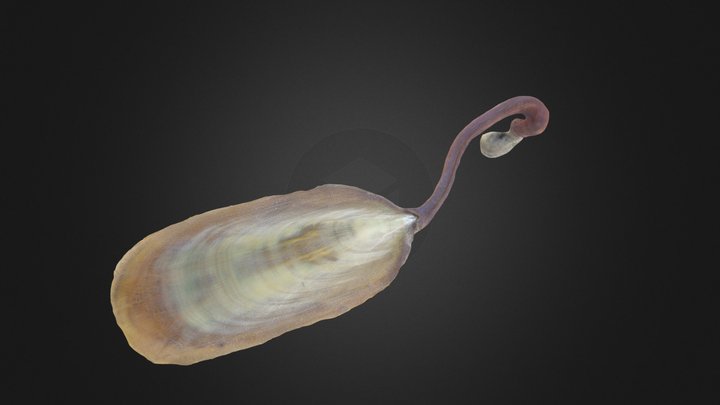
3D model
- Source
- Sketchfab
- Licence
- CC0 Public Domain
- Commercial use
- the licence allows it
The description on this site
- Source
- Wikipedia, “Anatina”
- Licence
- CC BY-SA 4.0
This is what the site found, which is not the same as what exists.
Keep going
What may have been alongside itKymatoxinae through timeFormations of the Late TriassicThe world it lived on
Occurrence data from the Paleobiology Database, CC BY 4.0. Schumacher 1817