Mytilus
Mytilus is a cosmopolitan genus of medium to large-sized edible, mainly saltwater mussels, marine bivalve molluscs in the family Mytilidae.

Wilson44691 at English Wikipedia · Public Domain · via Wikipedia/Commons. May be a photograph of a specimen, or an artist’s reconstruction — an interpretation of a skeleton, since colour and soft tissue are almost never preserved.
On record
Recorded, not inferred- Sits inside
- MytilinaePBDB
- Diet
- suspension feederPBDB
- Life habit
- epifaunalPBDB
- Motility
- stationary, attachedPBDB
- Vision
- blindPBDB, for Bivalvia
- Environment
- lagoonal,coastal,inner shelf,outer shelf,oceanic,brackish,freshwaterPBDB, for Mytilidae
Time the record covers
At least 419 million years on record.
The record covers at least 419.62 Mya to 11.7 ka. No occurrence read is dated outside 426.7 Mya to 0 Mya.
862 occurrences of Mytilus on record, most of them in the Pleistocene. The Paleobiology Database records this as a living group. Bar height is expected occurrences, not a count: each fossil is spread across the span it is dated to, so a tall narrow bar means tight dating and a low wide one means loose.
When
862 occurrences- Silurianunder 1%
- Permianunder 1%
- Early Triassicunder 1%
- Middle Triassic2%
- Late Triassic7%
- Early Jurassic2%
- Middle Jurassic5%
- Late Jurassic8%
- Early Cretaceous7%
- Late Cretaceous5%
- Paleocene2%
- Eocene5%
- Oligocene8%
- Miocene16%
- Pliocene5%
- Pleistocene24%
- Holocene5%
These are dates about fossils, not the animal: the record can only begin after it arose and end before it died out, so either end may reach further. Shares are expected occurrences: a fossil dated to a span is counted partly in each period it straddles. More on what this infers.
Found in
254 formations
- Castilletes Formation28
- Palos Verdes Sand Formation12
- Unnamed Formation11
- Blakeley Formation10
- Alcobaca Formation9
- Choptank Formation · Chesapeake Group9
Loading coastlines…
The named rock units Mytilus has been recovered from, largest first. Drawn where the rock is now, not where it formed. 230 further formations hold fewer occurrences each and are not listed. 331 occurrences have no formation on record, which is common for older literature.
Mytilus and its relatives
PleistoceneWhere Mytilus and its relatives were recorded in the Pleistocene.
Found in the same rock
3,691 taxa- Cardium43 sites
- Ostrea39 sites
- Arca30 sites
- Astarte28 sites
- Modiolus27 sites
- Pholadomya27 sites
- Chlamys22 sites
- Panopea22 sites
- Turritella22 sites
- Nuculana21 sites
- Bryozoa20 sites
- Natica20 sites
- Serpula20 sites
- Tellina20 sites
- Lima19 sites
- Protocardia18 sites
- Pseudomelania18 sites
- Cardita17 sites
- Cerithium17 sites
- Corbula17 sites
- Pleurotomaria17 sites
- Pteria17 sites
- Turbo17 sites
- Venus17 sites
The Paleobiology Database records 554 sites for Mytilus, and this reads 240 of them. Of that, one read hit the database's own return limit, so every count below is a floor rather than a total. The number is how many of those sites it was catalogued from too. The 24 sharing the most are listed.
This is not a list of everything alive at the time. It is only what has come out of the same ground as this animal and been written down.
Entered from
318 references- Jura Vaudois et Neuchatelois42
- Neogene and Paleogene Molluscan (Bivalvia) Cenozones of the Russian Northeast.37
- Neogene molluscs, shallow marine paleoenvironments, and chronostratigraphy of the Guajira Peninsula, Colombia32
- Studies on the marine Pleistocene: Part II. The marine Pleistocene mollusks of eastern North America29
- Neogene and Paleogene Molluscan (Bivalvia) Cenozones of Sakhalin and Kurile Islands24
- Unpublished data22
- Marine Molluscan Assemblages in the Early Pleistocene of Sidestrand, Bramerton and the Royal Society Borehole at Ludham, Norfolk21
- Morza plejstocenskie w Polsce; osady, wiek i paleogeografia [Pleistocene seas in Poland; sediments, age and paleogeography]11
- Geologie, Paleontologie et Paleoecologie du Bathonien au sud-ouest du Massif Ardennais11
- Geology of San Nicolas Island, California11
- The San Lorenzo Group of the San Emigdio region, California10
- Stratigraphy, invertebrate taphonomy and depositional history of the Miocene Calvert and Choptank Formations, Atlantic Coastal Plain9
Each of the 862 occurrences read was entered from one of these publications, ordered by how many each accounts for. This is not a search for papers mentioning the name. 306 further references are not listed. Entries link to doi.org where the Paleobiology Database holds an identifier, and to its own record where it does not. Relayed as the Paleobiology Database holds them, not checked against what they resolve to.
Media and terms
Media content3

Picture of Mytilus
- Source
- Wikipedia/Commons
- Credit
- Wilson44691 at English Wikipedia
- Licence
- Public Domain
- Commercial use
- the licence allows it
Photogrammetry
- Source
- MorphoSource
- Licence
- not stated by the source
- Commercial use
- cannot be read from the licence given — check the record
- Specimen
- mytilus edulis · MST:PALEO:MST-SP-561
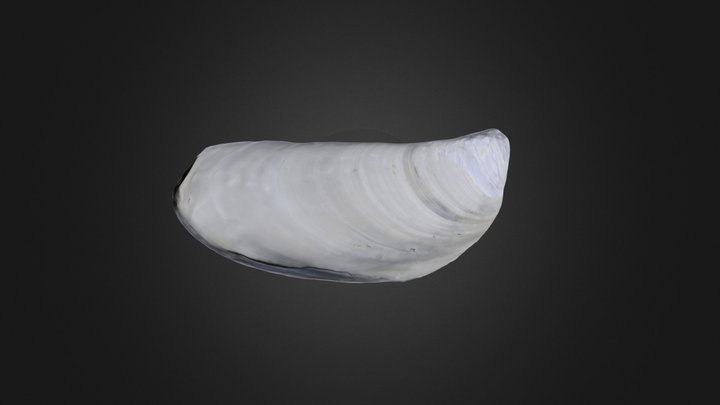
3D model
- Source
- Sketchfab
- Licence
- CC0 Public Domain
- Commercial use
- the licence allows it
The description on this site
- Licence
- CC BY-SA 4.0
This is what the site found, which is not the same as what exists.
Keep going
What may have been alongside itMytilinae through timeFormations of the PleistoceneThe world it lived on
Occurrence data from the Paleobiology Database, CC BY 4.0. (Linnaeus 1758)