Alnus
Searched as Alnus vera. The Paleobiology Database treats Alnus as the accepted name.
Alders are trees of the genus Alnus in the birch family Betulaceae. The genus includes about 35 species of monoecious trees and shrubs, a few reaching a large size, distributed throughout the north temperate zone with a few species extending into Central America, as well as the northern and southern Andes.

AnRo0002 · CC0 · via Wikipedia/Commons. May be a photograph of a specimen, or an artist’s reconstruction — an interpretation of a skeleton, since colour and soft tissue are almost never preserved.
On record
Recorded, not inferred- Also called
- alderPBDB
- Sits inside
- BetulaceaePBDB
- Diet
- "photoautotroph"PBDB, for Angiospermae
Time the record covers
At least 18 million years on record.
The record covers at least 56 Mya to 37.71 Mya. No occurrence read is dated outside 66 Mya to 33.9 Mya.
20 occurrences of Alnus on record, most of them in the Eocene. The Paleobiology Database records this as a living group, and the chart stops with its fossils rather than at the present. Bar height is expected occurrences, not a count: each fossil is spread across the span it is dated to, so a tall narrow bar means tight dating and a low wide one means loose.
When
20 occurrencesThese are dates about fossils, not the animal: the record can only begin after it arose and end before it died out, so either end may reach further. Shares are expected occurrences: a fossil dated to a span is counted partly in each period it straddles. More on what this infers.
Found in
5 formations
Loading coastlines…
The named rock units Alnus has been recovered from, largest first. Drawn where the rock is now, not where it formed. 11 occurrences have no formation on record, which is common for older literature.
Alnus and its relatives
EoceneWhere Alnus and its relatives were recorded in the Eocene.
Found in the same rock
1,972 taxa- Quercus80 sites
- Betula78 sites
- Pinus63 sites
- Picea61 sites
- Ulmus61 sites
- Carya58 sites
- Poaceae57 sites
- Dicotyledoneae56 sites
- Salix55 sites
- Acer54 sites
- Glyptostrobus europaeus49 sites
- Juglans47 sites
- Cyperaceae46 sites
- Abies44 sites
- Asteraceae43 sites
- Carpinus43 sites
- Corylus43 sites
- Populus39 sites
- Liquidambar37 sites
- Dombeya novimundi36 sites
- Artemisia35 sites
- Pterocarya33 sites
- Tilia33 sites
- Tsuga33 sites
The Paleobiology Database records 308 sites for Alnus, and this reads 240 of them. The number is how many of those sites it was catalogued from too. The 24 sharing the most are listed.
This is not a list of everything alive at the time. It is only what has come out of the same ground as this animal and been written down.
Entered from
3 references- Paleocene (?) and Eocene Pollen Samples from the General Region of the San Jose 2° Sheet, California12
- Sporomorph biostratigraphy, floral changes, and paleoclimatology, Eocene and Earliest Oligocen of the eastern Gulf Coast6
- Biostratigraphy and paleoecology of lower Paleozoic, upper Cretaceous, and lower Tertiary rocks in U.S. Geological Survey New Madrid test wells, Southeastern Missouri2
Each of the 20 occurrences read was entered from one of these publications, ordered by how many each accounts for. This is not a search for papers mentioning the name. Entries link to doi.org where the Paleobiology Database holds an identifier, and to its own record where it does not. Relayed as the Paleobiology Database holds them, not checked against what they resolve to.
Media and terms
Media content1
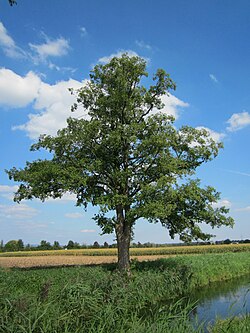
Picture of Alnus
- Source
- Wikipedia/Commons
- Credit
- AnRo0002
- Licence
- CC0
- Commercial use
- the licence allows it
No 3D scan of Alnus was found in Sketchfab.
Smithsonian Open Access and MorphoSource were not reached for this taxon, so this list is what the others held rather than everything there is.
The description on this site
- Source
- Wikipedia, “Alder”
- Licence
- CC BY-SA 4.0
This is what the site found, which is not the same as what exists.
Keep going
What may have been alongside itBetulaceae through timeFormations of the EoceneThe world it lived on
Occurrence data from the Paleobiology Database, CC BY 4.0. Miller 1754