Pterocarya
Pterocarya, often called wingnuts in English, are trees in the walnut family Juglandaceae. They are native to Asia and the extreme southeast of Europe, from the Caucasus Mountains east to Japan. The botanic name is from Ancient Greek πτερόν (pteron) "wing" + κάρυον (karyon) "nut". The genus is of particular scientific interest as a classic relict lineage, with a modern distribution disjunct between East Asia and the Caucasus–West Asian region, while its fossil record shows it was once widespread across much of the Northern Hemisphere. In Western Europe, the genus was present on Doggerland until shortly before it was flooded a few thousand years ago. Many fossils are known from the New World and the genus survived in the New world till the Pliocene. Most species of wingnuts are large, fast-growing trees, often associated with riverbanks, floodplains, and moist temperate forests. They are distinguished by pinnate leaves, monoecious flowers, and fruit with lateral wings that aid wind and water dispersal. Several species, such as Pterocarya stenoptera and Pterocarya fraxinifolia, are widely cultivated as ornamental or shade trees due to their graceful form and tolerance of wet soils.

Uncredited · CC BY-SA 3.0 · via Wikipedia/Commons. May be a photograph of a specimen, or an artist’s reconstruction — an interpretation of a skeleton, since colour and soft tissue are almost never preserved.
On record
Recorded, not inferred- Also called
- wingnutPBDB
- Sits inside
- JuglandaceaePBDB
- Diet
- "photoautotroph"PBDB, for Angiospermae
Time the record covers
At least 56 million years on record.
The record covers at least 57.5 Mya to 774 ka. No occurrence read is dated outside 66 Mya to 0 Mya.
188 occurrences of Pterocarya on record, most of them in the Miocene. The Paleobiology Database records this as a living group. Bar height is expected occurrences, not a count: each fossil is spread across the span it is dated to, so a tall narrow bar means tight dating and a low wide one means loose.
When
188 occurrencesThese are dates about fossils, not the animal: the record can only begin after it arose and end before it died out, so either end may reach further. Shares are expected occurrences: a fossil dated to a span is counted partly in each period it straddles. More on what this infers.
Found in
33 formations
- Sagavanirktok Formation25
- Canning Formation9
- Fort Union Formation6
- Itahana Formation · Tomioka Group5
- Green River Formation3
- Santa Maria di Ciciliano Formation3
Loading coastlines…
The named rock units Pterocarya has been recovered from, largest first. Drawn where the rock is now, not where it formed. 9 further formations hold fewer occurrences each and are not listed. 107 occurrences have no formation on record, which is common for older literature.
Pterocarya and its relatives
MioceneWhere Pterocarya and its relatives were recorded in the Miocene.
Found in the same rock
1,042 taxa- Carya58 sites
- Alnus48 sites
- Acer33 sites
- Liquidambar32 sites
- Triatriopollenites31 sites
- Ulmipollenites undulosus31 sites
- Intratriporopollenites30 sites
- Pinus29 sites
- Ulmus28 sites
- Triporopollenites mullensis27 sites
- Juglans26 sites
- Quercus26 sites
- Salix24 sites
- Tsuga23 sites
- Caryapollenites22 sites
- Alnipollenites verus20 sites
- Betula19 sites
- Picea19 sites
- Rhoipites18 sites
- Carpinus17 sites
- Cladrastis17 sites
- Corylus17 sites
- Fagus16 sites
- Poaceae16 sites
The Paleobiology Database records 110 sites for Pterocarya, and this reads all of them. The number is how many of those sites it was catalogued from too. The 24 sharing the most are listed.
This is not a list of everything alive at the time. It is only what has come out of the same ground as this animal and been written down.
Entered from
48 references- Die mittelmiozaenen und obermiozaenen Floren aus der Meuroer und Raunoer Folge in der Lausitz. III. Fundstellen und Palaeobiologie21
- Tretichnye Flory Zapadnoi Sibiri19
- Palynomorph biostratigraphy of Eocene samples from the Sagavanirktok Formation at Franklin Bluffs, North Slope of Alaska15
- Palynological dating of Upper Cretaceous to middle Eocene strata in the Sagavanirktok and Canning formations, North Slope of Alaska13
- Miocene floras in the lower Rhenish basin and their ecological interpretation13
- Paleoecological and Floristic Heterogeneity in the Plant-Fossil Record - An Analysis Based on the Eocene of Washington12
- Palynomorph biostratigraphy of Upper Cretaceous to Eocene samples from the Sagavanirktok Formation in its type region, North Slope of Alaska10
- Late Miocene and Pliocene Floras in Central Honshu, Japan9
- Niche evolution versus niche conservatism and habitat loss determine persistence and extirpation in late Neogene European Fagaceae6
- Die Miozaenan Frucht-und Samen-Floren die Oberpfaelzer Braunkohle. I. Funde aus den sandigen zwischenmitteln5
- A catalogue of Cenozoic megafossil plants in China4
- The section of Torre Picchio (Terni, Umbria, Central Italy): A Villafranchian site rich in vertebrates, molluscs, ostracods and plants.3
Each of the 188 occurrences read was entered from one of these publications, ordered by how many each accounts for. This is not a search for papers mentioning the name. 36 further references are not listed. Entries link to doi.org where the Paleobiology Database holds an identifier, and to its own record where it does not. Relayed as the Paleobiology Database holds them, not checked against what they resolve to.
Media and terms
Media content2

Picture of Pterocarya
- Source
- Wikipedia/Commons
- Credit
- nobody named on the record
- Licence
- CC BY-SA 3.0
- Commercial use
- the licence allows it
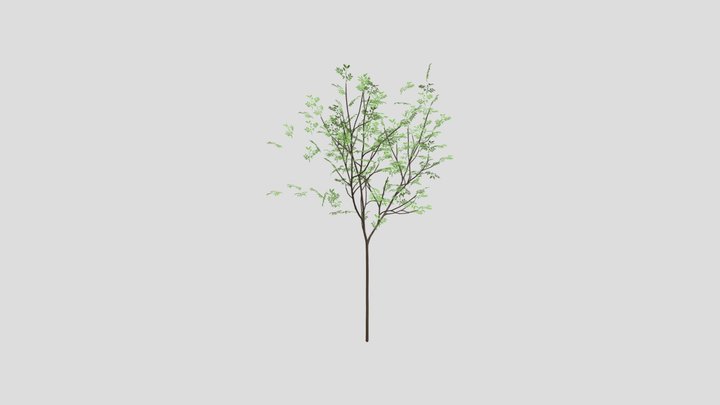
3D model
- Source
- Sketchfab
- Credit
- UESReseach
- Licence
- CC Attribution
- Commercial use
- cannot be read from the licence given — check the record
Smithsonian Open Access and MorphoSource were not reached for this taxon, so this list is what the others held rather than everything there is.
The description on this site
- Source
- Wikipedia, “Pterocarya”
- Licence
- CC BY-SA 4.0
This is what the site found, which is not the same as what exists.
Keep going
What may have been alongside itJuglandaceae through timeFormations of the MioceneThe world it lived on
Occurrence data from the Paleobiology Database, CC BY 4.0. Kunth 1824