Betula
A birch is a thin-leaved deciduous hardwood tree of the genus Betula, in the family Betulaceae, which also includes alders, hazels, and hornbeams. It is closely related to the beech-oak family Fagaceae. The genus Betula contains 30 to 60 known taxa of which 11 are on the IUCN 2011 Red List of Threatened Species. They are typically short-lived pioneer species and are widespread in the Northern Hemisphere, particularly in northern areas of temperate climates and in boreal climates. Birch wood is used for a wide range of purposes.

Willow · CC BY 2.5 · via Wikipedia/Commons. May be a photograph of a specimen, or an artist’s reconstruction — an interpretation of a skeleton, since colour and soft tissue are almost never preserved.
On record
Recorded, not inferred- Also called
- birchPBDB
- Sits inside
- BetulaceaePBDB
- Diet
- "photoautotroph"PBDB, for Angiospermae
Time the record covers
At least 55 million years on record.
The record covers at least 56 Mya to 11.7 ka. No occurrence read is dated outside 66 Mya to 0 Mya.
313 occurrences of Betula on record, most of them in the Miocene. The Paleobiology Database records this as a living group. Bar height is expected occurrences, not a count: each fossil is spread across the span it is dated to, so a tall narrow bar means tight dating and a low wide one means loose.
When
313 occurrencesThese are dates about fossils, not the animal: the record can only begin after it arose and end before it died out, so either end may reach further. Shares are expected occurrences: a fossil dated to a span is counted partly in each period it straddles. More on what this infers.
Found in
67 formations
- Chloropagus Formation13
- Fort Union Formation11
- Latah Formation9
- Nanjemoy Formation6
- Guchengzi Formation5
- Porters Creek Formation5
Loading coastlines…
The named rock units Betula has been recovered from, largest first. Drawn where the rock is now, not where it formed. 43 further formations hold fewer occurrences each and are not listed. 172 occurrences have no formation on record, which is common for older literature.
Betula and its relatives
MioceneWhere Betula and its relatives were recorded in the Miocene.
Found in the same rock
2,430 taxa- Alnus92 sites
- Quercus87 sites
- Pinus75 sites
- Poaceae72 sites
- Picea67 sites
- Carya65 sites
- Salix55 sites
- Ulmus55 sites
- Cyperaceae51 sites
- Asteraceae50 sites
- Acer49 sites
- Artemisia44 sites
- Corylus42 sites
- Juglans42 sites
- Abies41 sites
- Carpinus39 sites
- Apiaceae36 sites
- Ericaceae34 sites
- Tsuga30 sites
- Fraxinus29 sites
- Myrica29 sites
- Potamogeton28 sites
- Liquidambar27 sites
- Populus27 sites
The Paleobiology Database records 187 sites for Betula, and this reads all of them. Of that, one read hit the database's own return limit, so every count below is a floor rather than a total. The number is how many of those sites it was catalogued from too. The 24 sharing the most are listed.
This is not a list of everything alive at the time. It is only what has come out of the same ground as this animal and been written down.
Entered from
83 references- A Catalogue of Fossil Plants from India Part 6: Cenozoic (Quaternary) Palynology and Palaeobotany31
- Die mittelmiozaenen und obermiozaenen Floren aus der Meuroer und Raunoer Folge in der Lausitz. III. Fundstellen und Palaeobiologie28
- A catalogue of Cenozoic megafossil plants in China17
- Paleogene Sporomorph Biostratigraphy, Northeastern Virginia17
- Tretichnye Flory Zapadnoi Sibiri17
- Paleocene flora of the Rocky Mountains and Great Plains15
- The Miocene Purple Mountain Flora of Western Nevada13
- Stratigraphic, Paleoclimatic, and Paleobiogeographic Significance of Tertiary Sporomorphs from Massachusetts10
- Flora of the Latah formation of Spokane, Washington, and Coeur d'Alene, Idaho9
- Niche evolution versus niche conservatism and habitat loss determine persistence and extirpation in late Neogene European Fagaceae8
- Raschleneniye oligotsen-nizhnemiotsenovykh tolshch vostochnoy Kamchatki (zaliv Korfa). Subdivision of Oligocene-lower Miocene layers of eastern Kamchatka, Gulf of Korfa8
- Biostratigraphy and paleoecology of lower Paleozoic, upper Cretaceous, and lower Tertiary rocks in U.S. Geological Survey New Madrid test wells, Southeastern Missouri7
Each of the 313 occurrences read was entered from one of these publications, ordered by how many each accounts for. This is not a search for papers mentioning the name. 71 further references are not listed. Entries link to doi.org where the Paleobiology Database holds an identifier, and to its own record where it does not. Relayed as the Paleobiology Database holds them, not checked against what they resolve to.
Media and terms
Media content3

Picture of Betula
- Source
- Wikipedia/Commons
- Credit
- Willow
- Licence
- CC BY 2.5
- Commercial use
- the licence allows it
CT scan
- Source
- MorphoSource
- Licence
- In Copyright
- Commercial use
- cannot be read from the licence given — check the record
- Specimen
- Betula pendula · hlu:ccc:595
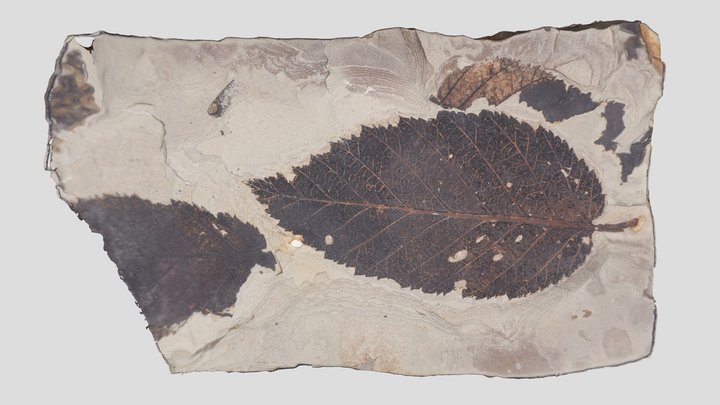
3D model
- Source
- Sketchfab
- Credit
- Yale Peabody Museum
- Licence
- CC Attribution
- Commercial use
- cannot be read from the licence given — check the record
The description on this site
- Source
- Wikipedia, “Birch”
- Licence
- CC BY-SA 4.0
This is what the site found, which is not the same as what exists.
Keep going
What may have been alongside itBetulaceae through timeFormations of the MioceneThe world it lived on
Occurrence data from the Paleobiology Database, CC BY 4.0. Linnaeus 1753